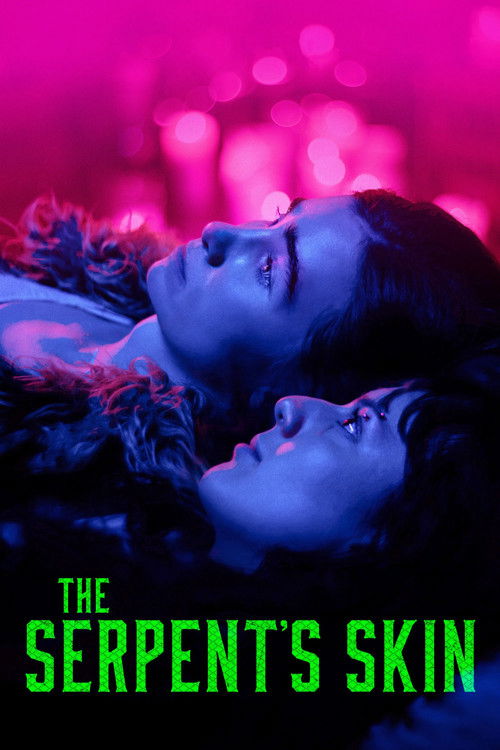
The Serpent's Skin
2026 · Directed by Alice Maio Mackay
Peak Woke
Consciousness Score: 84%
Representation Casting
Score: 95/100
The lead, Alexandra McVicker, is a trans actress playing a trans character, and the film was explicitly constructed around this casting as a central artistic and political statement. The director has publicly framed the project as a 'transgender film,' making representation not incidental but the entire premise.
LGBTQ+ Themes
Score: 98/100
The film is, by any reasonable measure, a document of LGBTQ+ experience first and a horror film second. It centers a trans protagonist, a sapphic romance, and a narrative arc structured around the psychological and social costs of queer identity in a hostile world.
Feminist Agenda
Score: 72/100
Two women discover supernatural powers, face down demonic forces, and are the sole agents of salvation in a story that pointedly sidelines male characters. The horror genre's oldest trope, female victimhood, is here inverted with some deliberateness.
Racial Consciousness
Score: 10/100
No evidence of racial consciousness as a foregrounded theme. The film's identity politics are organized entirely around gender and sexuality.
Climate Crusade
Score: 0/100
No climate themes are present or implied in any available materials.
Eat the Rich
Score: 15/100
The protagonist escaping a small, presumably conservative hometown for urban life carries faint anti-provincial undertones, but no explicit anti-capitalist critique is evident in the film's themes or marketing.
Body Positivity
Score: 40/100
A trans character navigating her body and identity is inherently adjacent to body politics, and reviewers note the film addresses 'imposed trans guilt' directly. This is not body positivity in the gym-selfie sense, but it touches the same nerve.
Neurodivergence
Score: 0/100
No neurodivergence themes are present or referenced in any available materials.
Revisionist History
Score: 0/100
The film is a contemporary supernatural horror story with no historical setting or revisionist intent.
Lecture Energy
Score: 65/100
Critics describe the film as 'focusing less on scares than on the sense of responsibility which seems naturally to arise just from being different,' which is a generous way of saying the film pauses the demon attacks to make sure the audience has absorbed its feelings. The messaging is present, earnest, and not always subtle.
Synopsis
Two young women form a romantic bond after discovering they have supernatural powers. Their insecurities unknowingly release a demon, which possesses one of their exes and begins feeding on their friends. As the bodies pile up, it becomes up to the women to face their pasts and stop the growing evil.
Consciousness Assessment
Alice Maio Mackay's "The Serpent's Skin" arrives pre-classified. The director, a 21-year-old Australian filmmaker of notable productivity and explicit political purpose, has described this as a transgender film, which is not a genre designation but a mission statement. The horror scaffolding, demons, possessions, mounting bodies, is largely a delivery mechanism for a portrait of queer identity under pressure. This is not a criticism. It is simply the thing the film is, stated plainly, before we proceed.
The premise is clean enough: two young women discover supernatural powers, release a demon through the ordinary psychic turbulence of insecurity and unresolved pasts, and must destroy it. The romantic lead is Anna, a trans woman played by Alexandra McVicker in her first role since transitioning, escaping a transphobic hometown to build something new in the city. Her love interest is a goth tattoo artist named Gen. The demon, one suspects, is not merely a demon. Reviewers have confirmed this suspicion at length. The film draws its bloodline from Buffy the Vampire Slayer and the films of Gregg Araki, a lineage that signals campy sincerity over dread, and the result is, by critical consensus, warm rather than frightening. The scares are present but secondary. The feelings are primary and know it.
What gives the film its peculiar texture is the combination of genuine indie conviction and the weight of its own earnestness. Mackay is not making exploitation cinema or a prestige awards vehicle. She is making, with apparent care, the film she wishes had existed for her. That is a legitimate artistic impulse. It also produces, in places, a lecture energy that critics have politely described as the film's focus on "responsibility." The demon does not merely threaten lives. It threatens identity, community, and the hard-won sense of self that the narrative has spent considerable time establishing. The film understands this. It would like you to understand it too. It will wait.
Analysis generated by our Consciousness Algorithm
Consciousness Markers
The lead, Alexandra McVicker, is a trans actress playing a trans character, and the film was explicitly constructed around this casting as a central artistic and political statement. The director has publicly framed the project as a 'transgender film,' making representation not incidental but the entire premise.
The film is, by any reasonable measure, a document of LGBTQ+ experience first and a horror film second. It centers a trans protagonist, a sapphic romance, and a narrative arc structured around the psychological and social costs of queer identity in a hostile world.
Two women discover supernatural powers, face down demonic forces, and are the sole agents of salvation in a story that pointedly sidelines male characters. The horror genre's oldest trope, female victimhood, is here inverted with some deliberateness.
No evidence of racial consciousness as a foregrounded theme. The film's identity politics are organized entirely around gender and sexuality.
No climate themes are present or implied in any available materials.
The protagonist escaping a small, presumably conservative hometown for urban life carries faint anti-provincial undertones, but no explicit anti-capitalist critique is evident in the film's themes or marketing.
A trans character navigating her body and identity is inherently adjacent to body politics, and reviewers note the film addresses 'imposed trans guilt' directly. This is not body positivity in the gym-selfie sense, but it touches the same nerve.
No neurodivergence themes are present or referenced in any available materials.
The film is a contemporary supernatural horror story with no historical setting or revisionist intent.
Critics describe the film as 'focusing less on scares than on the sense of responsibility which seems naturally to arise just from being different,' which is a generous way of saying the film pauses the demon attacks to make sure the audience has absorbed its feelings. The messaging is present, earnest, and not always subtle.