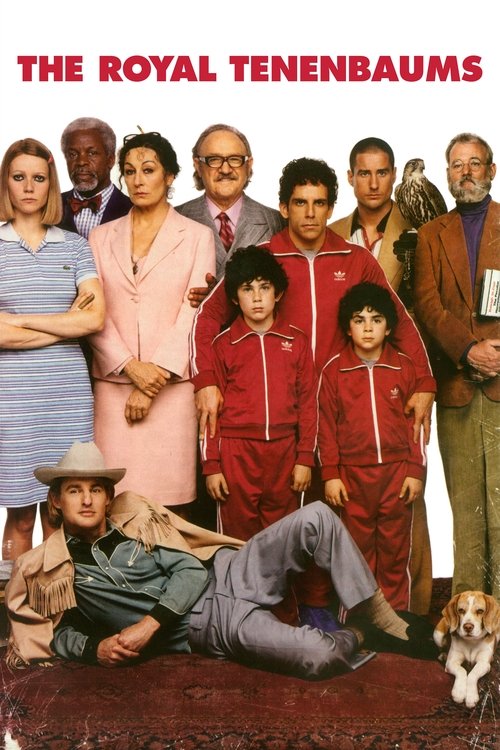
The Royal Tenenbaums
2001 · Directed by Wes Anderson
Woke Score
CriticCritic Score
Audience
Ultra Based
Critics rated this 74 points above its woke score. Among Ultra Based films, this critic score ranks #455 of 1469.
Representation Casting
Score: 0/100
The cast is predominantly white, with Danny Glover in a supporting role. The narrative centers entirely on the white Tenenbaum family with no meaningful diversity representation.
LGBTQ+ Themes
Score: 0/100
There are no LGBTQ+ themes, characters, or storylines present in the film.
Feminist Agenda
Score: 0/100
While Anjelica Huston plays a significant character, the film's narrative structure and thematic concerns show no feminist agenda or consciousness.
Racial Consciousness
Score: 0/100
The film contains no engagement with racial themes or consciousness. Racial identity is not a thematic concern.
Climate Crusade
Score: 0/100
There are no environmental or climate-related themes in the film.
Eat the Rich
Score: 5/100
The film satirizes wealthy privilege through the dysfunctional Tenenbaum family, but this is character-based comedy rather than systematic anti-capitalist critique.
Body Positivity
Score: 0/100
There is no body positivity messaging or representation in the film.
Neurodivergence
Score: 0/100
While characters display eccentric behavior, there is no explicit engagement with neurodivergence or autism representation.
Revisionist History
Score: 0/100
The film does not reinterpret or revisit historical events or narratives.
Lecture Energy
Score: 0/100
The film maintains a narrative and comedic tone without preachy lecturing about social issues.


Synopsis
Royal Tenenbaum and his wife Etheline had three children and then they separated. All three children are extraordinary --- all geniuses. Virtually all memory of the brilliance of the young Tenenbaums was subsequently erased by two decades of betrayal, failure, and disaster. Most of this was generally considered to be their father's fault. "The Royal Tenenbaums" is the story of the family's sudden, unexpected reunion one recent winter.
Consciousness Assessment
Wes Anderson's "The Royal Tenenbaums" remains a masterwork of formal precision and narrative control, yet it is almost entirely indifferent to the concerns that would later define early twenty-first-century progressive cinema. The film's universe is one of pure aesthetic pleasure, where the Tenenbaum family's dysfunction serves as material for visual composition rather than social commentary. Anderson treats wealth, failure, and privilege with a kind of anthropological detachment, observing these creatures as one might study specimens in a cabinet of curiosities.
The sole marker of social consciousness appears in the film's light satirization of affluent excess, though even this is delivered with such a light touch that one hesitates to call it critique. The Tenenbaums are absurd because they are human, not because they are rich, and the film maintains an almost Olympian distance from moral judgment. Danny Glover's presence as Henry Sherman, the family's loyal retainer, represents the extent to which this film engages with racial representation: a dignified supporting role in a narrative centered entirely on white characters and their petty struggles.
What one observes is a film that predates contemporary progressive sensibilities by nearly a decade and exists in a register that finds such concerns beside the point. "The Royal Tenenbaums" is interested in form, eccentricity, and the architecture of family melodrama. It is a work of genuine artistry that happens to be entirely unconcerned with the social consciousness markers that would later become industry standard. In this, it possesses a certain honesty.
Analysis generated by our Consciousness Algorithm
Critic Reviews
“You'll laugh, you'll cry -- the year's best movie.”
“Anderson offers no phony uplift for the Tenenbaums or for audiences. But he does know how to take a sad song and make it better. In these troubled times, that's a gift.”
“In a film that verges on greatness, it is a sign of terrific faith, as well as of Anderson's promise as a director, that when one of the characters in The Royal Tenenbaums wears hospital pajamas after a detour into grief, the words over his heart read "recovery area."”
“Anderson's other hallmarks here are brilliant gags that deflate in the execution, potentially interesting characters that end up so flat they feel as if they'd been cut out of paper, a plot that's all setup and no story.”
Consciousness Markers
The cast is predominantly white, with Danny Glover in a supporting role. The narrative centers entirely on the white Tenenbaum family with no meaningful diversity representation.
There are no LGBTQ+ themes, characters, or storylines present in the film.
While Anjelica Huston plays a significant character, the film's narrative structure and thematic concerns show no feminist agenda or consciousness.
The film contains no engagement with racial themes or consciousness. Racial identity is not a thematic concern.
There are no environmental or climate-related themes in the film.
The film satirizes wealthy privilege through the dysfunctional Tenenbaum family, but this is character-based comedy rather than systematic anti-capitalist critique.
There is no body positivity messaging or representation in the film.
While characters display eccentric behavior, there is no explicit engagement with neurodivergence or autism representation.
The film does not reinterpret or revisit historical events or narratives.
The film maintains a narrative and comedic tone without preachy lecturing about social issues.