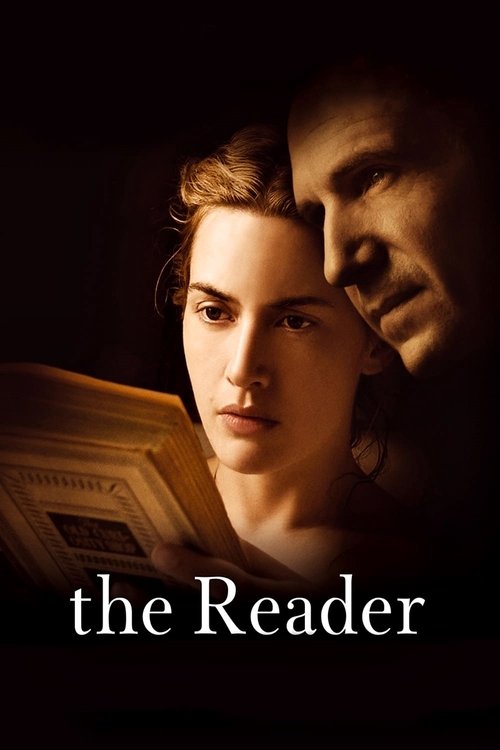
The Reader
2008 · Directed by Stephen Daldry
Woke Score
CriticCritic Score
Audience
Ultra Based
Critics rated this 40 points above its woke score. Among Ultra Based films, this critic score ranks #962 of 1469.
Representation Casting
Score: 0/100
The cast is predominantly white and European, which is appropriate to the German setting but reflects no conscious effort toward contemporary representation principles.
LGBTQ+ Themes
Score: 0/100
No LGBTQ+ themes, characters, or subtext are present in the film.
Feminist Agenda
Score: 15/100
Hanna is a complex female character with agency, but the narrative ultimately positions her through the lens of a male protagonist's moral awakening. The film does not engage with feminist critique.
Racial Consciousness
Score: 0/100
The film is set in post-war Germany and does not engage with race or racism as thematic concerns.
Climate Crusade
Score: 0/100
No climate or environmental themes are present.
Eat the Rich
Score: 0/100
The film contains no critique of capitalism or systemic economic exploitation.
Body Positivity
Score: 0/100
No engagement with body positivity or body image as thematic concerns.
Neurodivergence
Score: 0/100
Hanna's illiteracy is a plot device but is not framed as neurodivergence or disability representation.
Revisionist History
Score: 40/100
The film presents a sympathetic portrayal of a Nazi perpetrator that complicates historical judgment, offering a revisionist frame that emphasizes personal tragedy and moral ambiguity over institutional accountability.
Lecture Energy
Score: 5/100
The film is contemplative rather than preachy, though it occasionally gestures toward moral instruction about complicity and responsibility.


Synopsis
The story of Michael Berg, a German lawyer who, as a teenager in the late 1950s, had an affair with an older woman, Hanna, who then disappeared only to resurface years later as one of the defendants in a war crimes trial stemming from her actions as a concentration camp guard late in the war. He alone realizes that Hanna is illiterate and may be concealing that fact at the expense of her freedom.
Consciousness Assessment
The Reader arrives as a prestige Holocaust drama of the sort that flourished in the 2000s, when films about historical atrocity could operate under the assumption that bearing witness alone constituted sufficient artistic statement. Stephen Daldry's adaptation of Bernhard Schlink's novel concerns itself with questions of complicity, shame, and the illegibility of evil in human form, but these are humanist preoccupations rather than expressions of contemporary progressive sensibility. The film presents Hanna, a former concentration camp guard, with a kind of tragic dimensionality that was considered morally sophisticated in 2008, yet the work never engages with the apparatus of modern identity-conscious criticism that would frame such representation as potentially problematic. Kate Winslet and Ralph Fiennes navigate material that asks us to sympathize with a Nazi without interrogating that sympathy through any lens of systemic accountability.
The structural choices reveal much. The narrative privileges the emotional and sexual awakening of a young German man encountering the historical record of his country's crimes, positioning his discomfort as the thematic center rather than the experiences of those who suffered. This is not a conservative film, yet it lacks any dimension of what we might recognize as social consciousness in the contemporary sense. There is no discussion of how systems perpetuate harm, no interrogation of institutional complicity beyond individual moral failure, no attempt to center the perspectives of those most affected. The film's engagement with literacy, Hanna's concealed illiteracy, gestures toward class consciousness but remains oddly underdeveloped, a plot device rather than a thematic throughline.
What we have is a film that takes moral seriousness as its primary credential, which is not the same thing as engaging with modern frameworks of progressive critique. The Reader is competent, occasionally moving, and utterly of its historical moment, which was a moment before the vocabulary of contemporary social consciousness became standard in prestige cinema. It remains a film about the past examining the past, rather than a film using the past to comment on present structures of power and representation.
Analysis generated by our Consciousness Algorithm
Critic Reviews
“Kross and Winslet's intense performances and Daldry's deliberately placid control of tone make the material work as a love (and hate) story as well as a metaphor.”
“The Reader is significant because -- like another film opening today, "Valkyrie" -- it asks us to see not just the Jews but the whole German people as victims of the Holocaust, and to view Nazism as more a product of explicable ignorance than inexplicable evil.”
“The shallowest "serious" film to be reeling this year.”
Consciousness Markers
The cast is predominantly white and European, which is appropriate to the German setting but reflects no conscious effort toward contemporary representation principles.
No LGBTQ+ themes, characters, or subtext are present in the film.
Hanna is a complex female character with agency, but the narrative ultimately positions her through the lens of a male protagonist's moral awakening. The film does not engage with feminist critique.
The film is set in post-war Germany and does not engage with race or racism as thematic concerns.
No climate or environmental themes are present.
The film contains no critique of capitalism or systemic economic exploitation.
No engagement with body positivity or body image as thematic concerns.
Hanna's illiteracy is a plot device but is not framed as neurodivergence or disability representation.
The film presents a sympathetic portrayal of a Nazi perpetrator that complicates historical judgment, offering a revisionist frame that emphasizes personal tragedy and moral ambiguity over institutional accountability.
The film is contemplative rather than preachy, though it occasionally gestures toward moral instruction about complicity and responsibility.