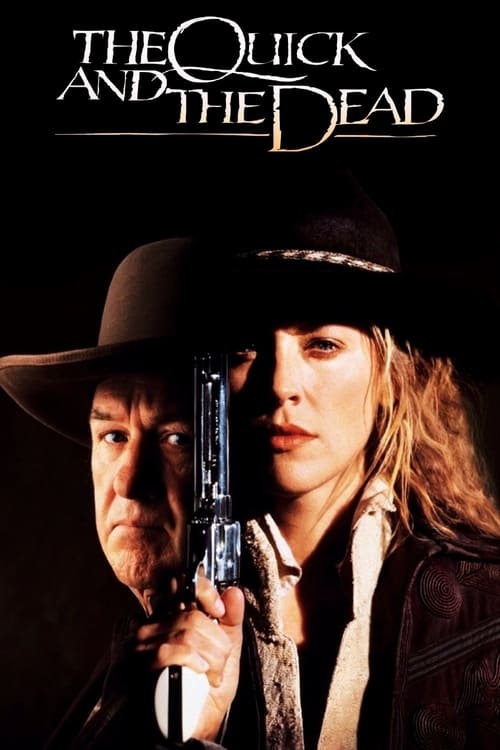
The Quick and the Dead
1995 · Directed by Sam Raimi
Woke Score
CriticCritic Score
Audience
Based
Critics rated this 27 points above its woke score. Among Based films, this critic score ranks #312 of 345.
Representation Casting
Score: 15/100
Sharon Stone leads as a capable female gunfighter, which was notably uncommon for action Westerns in 1995. However, the rest of the cast remains predominantly white with no evidence of deliberate diversity strategy.
LGBTQ+ Themes
Score: 0/100
No LGBTQ+ themes, characters, or representation present in the film.
Feminist Agenda
Score: 35/100
Stone's character is a skilled action protagonist seeking revenge, but the film does not interrogate gender dynamics or advance feminist messaging. Her gender exists as narrative fact rather than thematic concern.
Racial Consciousness
Score: 5/100
Keith David appears in the cast, but there is no evidence of deliberate racial consciousness or thematic engagement with race. Minority characters are present but unremarked upon.
Climate Crusade
Score: 0/100
No climate-related themes or environmental consciousness present in this 1995 Western.
Eat the Rich
Score: 0/100
No anti-capitalist messaging or critique of wealth and power structures discernible in the narrative.
Body Positivity
Score: 0/100
No themes related to body positivity, body diversity, or acceptance of non-standard body types present in the film.
Neurodivergence
Score: 0/100
No representation of or thematic engagement with neurodivergence or disability.
Revisionist History
Score: 20/100
Marketed as a revisionist Western, but Raimi's revisionism refers to stylistic experimentation rather than historical reframing through a progressive lens. The film does not deliberately challenge or reexamine historical narratives.
Lecture Energy
Score: 10/100
The film prioritizes entertainment and spectacle over preachy messaging. While it features a female protagonist, it avoids any preachy or explicitly instructive tone about social issues.


Synopsis
A mysterious woman comes to compete in a quick-draw elimination tournament, in a town taken over by a notorious gunman.
Consciousness Assessment
Sam Raimi's 1995 Western stands as an artifact of a transitional moment in American cinema, when the presence of a female gunslinger in a traditionally masculine genre could register as transgressive simply through existence rather than through any explicit interrogation of power structures. Sharon Stone's Ellen is competent, ruthless, and central to the narrative, but the film makes no particular effort to comment on her gender or to explore the gender dynamics that would logically complicate her participation in a male-dominated frontier society. She is simply a gunfighter who happens to be a woman, which in the context of 1995 action cinema was notable enough to market but not sufficiently examined to constitute genuine progressive sensibility.
The film's stylistic revisionism, which Raimi deploys through color grading, exaggerated violence, and tonal whimsy, operates entirely in the register of aesthetic play. There is no sense that Raimi is using the Western form to reexamine or challenge historical narratives through a contemporary social lens. Gene Hackman's villain, the town's tyrant, is motivated by personal vendetta rather than any systemic critique. The narrative remains fundamentally concerned with individual revenge and frontier justice, untethered from any broader commentary on power, oppression, or social hierarchy.
One encounters in this film a curious historical moment where formal inclusion without thematic engagement passes for cultural awareness. The presence of a woman in the lead role, divorced from any larger conversation about representation or equality, functions as a surface-level gesture rather than as evidence of progressive sensibilities. For a film genuinely concerned with social consciousness, we would expect either explicit thematic engagement or at minimum a narrative that grapples with the implications of its own gender dynamics. This film does neither, remaining content to entertain and nothing more.
Analysis generated by our Consciousness Algorithm
Critic Reviews
“That conscious absurdity is at the core of The Quick and the Dead. It's a rousingly grotesque, often wildly entertaining western horror-comedy, with co-producer and star Sharon Stone as a sexy lady gunslinger taking on all comers in the gunfight tournament from hell. [10 Feb 1995, p.C]”
“Apparently no one bothered to tell Stone the movie was a joke. She plays it without a hint of the tongue-in-cheek required, and totally against her strong star persona, so that she serves mostly as the unnecessary straight woman to all the giddy male comedy. [10 Feb 1995, p.3]”
“Ms. Stone's presence nicely underscores the genre-bending tactics of Sam Raimi, the cult director now doing his best to reinvent the B-movie in a spirit of self-referential glee. Mr. Raimi is limited by a sketch mentality, which means his jokes tend to be over long before his films end. But his tastes for visual mischief and crazy, ill-advised homage can still make for sly, sporadic fun.”
“Ms. Stone. She alternates between two expressions here: sullen, and aghast. Then again, if you were listed on the credits as the co-producer of this violently dull piece of shlock, you'd look that way, too. [16 Feb 1995, p.A12]”
Consciousness Markers
Sharon Stone leads as a capable female gunfighter, which was notably uncommon for action Westerns in 1995. However, the rest of the cast remains predominantly white with no evidence of deliberate diversity strategy.
No LGBTQ+ themes, characters, or representation present in the film.
Stone's character is a skilled action protagonist seeking revenge, but the film does not interrogate gender dynamics or advance feminist messaging. Her gender exists as narrative fact rather than thematic concern.
Keith David appears in the cast, but there is no evidence of deliberate racial consciousness or thematic engagement with race. Minority characters are present but unremarked upon.
No climate-related themes or environmental consciousness present in this 1995 Western.
No anti-capitalist messaging or critique of wealth and power structures discernible in the narrative.
No themes related to body positivity, body diversity, or acceptance of non-standard body types present in the film.
No representation of or thematic engagement with neurodivergence or disability.
Marketed as a revisionist Western, but Raimi's revisionism refers to stylistic experimentation rather than historical reframing through a progressive lens. The film does not deliberately challenge or reexamine historical narratives.
The film prioritizes entertainment and spectacle over preachy messaging. While it features a female protagonist, it avoids any preachy or explicitly instructive tone about social issues.