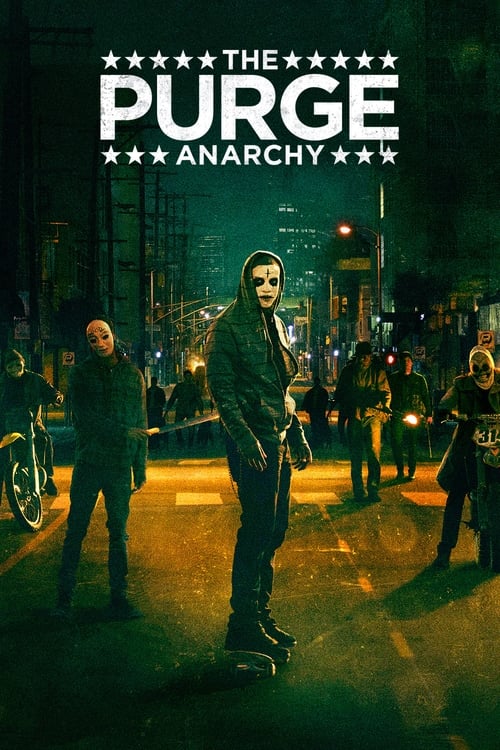
The Purge: Anarchy
2014 · Directed by James DeMonaco
Woke Score
CriticCritic Score
Audience
Based
Critics rated this 22 points above its woke score. Among Based films, this critic score ranks #303 of 345.
Representation Casting
Score: 25/100
Diverse ensemble cast including Black and Latino actors in significant roles, but diversity appears organic to the story rather than as an explicit progressive statement.
LGBTQ+ Themes
Score: 0/100
No LGBTQ+ themes or representation present in the film.
Feminist Agenda
Score: 15/100
Female characters exist in the narrative but are not central to feminist themes; the story prioritizes male protagonists and revenge narratives.
Racial Consciousness
Score: 35/100
The film depicts racial dimensions of class oppression, with wealthy elites targeting poor communities, but this is presented as dystopian premise rather than contemporary racial justice messaging.
Climate Crusade
Score: 0/100
No climate-related themes or environmental consciousness present in the film.
Eat the Rich
Score: 50/100
The film's central premise involves wealthy elites exploiting the poor through a government-sanctioned violence system, presenting clear anti-capitalist allegory, though as genre worldbuilding rather than contemporary progressive critique.
Body Positivity
Score: 0/100
No body diversity representation or body positivity themes present in the film.
Neurodivergence
Score: 0/100
No neurodivergence representation or themes present in the film.
Revisionist History
Score: 0/100
The film is set in a dystopian future, not an alternate interpretation of historical events.
Lecture Energy
Score: 15/100
While the film contains social commentary, it does not pause to explicitly lecture the audience; the themes emerge through the action and plot rather than preachy dialogue.


Synopsis
One night per year, the government sanctions a 12-hour period in which citizens can commit any crime they wish -- including murder -- without fear of punishment or imprisonment. Leo, a sergeant who lost his son, plans a vigilante mission of revenge during the mayhem. However, instead of a death-dealing avenger, he becomes the unexpected protector of four innocent strangers who desperately need his help if they are to survive the night.
Consciousness Assessment
The Purge: Anarchy presents itself as a film of social urgency, depicting a dystopian America where the wealthy exploit an annual crime amnesty to eliminate the poor. The narrative machinery is competent enough, pivoting from Leo's initial revenge plot to his reluctant guardianship of four strangers representing various social strata. Yet the film's engagement with class consciousness, while present, remains fundamentally a feature of the genre's worldbuilding rather than a contemporary progressive statement. DeMonaco constructs his allegory around inequality and state violence, but these are themes of science fiction dystopia, not markers of modern cultural sensibility.
The ensemble cast reflects demographic diversity, with Carmen Ejogo and Michael Kenneth Williams anchoring the emotional core of the resistance narrative. However, this casting appears functionally integrated into the story rather than pursued as an explicit corrective project. The film does not pause to affirm the representation; it simply proceeds with the plot. There is no LGBTQ+ content, no meaningful exploration of neurodivergence or body diversity, and climate themes are absent entirely. The anti-capitalist elements, while present in the film's premise, emerge as consequences of the dystopian setup rather than as expressions of contemporary progressive ideology.
This is ultimately a competent genre exercise that happens to contain class-conscious themes, not a film animated by the specific markers of twenty-first-century progressive sensibility. We might observe that it predates the cultural moment that would have made such sensibility available to it, and that observation largely exhausts the matter.
Analysis generated by our Consciousness Algorithm
Critic Reviews
“It's also breathtaking to watch a throwaway studio sequel break its corporate chains before your very eyes and become something thrilling and dangerous and alive.”
“The story has a welcome sense of continuous momentum, and what’s more, DeMonaco has a better handle on both his skewering of the entitled upper class (not as pointed as Paul Verhoeven’s ultraviolent satire, but a start) and the righteous anger of the targeted lower class (personified by Michael K. Williams’ resistance leader, Carmelo).”
“The movie's potential blossoms whenever it toys with the allegorical ingredients head-on. DeMonaco's script plays like a devious Brothers Grimm tale told through the filter of Occupy Wall Street.”
“The film’s “What if?” scenario takes the germ of an interesting social-science idea and lets it rot in a nasty, ethically questionable cesspool of junk cinema.”
Consciousness Markers
Diverse ensemble cast including Black and Latino actors in significant roles, but diversity appears organic to the story rather than as an explicit progressive statement.
No LGBTQ+ themes or representation present in the film.
Female characters exist in the narrative but are not central to feminist themes; the story prioritizes male protagonists and revenge narratives.
The film depicts racial dimensions of class oppression, with wealthy elites targeting poor communities, but this is presented as dystopian premise rather than contemporary racial justice messaging.
No climate-related themes or environmental consciousness present in the film.
The film's central premise involves wealthy elites exploiting the poor through a government-sanctioned violence system, presenting clear anti-capitalist allegory, though as genre worldbuilding rather than contemporary progressive critique.
No body diversity representation or body positivity themes present in the film.
No neurodivergence representation or themes present in the film.
The film is set in a dystopian future, not an alternate interpretation of historical events.
While the film contains social commentary, it does not pause to explicitly lecture the audience; the themes emerge through the action and plot rather than preachy dialogue.