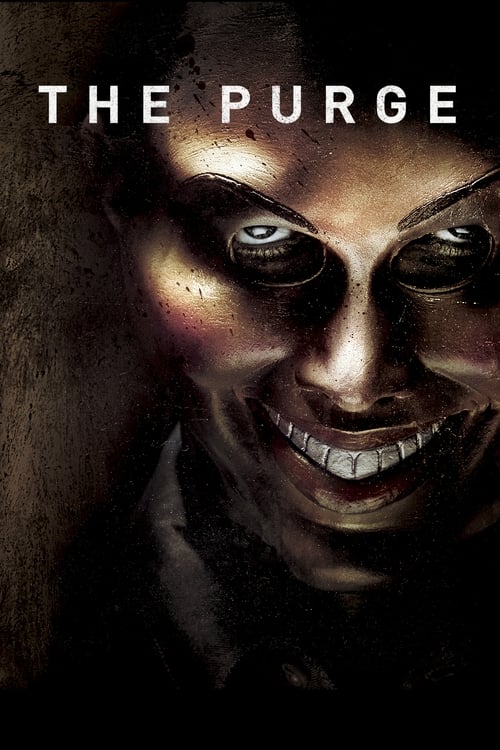
The Purge
2013 · Directed by James DeMonaco
Woke Score
CriticCritic Score
Audience
Woke-Adjacent
Critics rated this 1 points above its woke score. Among Woke-Adjacent films, this critic score ranks #146 of 151.
Representation Casting
Score: 25/100
The cast includes racial diversity among the antagonists, but the protagonists are white and wealthy, reflecting class consciousness more than progressive representation in casting.
LGBTQ+ Themes
Score: 0/100
No LGBTQ+ themes, characters, or content present in the narrative.
Feminist Agenda
Score: 15/100
The mother character is competent and protective, but feminist themes are not central to the film's concerns, and she functions within traditional family dynamics.
Racial Consciousness
Score: 20/100
The Purge's premise involves violence that disproportionately affects poor communities of color, but this remains backdrop rather than explicit thematic focus.
Climate Crusade
Score: 0/100
No environmental themes, climate references, or ecological consciousness present in the film.
Eat the Rich
Score: 65/100
The core premise explicitly critiques capitalist systems where wealth determines survival and the state uses violence to maintain class hierarchy. The Purge functions as a tool of class control and elimination.
Body Positivity
Score: 0/100
No body positivity themes or commentary present in this film.
Neurodivergence
Score: 0/100
No neurodivergent representation, characters, or thematic elements present.
Revisionist History
Score: 0/100
The film presents a fictional dystopian future rather than engaging in historical revisionism.
Lecture Energy
Score: 25/100
The film contains implicit social commentary about systemic inequality and class violence, but delivers it organically through narrative rather than explicit exposition or speeches.


Synopsis
Given the country's overcrowded prisons, the U.S. government begins to allow 12-hour periods of time in which all illegal activity is legal. During one of these free-for-alls, a family must protect themselves from a home invasion.
Consciousness Assessment
The Purge arrives as a home invasion thriller with considerable social architecture lurking beneath its genre mechanics. The premise itself contains anti-capitalist DNA: a near-future government that legalizes crime specifically to eliminate the poor and incarcerated, while the wealthy insulate themselves behind security systems and private militias. James DeMonaco constructs this scenario with the precision of a social theorist staging a thought experiment, yet the film remains fundamentally committed to genre thrills over ideological interrogation. The Hawke family's journey from complicit beneficiaries to reluctant moral actors provides the narrative engine, but the film stops short of genuine reckoning with the systems that enable their comfort.
What distinguishes The Purge from straightforward exploitation is its refusal to celebrate the violence or treat it as cathartic spectacle. The attackers are not dehumanized or rendered as mere threats. Instead, the film suggests that the Purge functions as a mechanism of class control, a valve through which the state permits the elimination of undesirable populations. This critique never becomes heavy-handed or preachy, which represents both the film's greatest strength and its fundamental limitation. We observe the machinery of inequality without being forced to confront our own complicity in it.
The film's cultural awareness remains implicit rather than explicit. It does not lecture, does not pause for speeches about systemic injustice, does not mobilize its violence as a sermon. Instead, it suggests that in a world where some people can afford to survive and others cannot, the difference is not moral virtue but economic circumstance. For a 2013 horror film operating within mainstream commercial constraints, this represents a notably sharp edge, even if the blade never cuts quite as deep as the premise demands.
Analysis generated by our Consciousness Algorithm
Critic Reviews
“The Purge manages to be smart, scary, and subversive.”
“There are flaws, but also some fun surprises. Much closer to Hitchcock than "Hostel," this is what can happen when a pile of trash falls into the hands of a talented and resourceful director (James DeMonaco).”
“As in so many Hollywood spectacles, the message and medium are at hopeless odds... Still, the set-up is arresting, the domestic scenes well observed and acted, and the payoffs involving that Roomba toy excellent. Also, a late-film twist isn't a surprise, exactly, but it is delicious.”
“The movie even makes night-vision-goggle scares more irksome, a rare feat. ”
Consciousness Markers
The cast includes racial diversity among the antagonists, but the protagonists are white and wealthy, reflecting class consciousness more than progressive representation in casting.
No LGBTQ+ themes, characters, or content present in the narrative.
The mother character is competent and protective, but feminist themes are not central to the film's concerns, and she functions within traditional family dynamics.
The Purge's premise involves violence that disproportionately affects poor communities of color, but this remains backdrop rather than explicit thematic focus.
No environmental themes, climate references, or ecological consciousness present in the film.
The core premise explicitly critiques capitalist systems where wealth determines survival and the state uses violence to maintain class hierarchy. The Purge functions as a tool of class control and elimination.
No body positivity themes or commentary present in this film.
No neurodivergent representation, characters, or thematic elements present.
The film presents a fictional dystopian future rather than engaging in historical revisionism.
The film contains implicit social commentary about systemic inequality and class violence, but delivers it organically through narrative rather than explicit exposition or speeches.