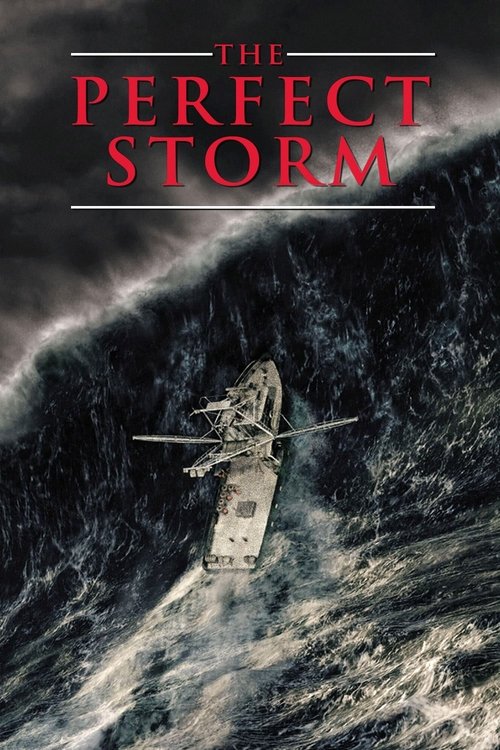
The Perfect Storm
2000 · Directed by Wolfgang Petersen
Woke Score
CriticCritic Score
Audience
Ultra Based
Critics rated this 51 points above its woke score. Among Ultra Based films, this critic score ranks #935 of 1469.
Representation Casting
Score: 25/100
The film includes women in supporting roles (Diane Lane, Mary Elizabeth Mastrantonio), but their characters exist primarily as emotional anchors for male protagonists rather than as fully realized perspectives.
LGBTQ+ Themes
Score: 0/100
No LGBTQ+ themes, characters, or representation are present in the film. Sexual orientation is not addressed.
Feminist Agenda
Score: 15/100
While female characters exist in the narrative, there is no examination of gender dynamics, power structures, or feminist themes. Women serve traditional supporting roles.
Racial Consciousness
Score: 5/100
The cast is predominantly white. There is no engagement with racial themes, racial justice, or meaningful representation of non-white perspectives in the narrative.
Climate Crusade
Score: 0/100
The film depicts a natural disaster but does not engage with climate change, environmental consciousness, or systemic environmental critique.
Eat the Rich
Score: 5/100
The film portrays working-class fishermen sympathetically, but this reflects humanist concern rather than anti-capitalist ideology or structural critique of economic systems.
Body Positivity
Score: 0/100
No body diversity, body positivity messaging, or commentary on physical appearance and acceptance is present in the film.
Neurodivergence
Score: 0/100
Neurodivergent characters or themes are not represented or addressed in the narrative.
Revisionist History
Score: 0/100
The film adapts a true story from 1991 but does not engage in revisionist historical narrative or recontextualization of historical events.
Lecture Energy
Score: 15/100
The film occasionally explains maritime and meteorological concepts to the audience, but this is exposition rather than ideological instruction or moral preaching.


Synopsis
In October 1991, a confluence of weather conditions combined to form a killer storm in the North Atlantic. Caught in the storm was the sword-fishing boat Andrea Gail.
Consciousness Assessment
The Perfect Storm arrives as a artifact of early 2000s blockbuster filmmaking, a moment when progressive sensibilities had not yet calcified into the distinct cultural markers we now recognize. Wolfgang Petersen's disaster film concerns itself primarily with the mechanics of maritime peril and masculine camaraderie, which is to say it concerns itself with very little beyond those matters. The cast includes Diane Lane and Mary Elizabeth Mastrantonio in supporting roles, though their presence registers as narrative obligation rather than any genuine engagement with female perspective or experience.
The film's treatment of working-class fishermen is sympathetic without being patronizing, and there exists a kind of humanist concern for the men facing the storm. However, this is simply good storytelling about people in crisis, not an expression of modern progressive cultural consciousness. The movie does not interrogate systems of power, does not center marginalized voices, and does not invite us to consider the social dimensions of its narrative. It is a film about weather and boats and death, executed with technical competence and emotional sincerity.
One must acknowledge that The Perfect Storm predates the cultural moment we are measuring. It was made in a time when the specific constellation of progressive sensibilities we now call "woke" simply did not exist as a coherent cultural force. Judging it by contemporary standards is somewhat unfair, though not unfair enough to prevent us from doing so anyway. The film remains, from the perspective of modern cultural consciousness, a straightforward action-drama with no particular investment in the social themes that would come to define the next two decades of American cinema.
Analysis generated by our Consciousness Algorithm
Critic Reviews
“This is one perfectly terrifying movie, an instant classic.”
“Nearly a perfect film, from its bold and epic man-vs.-nature conflict to the breathless scripting, editing, acting, and direction.”
“'Titanic'' was a case of a cheeseball story riding terrific effects. The Perfect Storm is in every important way deeper.”
“It's like a memorial service with killer special effects.”
Consciousness Markers
The film includes women in supporting roles (Diane Lane, Mary Elizabeth Mastrantonio), but their characters exist primarily as emotional anchors for male protagonists rather than as fully realized perspectives.
No LGBTQ+ themes, characters, or representation are present in the film. Sexual orientation is not addressed.
While female characters exist in the narrative, there is no examination of gender dynamics, power structures, or feminist themes. Women serve traditional supporting roles.
The cast is predominantly white. There is no engagement with racial themes, racial justice, or meaningful representation of non-white perspectives in the narrative.
The film depicts a natural disaster but does not engage with climate change, environmental consciousness, or systemic environmental critique.
The film portrays working-class fishermen sympathetically, but this reflects humanist concern rather than anti-capitalist ideology or structural critique of economic systems.
No body diversity, body positivity messaging, or commentary on physical appearance and acceptance is present in the film.
Neurodivergent characters or themes are not represented or addressed in the narrative.
The film adapts a true story from 1991 but does not engage in revisionist historical narrative or recontextualization of historical events.
The film occasionally explains maritime and meteorological concepts to the audience, but this is exposition rather than ideological instruction or moral preaching.