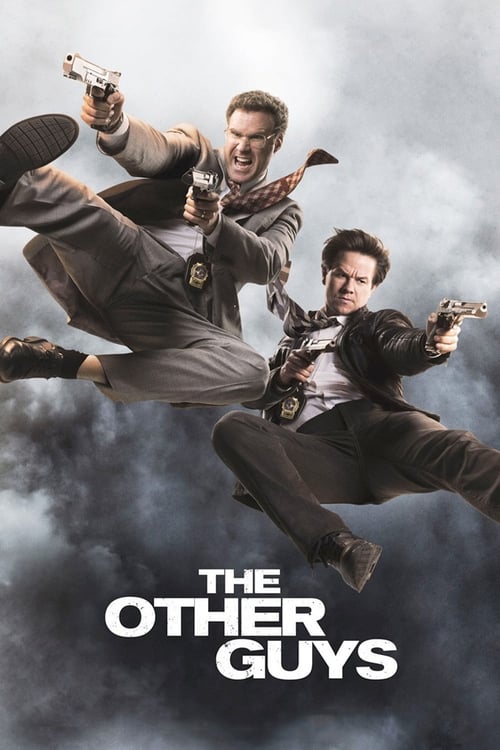
The Other Guys
2010 · Directed by Adam McKay
Woke Score
CriticCritic Score
Audience
Ultra Based
Critics rated this 60 points above its woke score. Among Ultra Based films, this critic score ranks #797 of 1469.
Representation Casting
Score: 15/100
The film features a diverse cast including Samuel L. Jackson and Dwayne Johnson in supporting roles, but this diversity appears incidental to the narrative rather than intentional representation work.
LGBTQ+ Themes
Score: 0/100
No LGBTQ+ themes, representation, or content of any kind appears in the film.
Feminist Agenda
Score: 0/100
Eva Mendes fills the traditional love interest role with minimal characterization, and no feminist themes or critique of gender dynamics are present.
Racial Consciousness
Score: 0/100
Despite the presence of Black actors, the film contains no examination of race, racial dynamics, or racial consciousness.
Climate Crusade
Score: 0/100
No climate-related themes or environmental consciousness appear anywhere in the film.
Eat the Rich
Score: 5/100
A financial crime subplot exists but serves purely as plot mechanism rather than any critique of capitalism or wealth accumulation.
Body Positivity
Score: 0/100
No body positivity themes or representation of diverse body types are evident in the film.
Neurodivergence
Score: 0/100
No neurodivergent characters or themes appear in the narrative.
Revisionist History
Score: 0/100
The film contains no historical narrative or revisionist historical claims.
Lecture Energy
Score: 0/100
The film makes no attempt to educate viewers about social issues or systemic inequality.


Synopsis
Unlike their heroic counterparts on the force, desk-bound NYPD detectives Gamble and Hoitz garner no headlines as they work day to day. When a seemingly minor case turns out to be a big deal, the two cops get the opportunity to finally prove to their comrades that they have the right stuff.
Consciousness Assessment
The Other Guys arrives as a pre-cultural-reckoning artifact, a straightforward buddy cop comedy content to entertain without interrogating the social hierarchies within which its humor operates. The film boasts a reasonably diverse cast, including Samuel L. Jackson, Dwayne Johnson, and Michael Keaton, but their presence functions as incidental casting rather than any conscious effort at representation. Eva Mendes occupies the traditional love interest slot with all the characterization that entails. The comedy derives entirely from mismatched personalities and action-sequence absurdities, never from any examination of the systems these characters inhabit or the power dynamics at play.
Director Adam McKay would later demonstrate a facility for embedding social critique within commercial entertainment, but The Other Guys shows him operating in pure entertainment mode. There is no lecture energy here, no attempt to educate viewers about systemic inequality, no thematic engagement with gender, sexuality, disability, or environmental concerns. The film is comfortable existing as a product designed to generate laughs and box office revenue, nothing more. This is not a moral failing of the work, merely a factual observation about where it stands relative to contemporary progressive sensibilities.
The fundamental absence of progressive cultural markers throughout the runtime is nearly complete. Even the financial crime subplot that briefly flickers into view serves only as plot mechanism rather than social commentary. We are left with a comedy that asks nothing of its audience except to enjoy competent performers executing well-worn buddy cop routines, a transaction completed successfully and without pretension.
Analysis generated by our Consciousness Algorithm
Critic Reviews
“It's a comedy of manhood for the age of emasculation.”
“Starts out as a hilarious take on cop-movie cliches, then turns into Will Ferrell's own "Capitalism: A Love Story." ”
Consciousness Markers
The film features a diverse cast including Samuel L. Jackson and Dwayne Johnson in supporting roles, but this diversity appears incidental to the narrative rather than intentional representation work.
No LGBTQ+ themes, representation, or content of any kind appears in the film.
Eva Mendes fills the traditional love interest role with minimal characterization, and no feminist themes or critique of gender dynamics are present.
Despite the presence of Black actors, the film contains no examination of race, racial dynamics, or racial consciousness.
No climate-related themes or environmental consciousness appear anywhere in the film.
A financial crime subplot exists but serves purely as plot mechanism rather than any critique of capitalism or wealth accumulation.
No body positivity themes or representation of diverse body types are evident in the film.
No neurodivergent characters or themes appear in the narrative.
The film contains no historical narrative or revisionist historical claims.
The film makes no attempt to educate viewers about social issues or systemic inequality.