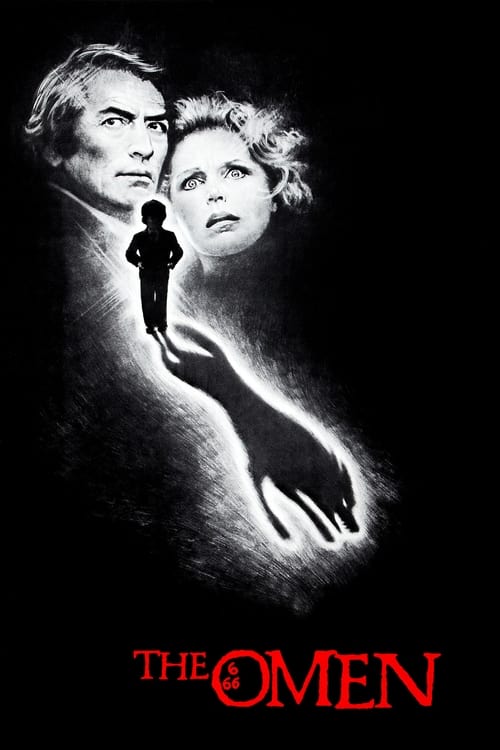
The Omen
1976 · Directed by Richard Donner
Woke Score
CriticCritic Score
Audience
Ultra Based
Critics rated this 39 points above its woke score. Among Ultra Based films, this critic score ranks #1304 of 1469.
Representation Casting
Score: 10/100
The cast is predominantly white and reflects the 1970s Hollywood norms. No particular effort toward diverse representation, which is typical for the era.
LGBTQ+ Themes
Score: 0/100
No LGBTQ+ themes, representation, or subtext present. The film concerns itself entirely with supernatural horror and family dynamics.
Feminist Agenda
Score: 15/100
The mother character (Lee Remick) is present but largely passive, kept in the dark about her son's true nature. She exists primarily as a plot device rather than an active agent.
Racial Consciousness
Score: 0/100
No engagement with racial themes or consciousness. The film is set in international diplomatic circles but treats race as irrelevant to the narrative.
Climate Crusade
Score: 0/100
Climate crusade is entirely absent from a film preoccupied with demonic possession and religious apocalypse.
Eat the Rich
Score: 0/100
No critique of capitalism or wealth. The protagonist is a wealthy diplomat, but his economic status is merely background to the horror plot.
Body Positivity
Score: 0/100
Body positivity is not a consideration in a supernatural horror film focused on terror and grotesque imagery.
Neurodivergence
Score: 0/100
No representation or engagement with neurodivergence. Damien's evil nature is supernatural rather than psychological or neurological.
Revisionist History
Score: 0/100
The film engages with religious mythology and apocalyptic theology but makes no attempt to revise historical narratives.
Lecture Energy
Score: 5/100
The film contains some expository dialogue explaining the Antichrist mythology, but this serves the plot rather than lecturing the audience on social values.


Synopsis
Immediately after their miscarriage, the US diplomat Robert Thorn adopts the newborn Damien without the knowledge of his wife. Yet what he doesn't know is that their new son is the son of the devil.
Consciousness Assessment
The Omen is a 1976 horror film of almost admirable singularity of purpose: it exists to frighten audiences through the mechanics of demonic possession and religious dread, not to educate them on matters of contemporary social consciousness. Richard Donner's direction is efficient and professional, the cinematography appropriately ominous, and Gregory Peck's casting lends a veneer of respectability to what is fundamentally a B-movie premise dressed in A-movie clothing. The film concerns itself with the eternal conflict between good and evil as understood through Christian theology, which is to say it concerns itself with nothing that modern progressive sensibilities would recognize as requiring correction or reframing.
The casting of Lee Remick as the diplomat's wife Katherine represents the standard 1970s approach to female characters: she is present, reasonably competent in scenes, yet systematically kept ignorant of the central plot. Her lack of agency is not presented as a cultural problem to be examined but simply as a narrative convenience. The supporting cast includes several notable British character actors who lend professional gravitas to scenes of supernatural mayhem. There is no diversity initiative at work here, no intentional recasting of traditional power structures, no conscious effort to represent marginalized communities. The film is simply made by and for audiences of its time, asking nothing more than that we accept the premise of a satanic infant and enjoy the carnage that follows.
The absence of contemporary progressive themes is so complete as to be almost refreshing, albeit in a manner that would horrify the sort of critic tasked with measuring such things. There is no lecture energy, no revisionist history, no body positivity, no climate consciousness. Even the film's engagement with religion is purely mythological rather than political. The film is so thoroughly unconcerned with the sensibilities that would emerge in subsequent decades that it functions as a kind of historical artifact of pre-conscious cinema. By every measure of modern social awareness, it barely registers. This is not a criticism of the film as filmmaking, merely as a cultural document.
Analysis generated by our Consciousness Algorithm
Critic Reviews
“A faithful remake of the 1976 film, and that's a relief; it depends on characters and situations and doesn't go berserk with visuals.”
“Director John Moore has added some creepy visuals and assembled an unusually strong cast for a horror flick.”
“The remake is directed by another slickster, the Irishman John Moore, who is no deep thinker (as his "Behind Enemy Lines" confirmed) but, like Donner, he's an able hack -- smooth, stylish, clever, soulless and a hoot. And so's his damned movie. And it is damned.”
“Not since Gus Van Sant inexplicably directed a shot-by-shot remake of Hitchcock's "Psycho" has a thriller been copied with so little point or impact.”
Consciousness Markers
The cast is predominantly white and reflects the 1970s Hollywood norms. No particular effort toward diverse representation, which is typical for the era.
No LGBTQ+ themes, representation, or subtext present. The film concerns itself entirely with supernatural horror and family dynamics.
The mother character (Lee Remick) is present but largely passive, kept in the dark about her son's true nature. She exists primarily as a plot device rather than an active agent.
No engagement with racial themes or consciousness. The film is set in international diplomatic circles but treats race as irrelevant to the narrative.
Climate crusade is entirely absent from a film preoccupied with demonic possession and religious apocalypse.
No critique of capitalism or wealth. The protagonist is a wealthy diplomat, but his economic status is merely background to the horror plot.
Body positivity is not a consideration in a supernatural horror film focused on terror and grotesque imagery.
No representation or engagement with neurodivergence. Damien's evil nature is supernatural rather than psychological or neurological.
The film engages with religious mythology and apocalyptic theology but makes no attempt to revise historical narratives.
The film contains some expository dialogue explaining the Antichrist mythology, but this serves the plot rather than lecturing the audience on social values.