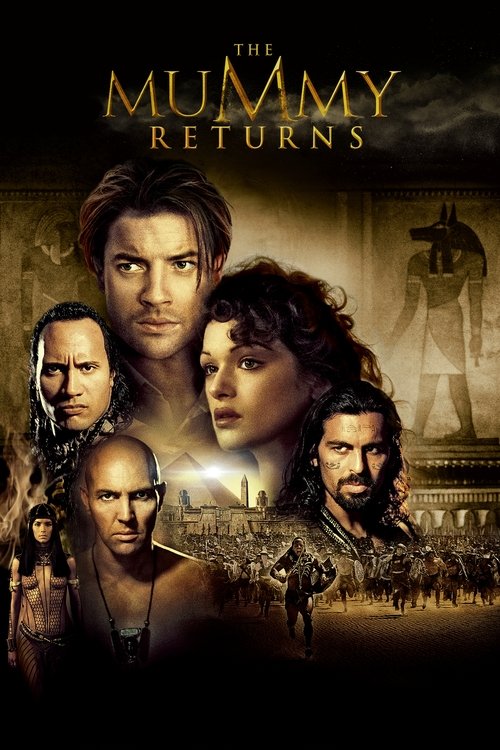
The Mummy Returns
2001 · Directed by Stephen Sommers
Woke Score
CriticCritic Score
Audience
Based
Critics rated this 26 points above its woke score. Among Based films, this critic score ranks #317 of 345.
Representation Casting
Score: 35/100
The film features some diversity in its supporting cast, including Adewale Akinnuoye-Agbaje and Arnold Vosloo, though these roles are largely ancillary to the main narrative. The casting reflects early 2000s Hollywood norms rather than intentional progressive representation.
LGBTQ+ Themes
Score: 0/100
There are no LGBTQ+ characters, themes, or subtext in this film. It is a straightforward heterosexual adventure narrative with no exploration of queer identity.
Feminist Agenda
Score: 42/100
Evelyn O'Connell is a capable action heroine who participates in combat and decision-making, though she remains secondary to Rick's leadership. The film presents female agency but does not actively interrogate gender dynamics or advance feminist consciousness.
Racial Consciousness
Score: 15/100
The film engages with Egyptian mythology and settings but treats them primarily as exotic adventure backdrop. There is no meaningful exploration of colonialism, cultural appropriation, or the racial implications of Western characters plundering Egyptian artifacts.
Climate Crusade
Score: 0/100
Climate change and environmental concerns are entirely absent from this adventure film. The narrative shows no awareness of ecological impact or sustainability.
Eat the Rich
Score: 5/100
The film contains no critique of capitalism or wealth systems. The protagonists are motivated by adventure and personal stakes rather than any ideological opposition to economic structures.
Body Positivity
Score: 10/100
The film features conventionally attractive cast members in traditional action hero roles. There is no meaningful representation of diverse body types or conscious effort toward body inclusivity in casting.
Neurodivergence
Score: 0/100
No characters are portrayed as neurodivergent, and the film makes no attempt to explore neurodiversity. This is standard for early 2000s action cinema.
Revisionist History
Score: 25/100
While the film invents fantastical elements around Egyptian history and mythology, it does not explicitly rewrite historical narratives to advance progressive causes. The historical revisionism is purely for adventure entertainment purposes.
Lecture Energy
Score: 15/100
The film avoids heavy-handed moralizing or preachy messaging. Its adventure-first approach means it does not pause to lecture audiences about social issues, though this also means it lacks any progressive consciousness.


Synopsis
Rick and Evelyn O'Connell, along with their 8-year-old son Alex, discover the key to the legendary Scorpion King's might: the fabled Bracelet of Anubis. Unfortunately, a newly resurrected Imhotep has designs on the bracelet as well, and isn't above kidnapping its new bearer, Alex, to gain control of Anubis's otherworldly army.
Consciousness Assessment
The Mummy Returns exists in that comfortable space occupied by early 2000s blockbuster cinema, where entertainment and spectacle take precedence over social commentary of any kind. Stephen Sommers has crafted a film concerned primarily with action sequences, family dynamics, and supernatural threats, leaving little room for the kind of cultural interrogation that might elevate its progressive sensibilities beyond the mundane. Evelyn O'Connell functions as something approximating a female action hero, though her agency remains subordinate to Rick's narrative authority, and the film does not seem particularly invested in examining the gender dynamics at play.
The most glaring absence is any meaningful reckoning with the film's relationship to colonialism and cultural appropriation. Here we have Western protagonists acquiring and weaponizing ancient Egyptian artifacts in pursuit of personal adventure, yet the film treats this plundering as morally neutral, even heroic. The inclusion of some actors of color in supporting roles registers as demographic reality rather than intentional progressive casting. There is no environmental consciousness, no queer representation, no neurodivergent characters, and certainly no systemic critique of wealth and power. The film simply does not concern itself with these matters.
This is not a condemnation. The Mummy Returns is competently made adventure entertainment that knows exactly what it is. It operates in a register where social consciousness was not yet expected to intrude upon summer blockbuster enjoyment. The film's modest score reflects not failure but rather historical positioning: a product of its era, before the cultural expectations that now define contemporary cinema took hold.
Analysis generated by our Consciousness Algorithm
Critic Reviews
“What matters is that the movie's a blast, right up until its protracted climax.”
“There's much mumbo-jumbo about past lives and symbolic tattoos, but who cares when you can gaze at a sight as lovely as a dirigible floating in the night sky?”
“Both pleasantly old-fashioned and packed with up-to-date computer-generated special effects, the film's constant plot turns, cheeky sensibility and omnipresent action sequences have no trouble attracting our attention and holding on.”
“It punishes rather than entertains; it condescends, it offends, it loathes its audience.”
Consciousness Markers
The film features some diversity in its supporting cast, including Adewale Akinnuoye-Agbaje and Arnold Vosloo, though these roles are largely ancillary to the main narrative. The casting reflects early 2000s Hollywood norms rather than intentional progressive representation.
There are no LGBTQ+ characters, themes, or subtext in this film. It is a straightforward heterosexual adventure narrative with no exploration of queer identity.
Evelyn O'Connell is a capable action heroine who participates in combat and decision-making, though she remains secondary to Rick's leadership. The film presents female agency but does not actively interrogate gender dynamics or advance feminist consciousness.
The film engages with Egyptian mythology and settings but treats them primarily as exotic adventure backdrop. There is no meaningful exploration of colonialism, cultural appropriation, or the racial implications of Western characters plundering Egyptian artifacts.
Climate change and environmental concerns are entirely absent from this adventure film. The narrative shows no awareness of ecological impact or sustainability.
The film contains no critique of capitalism or wealth systems. The protagonists are motivated by adventure and personal stakes rather than any ideological opposition to economic structures.
The film features conventionally attractive cast members in traditional action hero roles. There is no meaningful representation of diverse body types or conscious effort toward body inclusivity in casting.
No characters are portrayed as neurodivergent, and the film makes no attempt to explore neurodiversity. This is standard for early 2000s action cinema.
While the film invents fantastical elements around Egyptian history and mythology, it does not explicitly rewrite historical narratives to advance progressive causes. The historical revisionism is purely for adventure entertainment purposes.
The film avoids heavy-handed moralizing or preachy messaging. Its adventure-first approach means it does not pause to lecture audiences about social issues, though this also means it lacks any progressive consciousness.