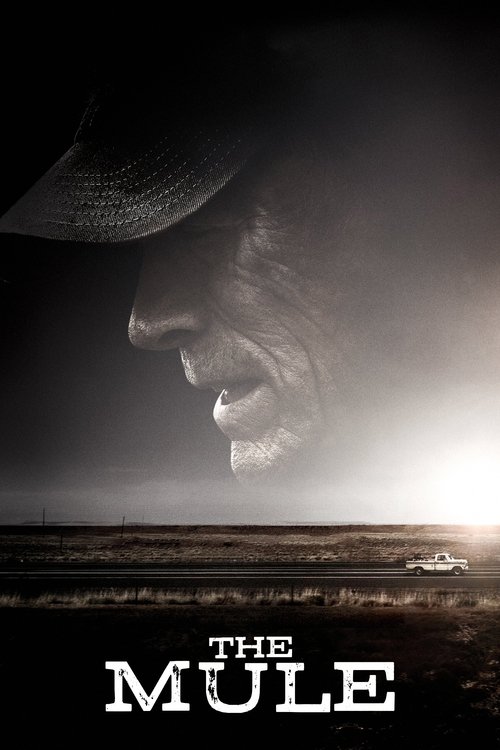
The Mule
2018 · Directed by Clint Eastwood
Woke Score
CriticCritic Score
Audience
Ultra Based
Critics rated this 49 points above its woke score. Among Ultra Based films, this critic score ranks #980 of 1469.
Representation Casting
Score: 15/100
The cast includes actors of color in supporting roles (Fishburne, Peña), but they are secondary to the white male protagonist and their characterization does not challenge the film's racial perspective.
LGBTQ+ Themes
Score: 0/100
No LGBTQ+ representation or thematic content is evident in the film.
Feminist Agenda
Score: 10/100
Female characters (Farmiga, Wiest) appear in the cast, but the narrative centers on a male protagonist with limited female agency or perspective.
Racial Consciousness
Score: 20/100
The protagonist is explicitly racist, but the film does not use this as an opportunity for racial consciousness or critique. Critics flagged the film's racial problems, suggesting it treats racism as a character quirk rather than examining systemic issues.
Climate Crusade
Score: 0/100
No climate-related themes or environmental consciousness present in this crime drama.
Eat the Rich
Score: 5/100
The film involves criminal enterprise and cartel activity, but shows no clear anti-capitalist messaging or critique of wealth inequality.
Body Positivity
Score: 0/100
No body positivity messaging or themes present in the narrative.
Neurodivergence
Score: 0/100
No representation of or engagement with neurodivergence in the film.
Revisionist History
Score: 0/100
While based on a true story, the film does not engage in historical revisionism or reframing of events.
Lecture Energy
Score: 15/100
Eastwood presents philosophical musings about aging, morality, and personal redemption, but the film is not preachy in a progressive sense and instead reflects a conservative worldview.


Synopsis
Earl Stone, a man in his eighties, is broke, alone, and facing foreclosure of his business when he is offered a job that simply requires him to drive. Easy enough, but, unbeknownst to Earl, he's just signed on as a drug courier for a Mexican cartel. He does so well that his cargo increases exponentially, and Earl hit the radar of hard-charging DEA agent Colin Bates.
Consciousness Assessment
Clint Eastwood's "The Mule" presents itself as a meditative character study of an aging drug courier, but what emerges instead is a film that critics have rightly identified as bearing significant cultural blind spots. The protagonist is explicitly framed as a racist, yet the film does not appear to use this characterization as a vehicle for examining systemic racism or promoting racial consciousness. Rather, it treats his bigotry as merely one eccentric trait among many in what Eastwood seems to view as a sympathetic portrait of American resilience and resourcefulness. The inclusion of Laurence Fishburne and Michael Peña in supporting roles does little to complicate this dynamic, as they exist largely in service to the white male protagonist's redemptive arc.
The film's approach to morality is equally unconflicted. That the protagonist uses drug money for good deeds (helping family, assisting others) is presented as philosophically interesting rather than as a fundamental moral compromise that might warrant serious interrogation. This is the work of a director confident enough in his worldview to assume audiences will accept that a man's personal kindnesses can offset his participation in the destruction wrought by cartel violence. The film does not grapple with the human cost of the trade in which its hero has become complicit.
What "The Mule" reveals is a filmmaker working at the margins of contemporary cultural consciousness, producing a work that feels deliberately unconcerned with examining the racial and systemic dimensions of its own narrative. It is a personal film, yes, but one whose perspective remains fundamentally parochial.
Analysis generated by our Consciousness Algorithm
Critic Reviews
“In the end, The Mule is essentially a straightforward, somewhat overextended crime story enlivened by its uniquely grotesque circumstances (based on a true story, as noted at the beginning), and directed by Mahony in a lean, no-frills style that’s entirely convincing where it counts.”
“A bloody, violent and yet grimly comic tale.”
“The Mule proves a tough sit, but by the end you might be satisfied you gritted through it. ”
“Mahony and Sampson certainly know how to lay out a crime/thriller/comedy structurally, but unfortunately, they mishandle the tone and momentum this sort of movie needs to work.”
Consciousness Markers
The cast includes actors of color in supporting roles (Fishburne, Peña), but they are secondary to the white male protagonist and their characterization does not challenge the film's racial perspective.
No LGBTQ+ representation or thematic content is evident in the film.
Female characters (Farmiga, Wiest) appear in the cast, but the narrative centers on a male protagonist with limited female agency or perspective.
The protagonist is explicitly racist, but the film does not use this as an opportunity for racial consciousness or critique. Critics flagged the film's racial problems, suggesting it treats racism as a character quirk rather than examining systemic issues.
No climate-related themes or environmental consciousness present in this crime drama.
The film involves criminal enterprise and cartel activity, but shows no clear anti-capitalist messaging or critique of wealth inequality.
No body positivity messaging or themes present in the narrative.
No representation of or engagement with neurodivergence in the film.
While based on a true story, the film does not engage in historical revisionism or reframing of events.
Eastwood presents philosophical musings about aging, morality, and personal redemption, but the film is not preachy in a progressive sense and instead reflects a conservative worldview.