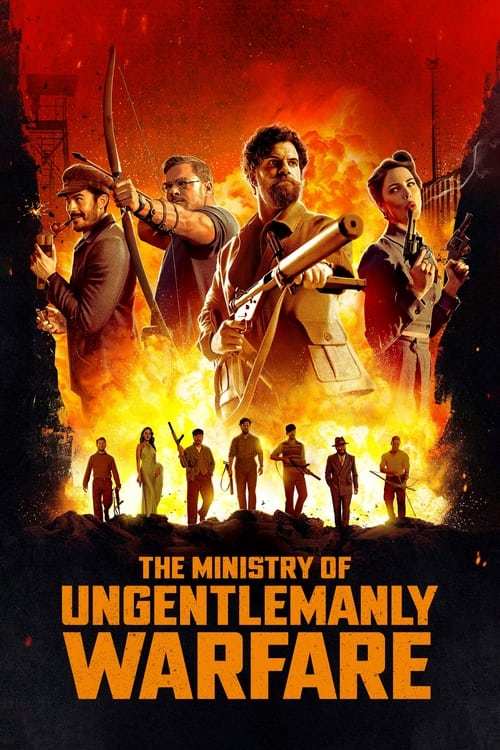
The Ministry of Ungentlemanly Warfare
2024 · Directed by Guy Ritchie
Woke Score
Critic Score
Audience
Ultra Based
Critics rated this 65 points above its woke score. Among Ultra Based films, this critic score ranks #598 of 833.
Representation Casting
Score: 20/100
Diverse ensemble cast including Eiza González and Henry Golding, but diversity appears incidental to narrative rather than thematically explored. Characters are integrated naturally without commentary on representation.
LGBTQ+ Themes
Score: 0/100
No LGBTQ+ representation, themes, or character development evident in the film.
Feminist Agenda
Score: 15/100
One female character participates in combat operations, but the film offers no feminist messaging or thematic exploration of gender dynamics in military contexts.
Racial Consciousness
Score: 10/100
Diverse casting present but no thematic engagement with race, racial identity, or racial dynamics within the narrative.
Climate Crusade
Score: 0/100
WWII action film with no environmental themes, climate messaging, or ecological consciousness.
Eat the Rich
Score: 0/100
Traditional military action narrative with no critique of capitalism, economic systems, or class structures.
Body Positivity
Score: 0/100
Standard action film casting with conventional physiques. No body diversity representation or messaging present.
Neurodivergence
Score: 0/100
No representation of neurodivergent characters or thematic exploration of neurodiversity.
Revisionist History
Score: 5/100
Based on true events with creative dramatization typical of war films, but no apparent ideological revisionism or reframing of historical narratives.
Lecture Energy
Score: 5/100
Ritchie's kinetic style prioritizes action and humor over didactic messaging. Minimal expository dialogue about social or political themes.


Synopsis
During World War II, the British Army assigns a group of competent soldiers to carry out a mission against the Nazi forces behind enemy lines... A true story about a secret British WWII organization, the Special Operations Executive. Founded by Winston Churchill, their irregular warfare against the Germans helped to change the course of the war, and gave birth to modern black operations.
Consciousness Assessment
Guy Ritchie's "The Ministry of Ungentlemanly Warfare" represents a curious artifact of contemporary filmmaking, a WWII action spectacle almost entirely untouched by modern progressive sensibilities. The film assembles a diverse cast and includes one female combatant in its unit of irregular soldiers, yet these choices feel incidental rather than intentional. Eiza González appears as a capable operative, but the narrative extends her no particular thematic weight or commentary on her presence in a male-dominated military operation. She is simply there, doing her job, which is to say the film treats her with the casualness of historical inclusivity rather than contemporary didacticism.
The movie's orientation remains resolutely apolitical in the modern sense. Ritchie's signature kinetic style, all rapid cuts and sardonic humor, prioritizes spectacle and entertainment over any sustained examination of systemic power structures, identity, or social consciousness. The Special Operations Executive operates as presented in the film, a collection of competent individuals executing military objectives, with no interrogation of colonialism, gender dynamics, economic systems, or any other framework through which contemporary progressive cinema might examine historical institutions.
What results is a straightforward action entertainment that treats its diverse casting as simple fact rather than statement. The result is a movie that scores remarkably low on markers of cultural awareness precisely because it refuses to make cultural arguments at all. This may be its greatest virtue or its most glaring oversight, depending on one's perspective, but the critical fact remains: Ritchie has made a war film in 2024 that operates as if contemporary sensibilities do not exist.
Analysis generated by our Consciousness Algorithm
Critic Reviews
“The Ministry of Ungentlemanly Warfare is everything you want in a movie: the fight scenes are bloody and exciting, the dialogue is tongue-in-cheek, every joke landed, and not one actor felt out of place.”
“It's a larger than life World War II thriller in the Guy Ritchie house style, and he strikes a fine, fun balance between the threat that the Nazis posed and the thrill of watching hunky heroes slaughter them at great length, then chuckle and smoke cigarettes and call each other 'old boy' about 50 million times.”
“Adapted from Damien Lewis' book "Churchill's Secret Warriors: The Explosive True Story of the Special Forces Desperadoes of World War II" and featuring stunning visuals from the location shooting in the beautiful city of Antalya, Turkey, "The Ministry of Ungentlemanly Warfare" is a fantastic blending of some basic facts and a whole lot of fictionalization, including shuffling of the timeline.”
“It's compelling to see [Ritchie's] take on a World War II movie, despite a few narrative holes, and it's a good reminder that not all war stories have to be so serious.”
“Ritchie is tops when it comes to getting a group of guys (and, occasionally, gal) together to complete a bloody, belligerent task. And this is as taut an ensemble of his as ever.”
“It's all about the action. The Ministry of Ungentlemanly Warfare may be forgettable in the long run of Guy Ritchie movies, but it's fun.”
Consciousness Markers
Diverse ensemble cast including Eiza González and Henry Golding, but diversity appears incidental to narrative rather than thematically explored. Characters are integrated naturally without commentary on representation.
No LGBTQ+ representation, themes, or character development evident in the film.
One female character participates in combat operations, but the film offers no feminist messaging or thematic exploration of gender dynamics in military contexts.
Diverse casting present but no thematic engagement with race, racial identity, or racial dynamics within the narrative.
WWII action film with no environmental themes, climate messaging, or ecological consciousness.
Traditional military action narrative with no critique of capitalism, economic systems, or class structures.
Standard action film casting with conventional physiques. No body diversity representation or messaging present.
No representation of neurodivergent characters or thematic exploration of neurodiversity.
Based on true events with creative dramatization typical of war films, but no apparent ideological revisionism or reframing of historical narratives.
Ritchie's kinetic style prioritizes action and humor over didactic messaging. Minimal expository dialogue about social or political themes.