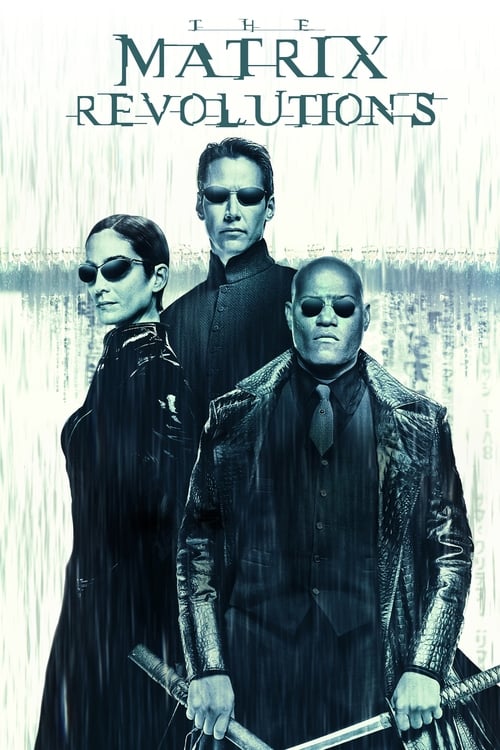
The Matrix Revolutions
2003 · Directed by Lana Wachowski
Woke Score
CriticCritic Score
Audience
Ultra Based
Critics rated this 39 points above its woke score. Among Ultra Based films, this critic score ranks #1228 of 1469.
Representation Casting
Score: 25/100
The cast includes Laurence Fishburne, Jada Pinkett Smith, and Harold Perrineau in significant roles, reflecting genuine diversity. However, this is incidental to the narrative rather than thematic.
LGBTQ+ Themes
Score: 0/100
No LGBTQ+ themes, characters, or narratives are present. The film is purely concerned with human-machine conflict.
Feminist Agenda
Score: 10/100
Carrie-Anne Moss appears as Trinity, a capable female character, but she is neither foregrounded nor subject to any feminist analysis by the film.
Racial Consciousness
Score: 5/100
While the cast is racially diverse, the film contains no explicit engagement with race, racism, or racial identity as thematic concerns.
Climate Crusade
Score: 0/100
Climate change and environmental concerns are entirely absent from the narrative.
Eat the Rich
Score: 0/100
The film contains no critique of capitalism or systemic economic inequality beyond the metaphorical human-machine struggle.
Body Positivity
Score: 0/100
Body positivity messaging is absent. The film focuses on action and spectacle without comment on body image or acceptance.
Neurodivergence
Score: 0/100
No neurodivergent characters or representation is present in the narrative.
Revisionist History
Score: 0/100
The film presents a fictional future scenario rather than engaging with or reinterpreting historical events.
Lecture Energy
Score: 5/100
While the film contains some philosophical dialogue about consciousness and reality, it does not lecture the audience about social issues or progressive politics.


Synopsis
The human city of Zion defends itself against the massive invasion of the machines as Neo fights to end the war at another front while also opposing the rogue Agent Smith.
Consciousness Assessment
The Matrix Revolutions arrives as a late-period blockbuster sequel concerned primarily with machine warfare and philosophical abstraction rather than social commentary. The cast is genuinely diverse, a fact that deserves acknowledgment, yet this diversity emerges from the original trilogy's DNA rather than any deliberate modern sensibility. The film traffics in metaphysical speculation and action spectacle, not in the contemporary markers of progressive cultural awareness.
To evaluate this film through the lens of 2020s social consciousness is to ask it questions it was never constructed to answer. It contains no messaging about systemic inequality, no interrogation of identity politics, no climate urgency, no critique of power structures that extends beyond the abstract human-versus-machine conflict. The Wachowskis' later work would embrace these concerns more directly, but Revolutions remains locked in the early 2000s, when such considerations barely registered on the blockbuster radar.
The modest score reflects not the film's quality as entertainment or its technical accomplishment, but simply the absence of the particular cultural markers we're measuring. This is a film that predates the cultural moment we're analyzing. It occupies the gap between the earnest sci-fi philosophy of the first film and whatever comes next.
Analysis generated by our Consciousness Algorithm
Critic Reviews
“No, it doesn't exactly re-create the magic that made the original such an instant classic, but it's faster and more involving than "Reloaded" and it rounds off the premise and themes of the trilogy in a surprisingly satisfying way. ”
“The trilogy ascends and soars with the two combatants and ends not with a whimper but with a blast of light. Thus the fabulous original film has found an honorable way to sign off. For those who didn't bother to join the early crowds, The Matrix Revolutions is a definite might see.”
“To the degree that I was able to put aside my questions, forget logic, disregard continuity problems and immerse myself in the moment, The Matrix Revolutions is a terrific action achievement. Andy and Larry Wachowski have concluded their trilogy with all barrels blazing.”
“Smith is only a rogue computer program, but this morbidly dispiriting movie makes him sound like a prophet. ”
Consciousness Markers
The cast includes Laurence Fishburne, Jada Pinkett Smith, and Harold Perrineau in significant roles, reflecting genuine diversity. However, this is incidental to the narrative rather than thematic.
No LGBTQ+ themes, characters, or narratives are present. The film is purely concerned with human-machine conflict.
Carrie-Anne Moss appears as Trinity, a capable female character, but she is neither foregrounded nor subject to any feminist analysis by the film.
While the cast is racially diverse, the film contains no explicit engagement with race, racism, or racial identity as thematic concerns.
Climate change and environmental concerns are entirely absent from the narrative.
The film contains no critique of capitalism or systemic economic inequality beyond the metaphorical human-machine struggle.
Body positivity messaging is absent. The film focuses on action and spectacle without comment on body image or acceptance.
No neurodivergent characters or representation is present in the narrative.
The film presents a fictional future scenario rather than engaging with or reinterpreting historical events.
While the film contains some philosophical dialogue about consciousness and reality, it does not lecture the audience about social issues or progressive politics.