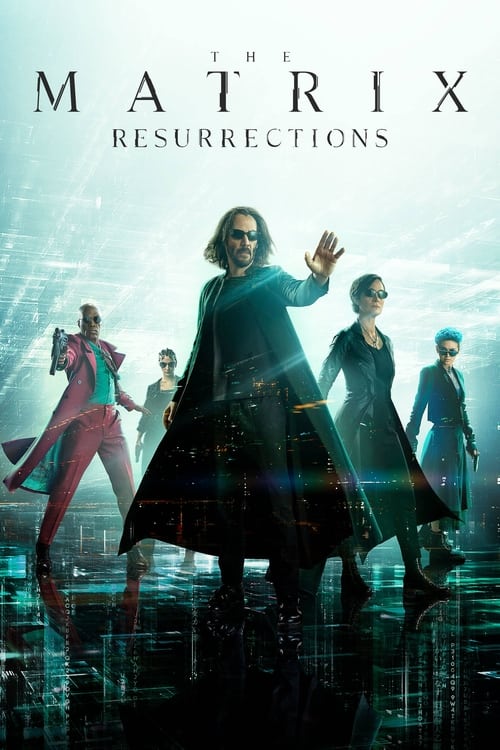
The Matrix Resurrections
2021 · Directed by Lana Wachowski
Woke Score
CriticCritic Score
Audience
Woke
Critics rated this 5 points below its woke score. Among Woke films, this critic score ranks #73 of 88.
Representation Casting
Score: 75/100
Notable diverse cast featuring Yahya Abdul-Mateen II, Jessica Henwick (queer actress), Jonathan Groff, and Priyanka Chopra Jonas in significant roles. Diversity is deliberate and prominent throughout the ensemble.
LGBTQ+ Themes
Score: 80/100
Directed by Lana Wachowski, a transgender filmmaker. Jonathan Groff plays a major character. The film explicitly reclaims and recontextualizes the red pill/blue pill metaphor as a trans awakening narrative, directly addressing LGBTQ+ identity as central to the film's thematic concerns.
Feminist Agenda
Score: 65/100
Trinity's role is significantly expanded with greater agency and autonomy. The narrative emphasizes choice, self-determination, and rejection of external control. Feminist themes are woven into plot rather than delivered heavy-handedly.
Racial Consciousness
Score: 45/100
The diverse casting demonstrates racial consciousness in the ensemble, but the film does not explicitly foreground racial themes or social commentary. Racial diversity exists as casting choice rather than narrative focus.
Climate Crusade
Score: 0/100
No evidence of climate-related themes, environmental messaging, or climate activism in the film's plot or narrative.
Eat the Rich
Score: 35/100
The Matrix franchise contains inherent anti-corporate themes through its premise, and these elements persist in the narrative. However, the film's own status as a $190 million corporate product creates irony that undermines the anti-capitalist message.
Body Positivity
Score: 0/100
No evidence of body positivity messaging, body diversity celebration, or explicit engagement with body-related social consciousness in the film.
Neurodivergence
Score: 0/100
No evidence of neurodivergence representation, neurodivergent characters, or thematic engagement with neurodiversity in the film.
Revisionist History
Score: 40/100
The film revisits and recontextualizes the original Matrix narrative and reclaims the red pill metaphor from right-wing appropriation. This represents narrative reclamation rather than historical revisionism of actual events.
Lecture Energy
Score: 55/100
The film employs self-referential, meta-textual elements discussing its own themes and the franchise's cultural legacy. Philosophical discussions are woven into narrative, though some scenes approach preachiness through direct commentary on the film's themes.


Synopsis
Plagued by strange memories, Neo's life takes an unexpected turn when he finds himself back inside the Matrix.
Consciousness Assessment
Lana Wachowski's return to the franchise she created presents a curious artifact of contemporary progressive filmmaking, one that seems to be having a debate with itself about its own cultural legacy. The film functions simultaneously as a love letter to queer subtext and a middle finger to those who have appropriated the red pill metaphor for reactionary purposes. A diverse cast led by returning stars Keanu Reeves and Carrie-Anne Moss, supplemented by Yahya Abdul-Mateen II, Jonathan Groff, and Jessica Henwick, grounds the narrative in bodies that signal contemporary casting sensibilities. Yet the film's progressive credentials are complicated by its corporate scaffolding: it is, after all, a $190 million Warner Bros. product designed to resurrect franchise value, which creates a certain tension between its anti-systemic themes and its status as a monument to Hollywood commerce.
The film's engagement with identity and autonomy, particularly around choice and self-determination, provides thematic substance that extends beyond mere representation. Wachowski's directorial presence infuses the narrative with queer sensibility, not through ham-fisted exposition but through the film's fundamental preoccupation with reality, authenticity, and the rejection of imposed constraints. Trinity's expanded role and agency within the narrative reflects a feminist consciousness that operates at the level of plot rather than sermon. The meta-textual elements, where the film discusses its own existence and cultural appropriation, demonstrate an awareness of the discourse surrounding the franchise, though this self-awareness sometimes threatens to collapse into mere cleverness.
What prevents this film from achieving a higher progressive score is the absence of engagement with several markers that have become standard in contemporary socially conscious cinema. Climate themes are entirely absent. Neurodivergence receives no thematic attention. Body positivity is not part of the conversation. The anti-capitalist posture, while present in the film's DNA as a franchise, sits uncomfortably with the film's own massive budget and corporate parentage, creating an irony that the film acknowledges but does not resolve. The result is a film that scores moderately on progressive cultural markers because it commits meaningfully to some while ignoring others entirely, suggesting that even Wachowski's return to this franchise cannot fully escape the gravitational pull of conventional blockbuster filmmaking.
Analysis generated by our Consciousness Algorithm
Critic Reviews
“Wachowski has taken the familiar and modified it in such a way to make it seem new. It’s a brilliant act of transformation.”
“Reeves and Moss are magnificent at resurrecting Neo and Trinity, and they blend exquisitely into Lana Wachowski’s matured style of filmmaking.”
“Wachowski’s gamble is that viewers will enjoy a film that’s heavy on philosophizing and introspection as long as it retains the emotional, romantic hook that powered the first movie. Reeves and Moss sell their reunion as Neo and Trinity persuasively, glowing with the overwhelming chemistry and affection that Wachowski needed to push the film beyond cynicism.”
“After two lousy sequels, here’s a pitch for Warner Bros.: “The Matrix Retirement.” ”
Consciousness Markers
Notable diverse cast featuring Yahya Abdul-Mateen II, Jessica Henwick (queer actress), Jonathan Groff, and Priyanka Chopra Jonas in significant roles. Diversity is deliberate and prominent throughout the ensemble.
Directed by Lana Wachowski, a transgender filmmaker. Jonathan Groff plays a major character. The film explicitly reclaims and recontextualizes the red pill/blue pill metaphor as a trans awakening narrative, directly addressing LGBTQ+ identity as central to the film's thematic concerns.
Trinity's role is significantly expanded with greater agency and autonomy. The narrative emphasizes choice, self-determination, and rejection of external control. Feminist themes are woven into plot rather than delivered heavy-handedly.
The diverse casting demonstrates racial consciousness in the ensemble, but the film does not explicitly foreground racial themes or social commentary. Racial diversity exists as casting choice rather than narrative focus.
No evidence of climate-related themes, environmental messaging, or climate activism in the film's plot or narrative.
The Matrix franchise contains inherent anti-corporate themes through its premise, and these elements persist in the narrative. However, the film's own status as a $190 million corporate product creates irony that undermines the anti-capitalist message.
No evidence of body positivity messaging, body diversity celebration, or explicit engagement with body-related social consciousness in the film.
No evidence of neurodivergence representation, neurodivergent characters, or thematic engagement with neurodiversity in the film.
The film revisits and recontextualizes the original Matrix narrative and reclaims the red pill metaphor from right-wing appropriation. This represents narrative reclamation rather than historical revisionism of actual events.
The film employs self-referential, meta-textual elements discussing its own themes and the franchise's cultural legacy. Philosophical discussions are woven into narrative, though some scenes approach preachiness through direct commentary on the film's themes.