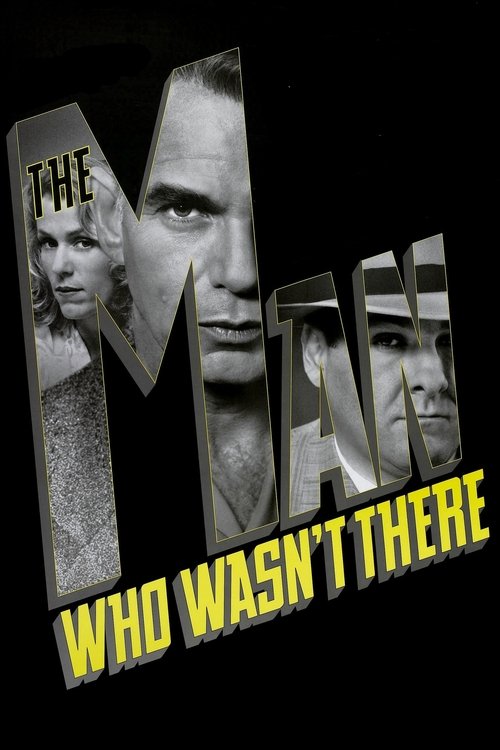
The Man Who Wasn't There
2001 · Directed by Joel Coen
Woke Score
CriticCritic Score
Audience
Ultra Based
Critics rated this 70 points above its woke score. Among Ultra Based films, this critic score ranks #536 of 1469.
Representation Casting
Score: 5/100
The cast is predominantly white with no prominent diversity in roles. The film does feature Frances McDormand in a significant role, though she functions primarily as the unfaithful wife within the male protagonist's narrative.
LGBTQ+ Themes
Score: 0/100
No LGBTQ+ themes, characters, or subtext are present in the film.
Feminist Agenda
Score: 2/100
Women exist primarily in relation to the male protagonist's schemes and desires. Frances McDormand's character is defined by infidelity and serves the plot mechanics rather than demonstrating agency or challenging gender norms.
Racial Consciousness
Score: 0/100
The film contains no examination of race, racial dynamics, or racial consciousness despite being set in 1949 America.
Climate Crusade
Score: 0/100
No climate or environmental themes are present in this noir crime narrative.
Eat the Rich
Score: 5/100
The film depicts capitalism and entrepreneurship (the barber's scheme to invest in dry cleaning technology) with moral ambiguity rather than critique, though it does show the scheme's ultimate emptiness.
Body Positivity
Score: 0/100
The film makes no statements regarding body image, body diversity, or body positivity.
Neurodivergence
Score: 0/100
No neurodivergent characters or representation are present in the film.
Revisionist History
Score: 0/100
The film uses 1949 as aesthetic setting but engages in no revisionist commentary on the period or its historical circumstances.
Lecture Energy
Score: 2/100
The film's noir voiceover narration is contemplative and existential rather than preachy, though it occasionally philosophizes about human nature and meaning in ways that border on moralizing.


Synopsis
A tale of murder, crime and punishment set in the summer of 1949. Ed Crane, a barber in a small California town, is dissatisfied with his life, but his wife Doris' infidelity and a mysterious opportunity presents him with a chance to change it.
Consciousness Assessment
The Man Who Wasn't There stands as a resolutely indifferent artifact regarding modern progressive sensibilities. Shot in stark black and white, this 2001 Coen Brothers noir operates entirely within the existential and philosophical traditions of its genre, concerned with alienation, moral ambiguity, and the human condition rather than any form of social consciousness. Ed Crane's journey from small-town barber to entangled blackmailer unfolds with the detached precision of a clock mechanism, but the mechanism itself contains no gears for contemporary cultural awareness.
The 1949 setting functions as a historical backdrop, not a platform for revisionist commentary on mid-century America. The cast is predominantly white, the narrative centers on male experience and desire, and the film's women exist primarily in relation to the male protagonist's alienation and schemes. There are no queer characters, no disability representation, no climate messaging, no anti-capitalist grandstanding, and no lectures about historical injustice. The film's only nod to its historical moment comes through its genre conventions, which automatically encode certain assumptions about beauty standards and gender roles that predate contemporary discourse entirely.
The Coen Brothers have made a film about a man so disconnected from meaning that he is barely present in his own life, and they have done so without ever asking the audience to consider whether his alienation might be inflected by race, gender performance, or systemic injustice. It is a film of the early 2000s, yet it moves through 1949 as though social history does not exist.
Analysis generated by our Consciousness Algorithm
Critic Reviews
“Like all the Coens' movies, "Man" is supremely self-aware and darkly, hellishly funny. It's also brilliantly written and acted to a fare-thee-well by an outrageously good cast.”
“Most of the way this ranks with the Coens' most immaculately crafted work. Cain would have loved its dreamlike chills, and so will audiences nostalgic for the movies of half a century ago.”
“The Coens' plotting, with its suspense and reversals, is a source of amazement and delight.”
“Ordinary moviegoers, on the other hand, may wonder what they're supposed to feel, apart from bored.”
Consciousness Markers
The cast is predominantly white with no prominent diversity in roles. The film does feature Frances McDormand in a significant role, though she functions primarily as the unfaithful wife within the male protagonist's narrative.
No LGBTQ+ themes, characters, or subtext are present in the film.
Women exist primarily in relation to the male protagonist's schemes and desires. Frances McDormand's character is defined by infidelity and serves the plot mechanics rather than demonstrating agency or challenging gender norms.
The film contains no examination of race, racial dynamics, or racial consciousness despite being set in 1949 America.
No climate or environmental themes are present in this noir crime narrative.
The film depicts capitalism and entrepreneurship (the barber's scheme to invest in dry cleaning technology) with moral ambiguity rather than critique, though it does show the scheme's ultimate emptiness.
The film makes no statements regarding body image, body diversity, or body positivity.
No neurodivergent characters or representation are present in the film.
The film uses 1949 as aesthetic setting but engages in no revisionist commentary on the period or its historical circumstances.
The film's noir voiceover narration is contemplative and existential rather than preachy, though it occasionally philosophizes about human nature and meaning in ways that border on moralizing.