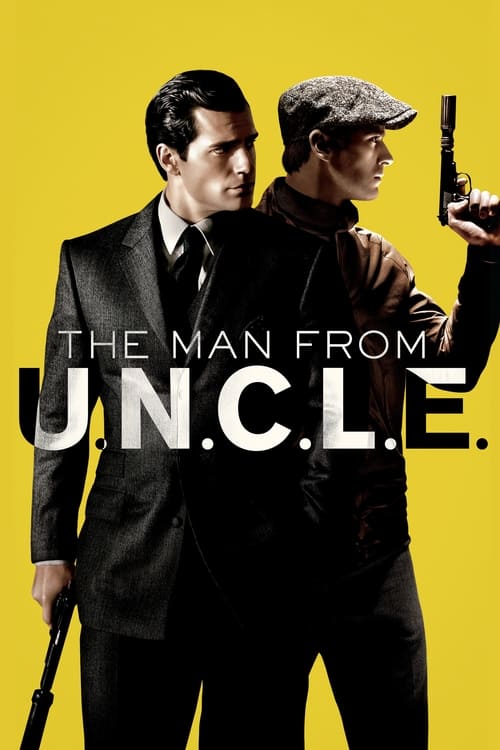
The Man from U.N.C.L.E.
2015 · Directed by Guy Ritchie
Woke Score
CriticCritic Score
Audience
Ultra Based
Critics rated this 52 points above its woke score. Among Ultra Based films, this critic score ranks #1016 of 1469.
Representation Casting
Score: 15/100
The cast is predominantly white and male. Alicia Vikander appears as the female lead but is largely a plot device rather than an active protagonist.
LGBTQ+ Themes
Score: 0/100
No LGBTQ+ themes or representation present in the film.
Feminist Agenda
Score: 5/100
The female character exists within a traditional protective framework. While not actively hostile to women, the narrative does not examine or interrogate gender dynamics.
Racial Consciousness
Score: 0/100
The film contains no examination of race or racial systems. It operates in a racially homogeneous space without acknowledgment or reflection.
Climate Crusade
Score: 0/100
Climate concerns are entirely absent from this Cold War spy thriller.
Eat the Rich
Score: 0/100
The film presents no critique of capitalism or economic systems. It celebrates consumer goods and luxury as markers of sophistication.
Body Positivity
Score: 0/100
No body diversity or body positivity themes are present. The film features conventionally attractive actors in conventional roles.
Neurodivergence
Score: 0/100
Neurodivergence is not addressed or represented in the film.
Revisionist History
Score: 0/100
The film does not attempt to revise historical narratives. It treats Cold War history as straightforward backdrop.
Lecture Energy
Score: 5/100
While the film occasionally indulges in expository dialogue about spy craft and Cold War politics, this is minimal and serves plot function rather than preachy purpose.


Synopsis
At the height of the Cold War, a mysterious criminal organization plans to use nuclear weapons and technology to upset the fragile balance of power between the United States and Soviet Union. CIA agent Napoleon Solo and KGB agent Illya Kuryakin are forced to put aside their hostilities and work together to stop the evildoers in their tracks. The duo's only lead is the daughter of a missing German scientist, whom they must find soon to prevent a global catastrophe.
Consciousness Assessment
Guy Ritchie's "The Man from U.N.C.L.E." is a sleek period spy comedy that functions as a paean to 1960s masculine cool, rendered in fastidious detail through costumes, locations, and the careful calibration of ironic detachment. The film features Alicia Vikander as a female lead who exists primarily as a plot device, a woman to be rescued and protected rather than an agent of her own narrative. Her presence does not constitute meaningful representation so much as the fulfillment of a generic requirement. The rest of the ensemble is overwhelmingly white and male, with Henry Cavill and Armie Hammer occupying the narrative center as American and Soviet agents who must cooperate, a dynamic that generates occasional charm but no particular social consciousness. The film's concerns are purely aesthetic and formal. It cares about the cut of a suit and the framing of a car chase, not about the social structures it depicts or the implications of its storytelling choices. There is no examination of gender dynamics beyond the surface level, no interrogation of Cold War ideology beyond its use as backdrop, no engagement with racial or economic systems. Even the film's female characters exist in a state of narrative subordination that feels less like a deliberate statement and more like an unquestioned inheritance from the 1960s television series it adapts. This is a film made by and for an audience content to admire surfaces without asking what lies beneath them.
Analysis generated by our Consciousness Algorithm
Critic Reviews
“Though it's made with lots of modern tricks and technology, it's old-fashioned in the best sense, and not just because it's set in the Sixties. ”
“If you have a fondness for the genre and a particular love of '60s pop, The Man From UNCLE is the summer's big fizzy drink, all bubbles, and while it may be gone the moment you walk out of the theater, the smile it puts on your face will likely linger.”
“It succeeds admirably on its own terms – more so, I think, than his two Sherlock Holmes films – and while it never really transcends pastiche, its ambitions don’t lie in that direction.”
“It’s slow, lethargic, utterly lacking in charm and undeserving of the Cold War setting that is its best trait.”
Consciousness Markers
The cast is predominantly white and male. Alicia Vikander appears as the female lead but is largely a plot device rather than an active protagonist.
No LGBTQ+ themes or representation present in the film.
The female character exists within a traditional protective framework. While not actively hostile to women, the narrative does not examine or interrogate gender dynamics.
The film contains no examination of race or racial systems. It operates in a racially homogeneous space without acknowledgment or reflection.
Climate concerns are entirely absent from this Cold War spy thriller.
The film presents no critique of capitalism or economic systems. It celebrates consumer goods and luxury as markers of sophistication.
No body diversity or body positivity themes are present. The film features conventionally attractive actors in conventional roles.
Neurodivergence is not addressed or represented in the film.
The film does not attempt to revise historical narratives. It treats Cold War history as straightforward backdrop.
While the film occasionally indulges in expository dialogue about spy craft and Cold War politics, this is minimal and serves plot function rather than preachy purpose.