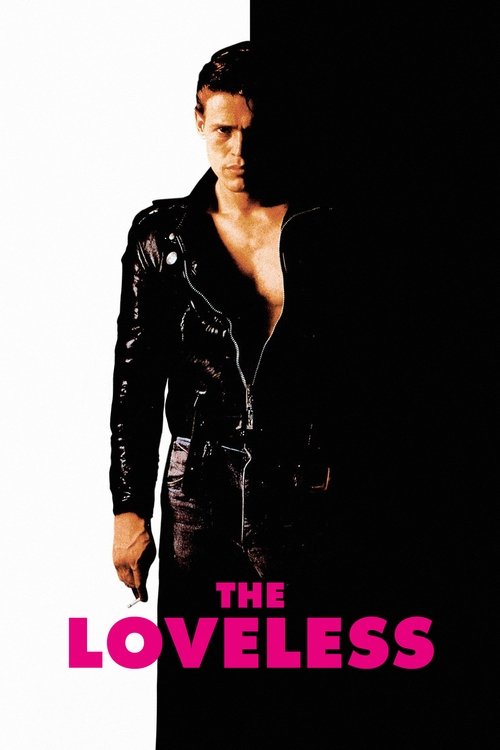
The Loveless
1984 · Directed by Kathryn Bigelow
Woke Score
CriticCritic Score
Audience
Ultra Based
Critics rated this 42 points above its woke score. Among Ultra Based films, this critic score ranks #1288 of 1469.
Representation Casting
Score: 5/100
Female director in a male-dominated field, but the cast itself is uniformly male and white with no apparent intentional representation.
LGBTQ+ Themes
Score: 0/100
No LGBTQ+ themes, characters, or subtext present in the film.
Feminist Agenda
Score: 0/100
No feminist agenda or themes within the narrative itself, despite female directorship.
Racial Consciousness
Score: 0/100
No racial consciousness or commentary present in the film.
Climate Crusade
Score: 0/100
No climate themes or environmental messaging.
Eat the Rich
Score: 0/100
No anti-capitalist or class critique in the narrative.
Body Positivity
Score: 0/100
No body positivity themes or messaging.
Neurodivergence
Score: 0/100
No representation of neurodivergence or related themes.
Revisionist History
Score: 0/100
No revisionist historical framing or recontextualization.
Lecture Energy
Score: 3/100
The film's detached, cerebral approach creates a meditative quality, but this is not preachy lecturing in a progressive sense.


Synopsis
Trouble ensues when a motorcycle gang stops in a small southern town while heading to the races at Daytona.
Consciousness Assessment
Kathryn Bigelow's directorial debut is a cerebral examination of masculine power and rebellion that happens to be helmed by a woman. The film itself, however, remains largely indifferent to matters of social consciousness. It is a psychological meditation on biker iconography, constructed with aesthetic precision and a deliberate detachment that keeps viewers at arm's length from any emotional investment in its subjects. The narrative refuses conventional problem-solving, instead creating a tableau of masculine posturing and existential aimlessness in a small Southern setting.
The cast is uniformly male and white, reflecting the insular world of the motorcycle gang without any apparent self-awareness about representation. There are no LGBTQ+ themes, no feminist agenda within the story itself, no racial consciousness, and no engagement with body positivity or neurodivergence. The film is not interested in lecturing or revisiting history through a contemporary lens. It is simply a biker film, executed with artistic rigor but devoid of the specific markers of modern progressive sensibility that have become cultural touchstones.
The modest woke score reflects Bigelow's presence as a female director in a male-dominated space, an achievement that carries some cultural weight in 1984. Beyond this biographical fact, however, the film offers nothing to those seeking evidence of contemporary social awareness. It is a work of pure aesthetic formalism, indifferent to the world outside its frame.
Analysis generated by our Consciousness Algorithm
Critic Reviews
“The Loveless is far from Bigelow or Dafoe's best work but still remains an impressive debut for both. Thanks to the deliberately subdued pace and reworking of the biker genre, The Loveless deserves to be given a second chance.”
“At times the perversely slow beat of each scene can irritate, but that's a reasonable price for the film's super-saturated atmosphere.”
“Not much happens, but the the filmmakers' knowing, stylized eroticization of biker culture is extraordinary.”
“The Loveless, a pathetic homage to the 1950's, has been made by two writer-directors, Kathryn Bigelow and Monty Montgomery, who share an unmistakable longing for that era. But their nostalgia expresses itself no more interestingly than through a lot of silly, lifeless posturing, plus the use of colors like chartreuse.”
Consciousness Markers
Female director in a male-dominated field, but the cast itself is uniformly male and white with no apparent intentional representation.
No LGBTQ+ themes, characters, or subtext present in the film.
No feminist agenda or themes within the narrative itself, despite female directorship.
No racial consciousness or commentary present in the film.
No climate themes or environmental messaging.
No anti-capitalist or class critique in the narrative.
No body positivity themes or messaging.
No representation of neurodivergence or related themes.
No revisionist historical framing or recontextualization.
The film's detached, cerebral approach creates a meditative quality, but this is not preachy lecturing in a progressive sense.