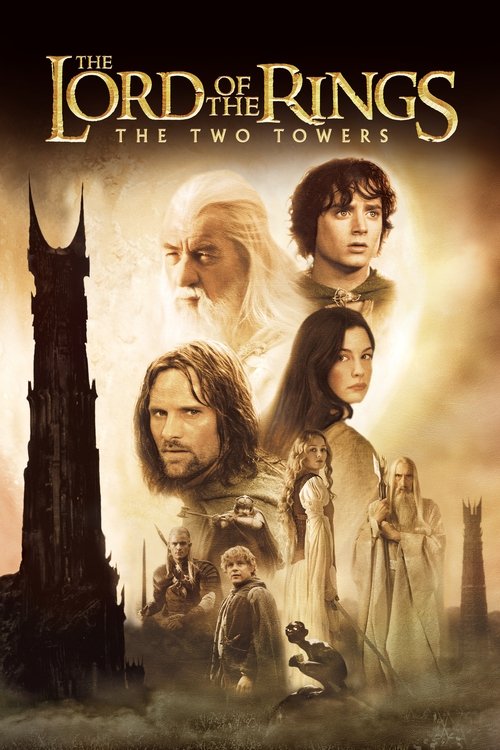
The Lord of the Rings: The Two Towers
2002 · Directed by Peter Jackson
Woke Score
CriticCritic Score
Audience
Ultra Based
Critics rated this 79 points above its woke score. Among Ultra Based films, this critic score ranks #195 of 1469.
Representation Casting
Score: 8/100
The cast is almost entirely white European actors. No meaningful diversity in racial, ethnic, or cultural representation. This reflects early 2000s mainstream filmmaking norms rather than contemporary casting consciousness.
LGBTQ+ Themes
Score: 0/100
No LGBTQ+ themes, representation, or subtext. The film contains no queer characters or relationships. This is consistent with Tolkien's original work and early 2000s mainstream cinema.
Feminist Agenda
Score: 15/100
Female characters like Eowyn and Arwen possess some agency and martial capability, but they remain secondary to male narratives and are sometimes diminished from source material. Their arcs resolve into romantic plotlines rather than sustained examination of gender dynamics.
Racial Consciousness
Score: 5/100
The film contains racial coding in its portrayal of antagonists (orcs, Uruk-hai) that maps onto historical racial stereotypes, though this reflects Tolkien's original worldbuilding rather than contemporary commentary. No examination of racial themes or consciousness.
Climate Crusade
Score: 25/100
Environmental themes exist in the narrative (Isengard's industrialization, Mordor's desolation), but these function as metaphorical backdrops to the fantasy plot rather than as contemporary climate activism or consciousness.
Eat the Rich
Score: 10/100
Saruman's industrial ambitions could be read as a critique of technological/industrial excess, but the film frames this as personal corruption and evil rather than systemic critique. No engagement with class structures or economic systems.
Body Positivity
Score: 0/100
The film contains no body-positive messaging or representation. Character bodies are presented according to fantasy genre conventions with no contemporary commentary on body diversity or acceptance.
Neurodivergence
Score: 0/100
No representation of neurodivergent characters or conditions. No engagement with disability or neurodiversity themes beyond the fantastical elements of the narrative.
Revisionist History
Score: 0/100
This is a fantasy film adapting fictional source material, not a historical work. No revisionist historical narratives present in the film.
Lecture Energy
Score: 5/100
The film prioritizes narrative spectacle and character action over preachy messaging. While it contains thematic depth, it does not lecture the audience about social positions or correct thinking.


Synopsis
Frodo Baggins and the other members of the Fellowship continue on their sacred quest to destroy the One Ring--but on separate paths. Their destinies lie at two towers--Orthanc Tower in Isengard, where the corrupt wizard Saruman awaits, and Sauron's fortress at Barad-dur, deep within the dark lands of Mordor. Frodo and Sam are trekking to Mordor to destroy the One Ring of Power while Gimli, Legolas and Aragorn search for the orc-captured Merry and Pippin. All along, nefarious wizard Saruman awaits the Fellowship members at the Orthanc Tower in Isengard.
Consciousness Assessment
Peter Jackson's "The Two Towers" arrives as a technical and narrative achievement of staggering ambition, yet one that remains bound to the source material's mid-century fantasy sensibilities. The film does contain environmental themes, rooted in Tolkien's original vision of industrial corruption and ecological devastation, though these function as metaphorical backdrops to the central moral conflict rather than as contemporary climate consciousness. Saruman's transformation of Isengard into an industrial wasteland and the desolation of Mordor operate as cautionary imagery, but the film makes no effort to connect these themes to modern environmental activism or policy concerns.
The representation of female characters presents a more complex picture. Arwen, Eowyn, and Galadriel possess agency and martial capability, yet they remain secondary to the male-centered narrative and, in certain instances, are actually diminished from their book counterparts. Jackson's decision to expand Arwen's role in the first film while simultaneously removing her entirely from "The Two Towers" suggests a filmmaker more interested in romantic plotting than sustained female characterization. Eowyn's arc, while containing moments of feminist resonance, ultimately resolves into a love story rather than a genuine exploration of gender roles or power structures. The film's cast remains overwhelmingly white and heterosexual, with no apparent concern for contemporary diversity considerations.
The film exists in a pre-2015 cultural moment when these concerns simply did not register as priorities for mainstream filmmaking. It is a work of craft and vision, but it is not a work animated by the specific markers of modern progressive consciousness. This assessment reflects not a judgment of artistic quality, but rather a clinical measurement of alignment with contemporary cultural frameworks.
Analysis generated by our Consciousness Algorithm
Critic Reviews
“The miracle is that 'The Lord of the Rings: The Two Towers is better: tighter, smarter, funnier.”
“Towers, while not quite so varied as Fellowship in its moods and settings, has a grave gusto that energizes every moment...a thrilling work of film craft.”
“The Two Towers moves faster, covers more ground, has more action and -- with the introduction of the marvelous character Gollum -- packs some much-appreciated laughs.”
“This second installment is heavy on battle sequences, which will thrill some viewers more than others.”
Consciousness Markers
The cast is almost entirely white European actors. No meaningful diversity in racial, ethnic, or cultural representation. This reflects early 2000s mainstream filmmaking norms rather than contemporary casting consciousness.
No LGBTQ+ themes, representation, or subtext. The film contains no queer characters or relationships. This is consistent with Tolkien's original work and early 2000s mainstream cinema.
Female characters like Eowyn and Arwen possess some agency and martial capability, but they remain secondary to male narratives and are sometimes diminished from source material. Their arcs resolve into romantic plotlines rather than sustained examination of gender dynamics.
The film contains racial coding in its portrayal of antagonists (orcs, Uruk-hai) that maps onto historical racial stereotypes, though this reflects Tolkien's original worldbuilding rather than contemporary commentary. No examination of racial themes or consciousness.
Environmental themes exist in the narrative (Isengard's industrialization, Mordor's desolation), but these function as metaphorical backdrops to the fantasy plot rather than as contemporary climate activism or consciousness.
Saruman's industrial ambitions could be read as a critique of technological/industrial excess, but the film frames this as personal corruption and evil rather than systemic critique. No engagement with class structures or economic systems.
The film contains no body-positive messaging or representation. Character bodies are presented according to fantasy genre conventions with no contemporary commentary on body diversity or acceptance.
No representation of neurodivergent characters or conditions. No engagement with disability or neurodiversity themes beyond the fantastical elements of the narrative.
This is a fantasy film adapting fictional source material, not a historical work. No revisionist historical narratives present in the film.
The film prioritizes narrative spectacle and character action over preachy messaging. While it contains thematic depth, it does not lecture the audience about social positions or correct thinking.