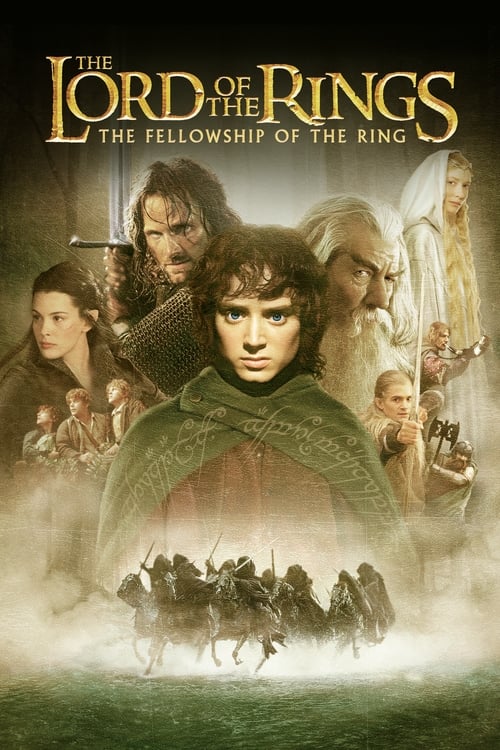
The Lord of the Rings: The Fellowship of the Ring
2001 · Directed by Peter Jackson
Woke Score
CriticCritic Score
Audience
Ultra Based
Critics rated this 88 points above its woke score. Among Ultra Based films, this critic score ranks #94 of 1469.
Representation Casting
Score: 2/100
The cast is predominantly white with minimal racial diversity. Female representation is minimal, with Liv Tyler as the only significant female character among the Fellowship's nine members.
LGBTQ+ Themes
Score: 0/100
There are no LGBTQ+ themes, characters, or subtext in the film. This reflects both the source material and the early-2000s filmmaking context.
Feminist Agenda
Score: 5/100
While Jackson expanded Arwen's role from the books, she remains primarily a love interest and plot device. The film centers male heroes and male relationships, with women functioning as supporting elements.
Racial Consciousness
Score: 0/100
The film does not engage with racial themes in any contemporary sense. The racial politics of Middle-earth (Orcs as evil, humans as noble) are presented without self-awareness of their implications.
Climate Crusade
Score: 0/100
There is no climate consciousness or environmental advocacy present. The destruction of nature is portrayed as collateral damage in the battle between good and evil rather than a thematic concern.
Eat the Rich
Score: 2/100
The narrative concerns the restoration of kingdoms and established hierarchies. While the Ring represents a corrupting power, the solution is not systemic change but individual virtue and rightful succession.
Body Positivity
Score: 0/100
The film presents conventionally attractive actors in leading roles. There is no visible attempt to include diverse body types or challenge conventional beauty standards.
Neurodivergence
Score: 0/100
Neurodivergence is not represented or addressed. The characters function as neurotypical archetypes without any exploration of alternative cognitive perspectives.
Revisionist History
Score: 0/100
The film is not revisionist in the contemporary sense. It presents Tolkien's mythological world as a self-contained fantasy universe rather than reinterpreting historical events.
Lecture Energy
Score: 5/100
There are expository moments where characters explain the history and significance of the Ring, but these serve narrative function rather than preachy preaching about social issues.


Synopsis
Young hobbit Frodo Baggins, after inheriting a mysterious ring from his uncle Bilbo, must leave his home in order to keep it from falling into the hands of its evil creator. Along the way, a fellowship is formed to protect the ringbearer and make sure that the ring arrives at its final destination: Mt. Doom, the only place where it can be destroyed.
Consciousness Assessment
Peter Jackson's 2001 adaptation of Tolkien's foundational fantasy text arrives at an interesting juncture in cinema history. The film is a technical marvel, a three-hour commitment to translating the ineffable onto screen, and in most respects a faithful rendering of source material that predates our current taxonomies of social consciousness by several decades. The cast is uniformly pale, the female characters are few and largely ornamental (Liv Tyler's Arwen, despite Jackson's expansion of her role, remains peripheral to the narrative machinery), and the entire enterprise is about the preservation of an established order rather than its interrogation.
What makes this film's relationship to modern progressive sensibilities peculiar is precisely its earnestness. There is no winking at contemporary concerns, no self-aware diversity casting, no subplot devoted to climate catastrophe or systemic oppression. The Fellowship itself could be read as an allegory of diversity working in concert (hobbits, dwarves, elves, and men united against darkness), but this reading requires us to project onto the text rather than observe it engaging with such ideas intentionally. The film's politics are conservative, concerned with honor, lineage, and the restoration of rightful kingdoms.
The movie is a masterwork of pre-woke cinema. It deserves every accolade it received, and its aesthetic and narrative achievements remain undiminished by its cultural positioning. Yet it is undeniably a product of its moment, before the modern constellation of social consciousness became a gravitational force in mainstream filmmaking. We can admire the execution while acknowledging the complete absence of contemporary progressive markers. The film exists in a realm of pure imagination, untethered from the ideological concerns that would come to dominate discourse in the years following its release.
Analysis generated by our Consciousness Algorithm
Critic Reviews
“I see it as nearly perfect: It's one of the best fantasy pictures ever made.”
“An extraordinary work, grandly conceived, brilliantly executed and wildly entertaining. It's a hobbit's dream, a wizard's delight. And, of course, it's only the beginning.”
“Against all odds in an era of machine-made spectaculars, Mr. Jackson and his collaborators have created a film epic that lives and breathes.”
“It's full of scenic splendors with a fine sense of scale, but its narrative thrust seems relatively pro forma, and I was bored by the battle scenes.”
Consciousness Markers
The cast is predominantly white with minimal racial diversity. Female representation is minimal, with Liv Tyler as the only significant female character among the Fellowship's nine members.
There are no LGBTQ+ themes, characters, or subtext in the film. This reflects both the source material and the early-2000s filmmaking context.
While Jackson expanded Arwen's role from the books, she remains primarily a love interest and plot device. The film centers male heroes and male relationships, with women functioning as supporting elements.
The film does not engage with racial themes in any contemporary sense. The racial politics of Middle-earth (Orcs as evil, humans as noble) are presented without self-awareness of their implications.
There is no climate consciousness or environmental advocacy present. The destruction of nature is portrayed as collateral damage in the battle between good and evil rather than a thematic concern.
The narrative concerns the restoration of kingdoms and established hierarchies. While the Ring represents a corrupting power, the solution is not systemic change but individual virtue and rightful succession.
The film presents conventionally attractive actors in leading roles. There is no visible attempt to include diverse body types or challenge conventional beauty standards.
Neurodivergence is not represented or addressed. The characters function as neurotypical archetypes without any exploration of alternative cognitive perspectives.
The film is not revisionist in the contemporary sense. It presents Tolkien's mythological world as a self-contained fantasy universe rather than reinterpreting historical events.
There are expository moments where characters explain the history and significance of the Ring, but these serve narrative function rather than preachy preaching about social issues.