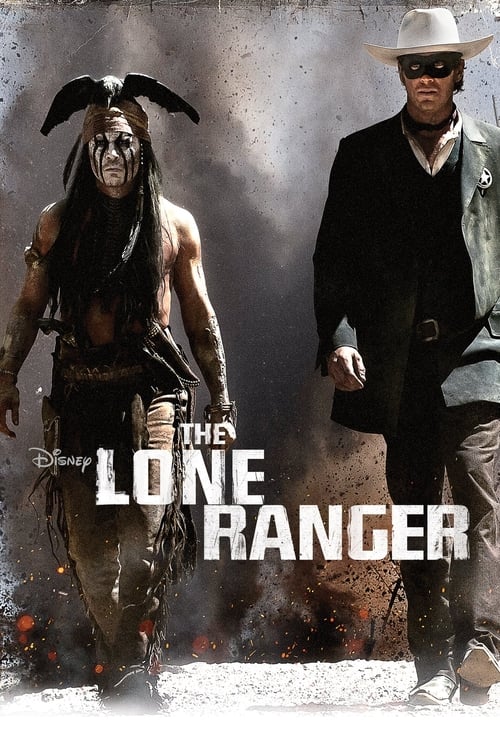
The Lone Ranger
2013 · Directed by Gore Verbinski
Woke Score
CriticCritic Score
Audience
Woke-Adjacent
Critics rated this 19 points below its woke score. Among Woke-Adjacent films, this critic score ranks #147 of 151.
Representation Casting
Score: 25/100
The film attempts progressive representation by centering Tonto as the moral protagonist rather than sidekick, but this is severely undermined by casting Johnny Depp, a non-Indigenous actor, in the role. The casting choice itself perpetuates colorblind ideology and appropriation.
LGBTQ+ Themes
Score: 0/100
No LGBTQ+ themes, characters, or representation present in the film.
Feminist Agenda
Score: 10/100
Helena Bonham Carter appears as a female character who demonstrates competence and agency, but her role is relatively minor and the film contains no substantive feminist messaging or thematic engagement.
Racial Consciousness
Score: 75/100
The film explicitly critiques settler colonialism, manifest destiny, and the destruction of Native American sovereignty. Tonto's character arc centers on resistance to colonial expansion and corporate exploitation of Indigenous lands.
Climate Crusade
Score: 0/100
No climate consciousness or environmental messaging present in the film.
Eat the Rich
Score: 65/100
The film positions the railroad baron and industrial capitalism as the primary villains, critiquing corporate predation and the commodification of Indigenous lands. Economic exploitation is central to the plot.
Body Positivity
Score: 0/100
No body positivity messaging or representation present in the film.
Neurodivergence
Score: 0/100
No neurodivergence representation or themes present in the film.
Revisionist History
Score: 50/100
The film attempts to revisit the Lone Ranger mythology through an Indigenous-centered perspective, reframing traditional Western narratives. However, this remains a white directorial reinterpretation rather than authentically Indigenous storytelling.
Lecture Energy
Score: 40/100
The film contains expository dialogue explaining themes of colonialism and exploitation, but maintains comedic distance and does not achieve the weight of genuine historical reckoning or moral instruction.


Synopsis
The Texas Rangers chase down a gang of outlaws led by Butch Cavendish, but the gang ambushes the Rangers, seemingly killing them all. One survivor is found, however, by an American Indian named Tonto, who nurses him back to health. The Ranger, donning a mask and riding a white stallion named Silver, teams up with Tonto to bring the unscrupulous gang and others of that ilk to justice.
Consciousness Assessment
The Lone Ranger represents a peculiar specimen of contemporary Hollywood attempting to rectify historical wrongs while simultaneously replicating them. Gore Verbinski's film explicitly critiques settler colonialism, manifest destiny, and corporate predation through a lens that foregrounds Tonto as the moral center of the narrative. The film grants its Indigenous character tragic backstory, emotional complexity, and agency denied to him in the original source material. Yet this progressive scaffolding rests upon a foundation of profound contradiction: the casting of Johnny Depp as Tonto, a non-Indigenous actor in a Native American role, undermines the entire revisionist project. The film's reliance on deadpan humor and Depp's exoticized performance invites the very mockery it claims to subvert.
The film's engagement with racial consciousness and anti-capitalist themes is genuine if uneven. Tonto's narrative arc centers on resistance to industrial exploitation and the defense of Comanche sovereignty. The railroad baron villain and the machinery of American expansion are presented as the true threat, not the Indigenous peoples themselves. This inverts the traditional Western's moral hierarchy. However, the film's lecture energy, while present in its exposition of these themes, never quite achieves the weight of genuine historical reckoning. Instead, it gestures toward social consciousness while maintaining the comedic distance that allows audiences to enjoy the spectacle without confronting actual complicity.
The film's other progressive markers register as minimal or absent. There is no meaningful LGBTQ+ representation, limited feminist content beyond a female character appearing competent, and no engagement with neurodivergence, body positivity, or climate consciousness. The revisionist history element exists but remains filtered through a white directorial perspective interpreting Indigenous experience for mainstream consumption. What remains is a film caught between genuine progressive impulse and structural compromise, a blockbuster that wants credit for its intentions while avoiding the more costly work of authentic representation.
Analysis generated by our Consciousness Algorithm
Critic Reviews
“For all its miscalculations, this is a personal picture, violent and sweet, clever and goofy. It's as obsessive and overbearing as Steven Spielberg's "1941" — and, I'll bet, as likely to be re-evaluated twenty years from now, and described as "misunderstood."”
“Talk about a pleasant surprise! Real storytelling, well thought-out and beautifully, at times insanely, executed, with excitement, laughs and fun to make you feel seven years old again. ”
“A wild, wacky, wide-screen reimagining of the vintage radio serial and TV series, the film - with Armie Hammer in the hat and mask, galloping across Texas righting wrongs, and Depp as his trusty Indian sidekick, Tonto - is an epic good time. ”
“It represents 2 1/2 of the longest hours on record, a jumbled botch that is so confused in its purpose and so charmless in its effect that it must be seen to be believed, but better yet, no. Don't see it, don't believe it, not unless a case of restless leg syndrome sounds like a fun time at the movies. ”
Consciousness Markers
The film attempts progressive representation by centering Tonto as the moral protagonist rather than sidekick, but this is severely undermined by casting Johnny Depp, a non-Indigenous actor, in the role. The casting choice itself perpetuates colorblind ideology and appropriation.
No LGBTQ+ themes, characters, or representation present in the film.
Helena Bonham Carter appears as a female character who demonstrates competence and agency, but her role is relatively minor and the film contains no substantive feminist messaging or thematic engagement.
The film explicitly critiques settler colonialism, manifest destiny, and the destruction of Native American sovereignty. Tonto's character arc centers on resistance to colonial expansion and corporate exploitation of Indigenous lands.
No climate consciousness or environmental messaging present in the film.
The film positions the railroad baron and industrial capitalism as the primary villains, critiquing corporate predation and the commodification of Indigenous lands. Economic exploitation is central to the plot.
No body positivity messaging or representation present in the film.
No neurodivergence representation or themes present in the film.
The film attempts to revisit the Lone Ranger mythology through an Indigenous-centered perspective, reframing traditional Western narratives. However, this remains a white directorial reinterpretation rather than authentically Indigenous storytelling.
The film contains expository dialogue explaining themes of colonialism and exploitation, but maintains comedic distance and does not achieve the weight of genuine historical reckoning or moral instruction.