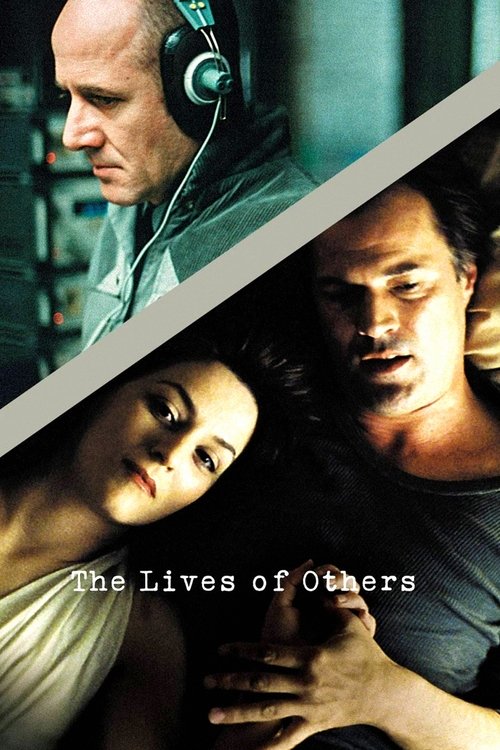
The Lives of Others
2006 · Directed by Florian Henckel von Donnersmarck
Woke Score
CriticCritic Score
Audience
Ultra Based
Critics rated this 85 points above its woke score. Among Ultra Based films, this critic score ranks #155 of 1469.
Representation Casting
Score: 15/100
The cast is entirely white and German, reflecting historical accuracy of 1984 East Berlin. No contemporary-style diversity casting, nor would such be appropriate to the setting.
LGBTQ+ Themes
Score: 0/100
No LGBTQ+ characters, themes, or representation appear in the film.
Feminist Agenda
Score: 20/100
Christa-Maria is a complex female character, but the film does not foreground feminist critique or frame her arc through contemporary gender politics.
Racial Consciousness
Score: 0/100
Not applicable to the film's historical and geographical context. No racial themes present.
Climate Crusade
Score: 0/100
No environmental themes or climate-related content in the film.
Eat the Rich
Score: 25/100
Set in communist East Germany and implicitly critical of authoritarian socialism, the film opposes rather than aligns with contemporary anti-capitalist sensibilities.
Body Positivity
Score: 0/100
No body-related themes or commentary on physical appearance and acceptance.
Neurodivergence
Score: 0/100
No representation or discussion of neurodivergence or mental health conditions.
Revisionist History
Score: 0/100
The film treats East German history with fidelity and seriousness, not rewriting it according to contemporary progressive narratives.
Lecture Energy
Score: 5/100
The film trusts its audience entirely, allowing meaning to emerge through action and character rather than exposition or preachy statement.


Synopsis
In 1984 East Berlin, dedicated Stasi officer Gerd Wiesler begins spying on a famous playwright and his actress-lover Christa-Maria. Wiesler becomes unexpectedly sympathetic to the couple, and faces conflicting loyalties when his superior takes a liking to Christa-Maria.
Consciousness Assessment
The Lives of Others is a masterwork of political cinema that arrived in 2006 entirely innocent of the cultural preoccupations that would soon dominate progressive discourse. It is a film about totalitarianism, surveillance, and the redemptive power of human conscience, told with such moral clarity and aesthetic precision that it won the Academy Award for Best Foreign Language Film. Yet by the standards of contemporary social consciousness, it barely registers. The film presents its East German setting with historical fidelity rather than ideological retrofit, its cast reflects the demographic reality of 1984 Berlin rather than contemporary casting imperatives, and its examination of oppression proceeds from humanistic principle rather than identity-based framework.
What makes this case instructive is that The Lives of Others is unquestionably important cinema about serious matters: state violence, artistic freedom, moral compromise, and the possibility of transformation. These are the very subjects that one might expect to align with progressive sensibilities. Yet the film achieves its power through restraint, through trust in the viewer's capacity to understand its implications without explicit statement. The moral argument emerges through character and action, through the slow accumulation of detail and consequence. There is no moment where the film lectures us about oppression or mansplains its own themes.
The film's relationship to ideology is notably unsentimental. It does not celebrate the East German state, but neither does it offer capitalism as redemption. Instead, it locates moral value in individual conscience, in art, in the capacity to recognize another person's humanity across a chasm of power and suspicion. This is a humanistic rather than ideologically progressive vision, and it remains all the more powerful for its refusal to subordinate character to message.
Analysis generated by our Consciousness Algorithm
Critic Reviews
“If there is any justice, this year's Academy Award for best foreign-language film will go to The Lives of Others, a movie about a world in which there is no justice.”
“The easy, complacent distance that informs much historical filmmaking is almost entirely absent from this supremely intelligent, unfailingly honest movie.”
“Rather than dwell on the darkness and squalor, von Donnersmarck has fashioned a genuinely thrilling tale, leavened with sly humor, that works ingenious variations on the theme of cat and mouse, speaks to current concerns about personal privacy and illuminates the timeless conflict between totalitarianism and art.”
“The Lives of Others wants us to see that the Stasi -- at least some of them -- were, like their Gestapo brethren, “just following orders." You can call that naive optimism on Donnersmarck's part, or historical revisionism of the sort duly lambasted by the current film version of Alan Bennett's "The History Boys." I, for one, tremble at the thought of what this young director does for an encore.”
Consciousness Markers
The cast is entirely white and German, reflecting historical accuracy of 1984 East Berlin. No contemporary-style diversity casting, nor would such be appropriate to the setting.
No LGBTQ+ characters, themes, or representation appear in the film.
Christa-Maria is a complex female character, but the film does not foreground feminist critique or frame her arc through contemporary gender politics.
Not applicable to the film's historical and geographical context. No racial themes present.
No environmental themes or climate-related content in the film.
Set in communist East Germany and implicitly critical of authoritarian socialism, the film opposes rather than aligns with contemporary anti-capitalist sensibilities.
No body-related themes or commentary on physical appearance and acceptance.
No representation or discussion of neurodivergence or mental health conditions.
The film treats East German history with fidelity and seriousness, not rewriting it according to contemporary progressive narratives.
The film trusts its audience entirely, allowing meaning to emerge through action and character rather than exposition or preachy statement.