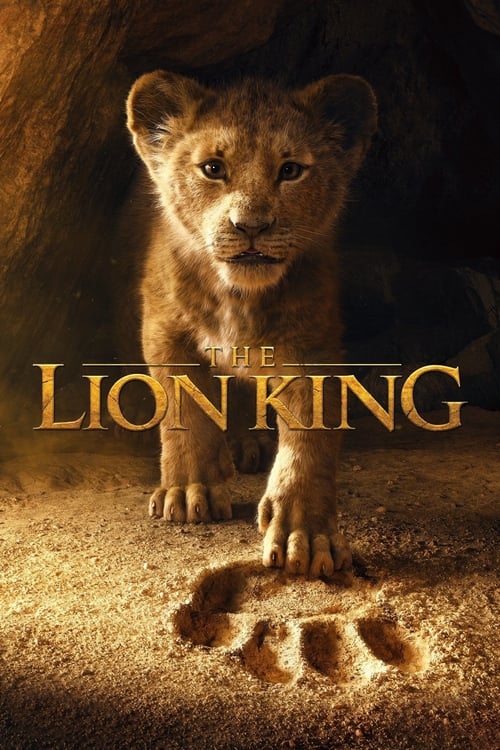
The Lion King
2019 · Directed by Jon Favreau
Woke Score
CriticCritic Score
Audience
Based
Critics rated this 53 points above its woke score. Among Based films, this critic score ranks #29 of 345.
Representation Casting
Score: 75/100
Strong voice cast featuring Donald Glover, Beyoncé, Chiwetel Ejiofor, and other prominent Black and brown actors. However, this represents voice casting of animals rather than explicit representation of human characters, limiting the cultural specificity of this choice.
LGBTQ+ Themes
Score: 0/100
No LGBTQ+ themes, characters, or subtext present in the film. The narrative remains heteronormative and focuses on traditional family structures.
Feminist Agenda
Score: 25/100
Nala receives slightly more agency than in the 1994 version, but the narrative remains fundamentally centered on male succession and patriarchal power. No meaningful interrogation of gender dynamics or feminist critique.
Racial Consciousness
Score: 40/100
The casting choices suggest racial awareness, but the film does not engage in explicit racial commentary or interrogate the African setting beyond aesthetic use. The narrative remains politically neutral on race.
Climate Crusade
Score: 10/100
The drought and environmental collapse in the narrative are presented as natural consequences of Scar's rule rather than as climate commentary. No engagement with contemporary environmental consciousness.
Eat the Rich
Score: 0/100
The film endorses hierarchical systems and royal succession without critique. No anti-capitalist or anti-establishment themes present. The natural order is presented as just.
Body Positivity
Score: 5/100
The film presents idealized animal forms with no commentary on body diversity or acceptance. Characters are uniformly attractive and powerful specimens.
Neurodivergence
Score: 0/100
No representation of neurodivergent characters or themes. No engagement with disability, mental health, or cognitive difference.
Revisionist History
Score: 0/100
The film presents a purely fictional animal kingdom with no engagement with actual history. No revisionist historical commentary present.
Lecture Energy
Score: 15/100
The film maintains a narrative focus on spectacle and entertainment rather than preachiness. Minimal overt messaging or educational intent, though the casting carries implicit cultural signaling.


Synopsis
Simba idolizes his father, King Mufasa, and takes to heart his own royal destiny. But not everyone in the kingdom celebrates the new cub's arrival. Scar, Mufasa's brother—and former heir to the throne—has plans of his own. The battle for Pride Rock is ravaged with betrayal, tragedy and drama, ultimately resulting in Simba's exile. With help from a curious pair of newfound friends, Simba will have to figure out how to grow up and take back what is rightfully his.
Consciousness Assessment
The 2019 remake of The Lion King stands as a curious artifact of contemporary Hollywood, a film that performs progressive sensibilities with considerable technical precision while maintaining the fundamental narrative conservatism of its 1994 predecessor. Jon Favreau's photorealistic approach yields a parade of star-studded voice casting, prominently featuring Donald Glover as Simba, Beyoncé as Nala, and Chiwetel Ejiofor as Scar, among others. The roster demonstrates a commitment to representation in voice acting, though this choice remains largely cosmetic, as the characters themselves remain anthropomorphic animals with no explicit connection to cultural identity. The film does not interrogate or expand upon its African setting beyond aesthetic spectacle.
The narrative structure adheres faithfully to the 1994 original, which means Nala receives marginally more agency in this iteration without fundamentally challenging the patriarchal succession plot or the cyclical naturalization of hierarchy that the story endorses. There are no meaningful explorations of gender dynamics, climate crisis, neurodivergence, or systemic critique. The villain Scar operates as a straightforward antagonist rather than a vehicle for commentary on power, class, or colonial systems. The film's relationship to history remains entirely mythological. The casting strategy itself functions as a form of cultural signaling: a film that allows audiences to feel they are consuming progressive content through the presence of recognizable Black talent while the underlying text remains politically inert.
The marketing apparatus surrounding the film, particularly the emphasis on Beyoncé's involvement and the broader discourse around "Black excellence" in casting, operates as a form of cultural washing. The production is undeniably a technical achievement in animation, but technical mastery should not be confused with thematic depth or genuine progressive vision. The Lion King 2019 represents the paradox of late-stage capitalist representation: the appearance of diversity without the risk of substantive social critique. It is a film that has learned to speak the language of contemporary progressive values while saying very little of consequence.
Analysis generated by our Consciousness Algorithm
Critic Reviews
“A hugely entertaining blend of music, fun and eye-popping thrills, though it doesn't lack for heart.”
“A scrumptiously delightful moviegoing experience. ”
“Shakespearean in tone, epic in scope, it seems more appropriate for grown-ups than for kids. If truth be told, even for adults it is downright strange.”
Consciousness Markers
Strong voice cast featuring Donald Glover, Beyoncé, Chiwetel Ejiofor, and other prominent Black and brown actors. However, this represents voice casting of animals rather than explicit representation of human characters, limiting the cultural specificity of this choice.
No LGBTQ+ themes, characters, or subtext present in the film. The narrative remains heteronormative and focuses on traditional family structures.
Nala receives slightly more agency than in the 1994 version, but the narrative remains fundamentally centered on male succession and patriarchal power. No meaningful interrogation of gender dynamics or feminist critique.
The casting choices suggest racial awareness, but the film does not engage in explicit racial commentary or interrogate the African setting beyond aesthetic use. The narrative remains politically neutral on race.
The drought and environmental collapse in the narrative are presented as natural consequences of Scar's rule rather than as climate commentary. No engagement with contemporary environmental consciousness.
The film endorses hierarchical systems and royal succession without critique. No anti-capitalist or anti-establishment themes present. The natural order is presented as just.
The film presents idealized animal forms with no commentary on body diversity or acceptance. Characters are uniformly attractive and powerful specimens.
No representation of neurodivergent characters or themes. No engagement with disability, mental health, or cognitive difference.
The film presents a purely fictional animal kingdom with no engagement with actual history. No revisionist historical commentary present.
The film maintains a narrative focus on spectacle and entertainment rather than preachiness. Minimal overt messaging or educational intent, though the casting carries implicit cultural signaling.