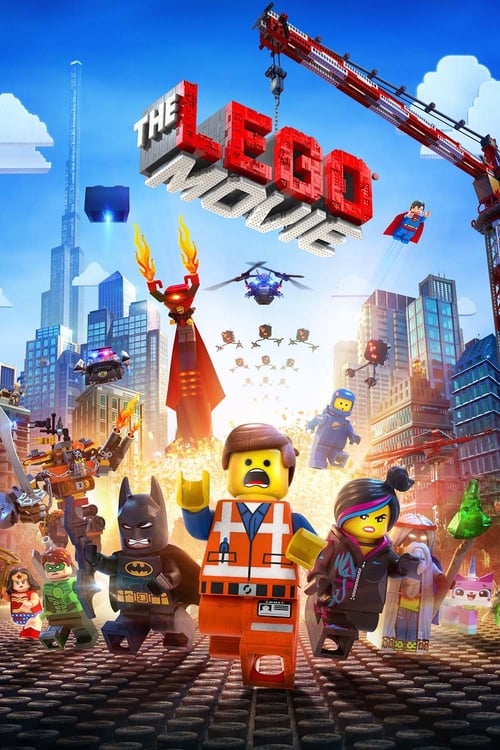
The Lego Movie
2014 · Directed by Phil Lord
Woke Score
CriticCritic Score
Audience
Ultra Based
Critics rated this 75 points above its woke score. Among Ultra Based films, this critic score ranks #283 of 1469.
Representation Casting
Score: 25/100
The film features a predominantly white male voice cast (Chris Pratt, Will Ferrell, Liam Neeson) with limited roles for women and people of color. While Morgan Freeman provides a voice role, meaningful representation remains minimal.
LGBTQ+ Themes
Score: 0/100
No LGBTQ+ themes, characters, or representation present in the film. The narrative contains no references to sexual orientation or gender identity.
Feminist Agenda
Score: 15/100
Elizabeth Banks and Alison Brie provide female voices, but their characters lack narrative agency or development comparable to male leads. The film does not engage with feminist themes or critique gender dynamics.
Racial Consciousness
Score: 10/100
While Morgan Freeman is part of the cast, the film contains no substantive exploration of race or racial themes. His presence represents tokenistic diversity rather than integrated representation.
Climate Crusade
Score: 0/100
No climate change themes, environmental consciousness, or ecological concerns appear in the film. The narrative is divorced from environmental or climate discourse.
Eat the Rich
Score: 35/100
The film critiques authoritarian control and conformity, with some thematic elements suggesting resistance to top-down systems. However, the anti-capitalist message is undermined by the film itself functioning as extended product placement for Lego merchandise.
Body Positivity
Score: 0/100
No body diversity, body positivity messaging, or engagement with body image appears in the film. All characters are Lego minifigures with identical proportions.
Neurodivergence
Score: 0/100
No representation of neurodivergence, mental health, disability, or neurodiverse characters or themes appear in the narrative.
Revisionist History
Score: 0/100
The film contains no historical content or revisionist historical narratives. It is a fictional fantasy story set in a Lego universe unconnected to actual history.
Lecture Energy
Score: 5/100
While the film contains some thematic messaging about individuality and creativity, it does not adopt a preachy or preachy tone. The message is woven into humor rather than delivered as explicit instruction.


Synopsis
An ordinary Lego mini-figure, mistakenly thought to be the extraordinary MasterBuilder, is recruited to join a quest to stop an evil Lego tyrant from conquering the universe.
Consciousness Assessment
The Lego Movie arrives as a peculiar artifact: a blockbuster animated film that is simultaneously a feature-length commercial for a toy company and a genuine critique of consumer conformity. The narrative presents an underdog hero who must learn that his ordinary nature is his strength, a message that sits in uneasy tension with the film's primary function as a delivery mechanism for product placement. The cast is predominantly white male (Chris Pratt, Will Ferrell, Liam Neeson), with Elizabeth Banks and Alison Brie providing female representation in supporting roles, though neither character receives the narrative weight of their male counterparts. The film's anti-authoritarian message, embodied in the resistance against Lord Business's totalitarian regime, suggests some interest in critiquing systems of control, yet this theme remains underdeveloped beneath layers of slapstick humor and visual spectacle.
The film's progressive sensibilities are limited to a surface-level celebration of individualism and creativity over blind obedience. This could be read as anti-capitalist sentiment, yet the irony is that we are watching capitalism's most refined product: a film that manufactures desire for its sponsor's merchandise while appearing to critique conformist thinking. There is no substantive engagement with issues of representation, identity, or systemic inequality. The diverse voice cast (Morgan Freeman as Vitruvius) provides some tonal authority but does not translate to meaningful representation of diverse perspectives within the narrative. The film remains fundamentally a family entertainment vehicle from 2014, predating the cultural moment when mainstream animation would more deliberately interrogate its own relationship to progressive themes. What emerges from this analysis is a work that contains the scaffolding for social critique without the commitment to actually construct it.
A film that wants to have it both ways: selling toys while appearing to question consumption, celebrating creativity while serving corporate interests. It is, in many ways, the perfect visual metaphor for the limitations of progressive aesthetics within consumer capitalism. Perfectly competent, mildly clever, but ultimately content to remain a product in service of other products.
Analysis generated by our Consciousness Algorithm
Critic Reviews
“It’s a non-stop blast from beginning to end, jam-packed with a wacky irreverence, dazzling state-of-the-art CGI (courtesy of Animal Logic) and a pitch-perfect voice cast headed by Chris Pratt, Elizabeth Banks and Will Ferrell.”
“The Lego Movie is an absolute blast—a whip-smart, surprisingly emotional family film where the toy property is seen less as a concrete template than a tool for seemingly limitless potential.”
“As cute and energetic as it is, The Lego Movie is more exhausting than fun, too unsure of itself to stick with any story thread for too long. The action scenes are enthusiastic, colorful but uninvolving, like an 8-year-old emptying a bucket of plastic blocks.”
Consciousness Markers
The film features a predominantly white male voice cast (Chris Pratt, Will Ferrell, Liam Neeson) with limited roles for women and people of color. While Morgan Freeman provides a voice role, meaningful representation remains minimal.
No LGBTQ+ themes, characters, or representation present in the film. The narrative contains no references to sexual orientation or gender identity.
Elizabeth Banks and Alison Brie provide female voices, but their characters lack narrative agency or development comparable to male leads. The film does not engage with feminist themes or critique gender dynamics.
While Morgan Freeman is part of the cast, the film contains no substantive exploration of race or racial themes. His presence represents tokenistic diversity rather than integrated representation.
No climate change themes, environmental consciousness, or ecological concerns appear in the film. The narrative is divorced from environmental or climate discourse.
The film critiques authoritarian control and conformity, with some thematic elements suggesting resistance to top-down systems. However, the anti-capitalist message is undermined by the film itself functioning as extended product placement for Lego merchandise.
No body diversity, body positivity messaging, or engagement with body image appears in the film. All characters are Lego minifigures with identical proportions.
No representation of neurodivergence, mental health, disability, or neurodiverse characters or themes appear in the narrative.
The film contains no historical content or revisionist historical narratives. It is a fictional fantasy story set in a Lego universe unconnected to actual history.
While the film contains some thematic messaging about individuality and creativity, it does not adopt a preachy or preachy tone. The message is woven into humor rather than delivered as explicit instruction.