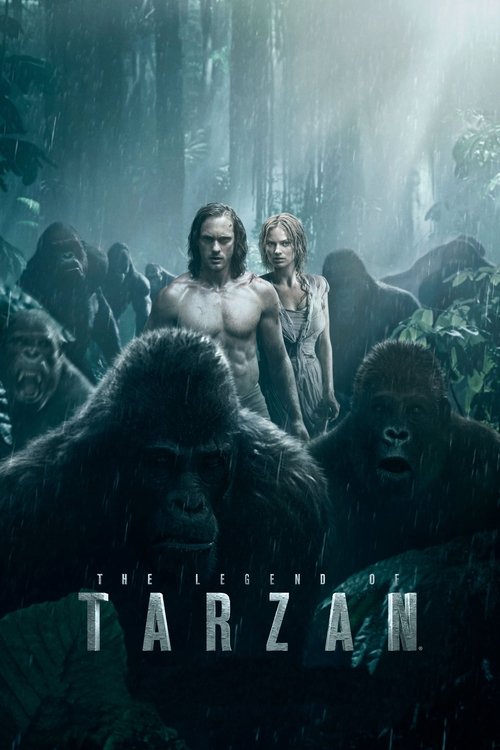
The Legend of Tarzan
2016 · Directed by David Yates
Woke Score
CriticCritic Score
Audience
Based
Critics rated this 22 points above its woke score. Among Based films, this critic score ranks #327 of 345.
Representation Casting
Score: 55/100
The cast includes Black actors (Samuel L. Jackson, Djimon Hounsou) and a woman in a significant role (Margot Robbie), suggesting diverse representation on the surface, though their character agency remains limited within colonial narrative structures.
LGBTQ+ Themes
Score: 0/100
No LGBTQ+ themes, characters, or representation are present in the film.
Feminist Agenda
Score: 15/100
Margot Robbie's character provides female representation but functions primarily as a romantic interest and observer rather than as an agent driving the narrative forward.
Racial Consciousness
Score: 35/100
The film acknowledges that colonialism and resource extraction are harmful, and includes Black characters in positions of influence, but never interrogates systemic racial hierarchies or centers African agency and perspective.
Climate Crusade
Score: 0/100
No climate themes or environmental consciousness are present in the film.
Eat the Rich
Score: 20/100
The mining operation is portrayed as villainous, but the critique remains superficial, blaming individual greed rather than interrogating the capitalist systems that incentivize resource extraction.
Body Positivity
Score: 0/100
No body positivity themes or representation of diverse body types are evident in the film.
Neurodivergence
Score: 0/100
No neurodivergent characters or themes are present in the film.
Revisionist History
Score: 25/100
The film attempts to acknowledge colonial violence through its plot setup but does not substantially revise or interrogate the historical record of colonialism and imperialism.
Lecture Energy
Score: 10/100
While the film gestures toward social awareness through its casting and plot setup, it avoids any explicit preachiness or speechifying about social issues.


Synopsis
Tarzan, having acclimated to life in London, is called back to his former home in the jungle to investigate the activities at a mining encampment.
Consciousness Assessment
The Legend of Tarzan presents a curious case of surface-level progressive casting layered atop fundamentally conservative storytelling. Samuel L. Jackson and Djimon Hounsou appear in the cast, suggesting a multicultural approach to the material, yet the film's narrative structure remains rooted in the traditional colonial framework: a white man must save Africa from exploitation, with African characters relegated to supporting roles in their own continent. The mining conflict, while ostensibly about resource extraction and imperial greed, never interrogates the systematic power structures that enable such exploitation, instead framing the conflict as a matter of individual villainy solved through personal heroism.
The film does make modest gestures toward acknowledging colonial violence and its consequences. The setup involves investigating exploitation in the Congo, and there is surface acknowledgment that colonialism caused harm. However, this awareness never deepens into genuine structural critique. The narrative remains centered on Tarzan's perspective and his emotional journey rather than on the agency or interiority of African characters. Margot Robbie's presence as a white female love interest further reinforces the film's focus on European protagonists navigating an exotic setting. The film treats Africa as a place to be rescued and its people as beneficiaries of white intervention, rather than as actors with their own historical agency.
Aesthetically and thematically, the film operates firmly within the adventure-spectacle genre without challenging its colonial underpinnings. There is no examination of how capitalism drives resource extraction, no meaningful interrogation of racial hierarchies, and no space for neurodivergent or queer perspectives. The body positivity, feminist consciousness, and climate awareness remain entirely absent. What we encounter instead is a 2016 film that hired a diverse cast but declined to fundamentally reimagine the colonial narrative it inherited.
Analysis generated by our Consciousness Algorithm
Critic Reviews
“The Legend of Tarzan isn't half-bad; actually, it's pretty good. Beautifully made and smartly set at the beginning of Belgian King Leopold II's rapacious colonization of the Congo in the 1880s, this is certainly the best live-action Tarzan film in many a decade (which, admittedly, isn't saying much) and offers a well-judged balance of vigorous action and engaging-enough drama.”
“The Legend of Tarzan has a whole lot of fun, big-screen things going for it — adventure, romance, natural landscapes, digital animals and oceans of rippling handsome man-muscle. Its sweep and easy pleasures come from its old-fashioned escapades — it’s one long dash through the jungle by foot, train, boat and swinging vine — but what makes it more enjoyable than other recycled stories of this type is that the filmmakers have given Tarzan a thoughtful, imperfect makeover.”
“You have to admire the sheer physical scope of this epic, even if there are no animals in it.”
“The Legend of Tarzan, for all its anticolonialist posturing and eminently attractive co-stars, has a dead soul.”
Consciousness Markers
The cast includes Black actors (Samuel L. Jackson, Djimon Hounsou) and a woman in a significant role (Margot Robbie), suggesting diverse representation on the surface, though their character agency remains limited within colonial narrative structures.
No LGBTQ+ themes, characters, or representation are present in the film.
Margot Robbie's character provides female representation but functions primarily as a romantic interest and observer rather than as an agent driving the narrative forward.
The film acknowledges that colonialism and resource extraction are harmful, and includes Black characters in positions of influence, but never interrogates systemic racial hierarchies or centers African agency and perspective.
No climate themes or environmental consciousness are present in the film.
The mining operation is portrayed as villainous, but the critique remains superficial, blaming individual greed rather than interrogating the capitalist systems that incentivize resource extraction.
No body positivity themes or representation of diverse body types are evident in the film.
No neurodivergent characters or themes are present in the film.
The film attempts to acknowledge colonial violence through its plot setup but does not substantially revise or interrogate the historical record of colonialism and imperialism.
While the film gestures toward social awareness through its casting and plot setup, it avoids any explicit preachiness or speechifying about social issues.