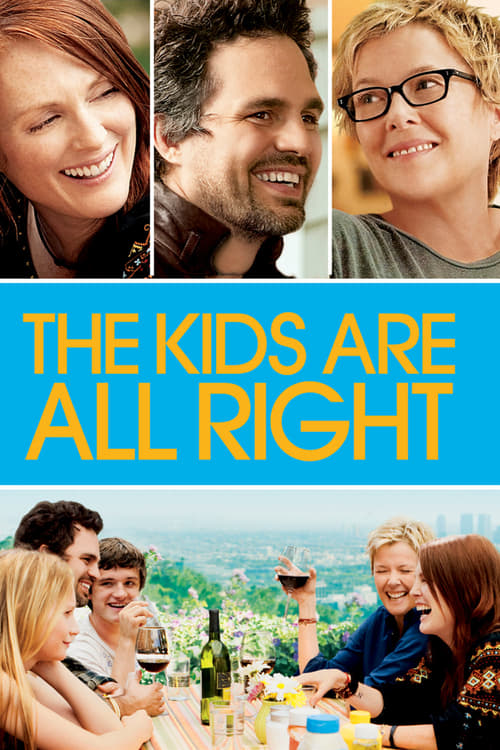
The Kids Are All Right
2010 · Directed by Lisa Cholodenko
Woke Score
CriticCritic Score
Audience
Woke-Adjacent
Critics rated this 28 points above its woke score. Among Woke-Adjacent films, this critic score ranks #22 of 151.
Representation Casting
Score: 65/100
The film centers on a lesbian family with accomplished, complex female leads, but does not employ casting as a deliberate diversity strategy. The supporting cast reflects some diversity but lacks the intentional representation calculus of later films.
LGBTQ+ Themes
Score: 75/100
A lesbian couple forms the emotional core of the film, and their relationship is treated with nuance and authenticity. However, the film avoids preachy messaging about LGBTQ+ identity or rights, instead portraying these characters as full human beings with interior lives.
Feminist Agenda
Score: 50/100
Both female leads are intelligent and agency-driven, but the film does not articulate explicit feminist ideology. The complications arise from individual personality conflicts rather than systemic gender analysis.
Racial Consciousness
Score: 25/100
The film includes some racial diversity in its supporting cast but does not address race as a thematic concern or examine racial dynamics within the narrative.
Climate Crusade
Score: 0/100
No climate-related themes, messaging, or advocacy appear in the film.
Eat the Rich
Score: 0/100
The film does not engage with anti-capitalist themes or critique of wealth and economic systems. The family operates within conventional economic structures without comment.
Body Positivity
Score: 0/100
No explicit body positivity messaging or representation of diverse body types as a thematic concern appears in the film.
Neurodivergence
Score: 0/100
No neurodivergent characters or exploration of neurodiversity appears in the narrative.
Revisionist History
Score: 0/100
The film does not engage in historical revisionism or reframe historical events through contemporary ideological lenses.
Lecture Energy
Score: 30/100
While the film addresses LGBTQ+ themes and family complexity, it avoids heavy-handed moral instruction. Characters debate and disagree in ways that feel organic rather than scripted for pedagogical purposes.


Synopsis
Two women, Nic and Jules, brought a son and daughter into the world through artificial insemination. When one of their children reaches age, both kids go behind their mothers' backs to meet with the donor. Life becomes so much more interesting when the father, two mothers and children start to become attached to each other.
Consciousness Assessment
The Kids Are All Right occupies an unusual position in the cultural chronology of progressive cinema. Released in 2010, it predates the full crystallization of contemporary social consciousness sensibilities by half a decade, yet it contains enough of the emerging markers to warrant serious consideration. The film centers on a lesbian family navigating parenthood and identity, presented with a refreshing lack of preachiness. What distinguishes it from genuine contemporary progressive filmmaking is its commitment to portraying these characters as ordinary people with ordinary complications rather than as vessels for ideological instruction. The film lets them be messy, flawed, and self-interested without suggesting that these qualities result from their sexual orientation or family structure.
The LGBTQ+ representation here deserves examination. Cholodenko's direction treats Nic and Jules as fully realized human beings whose relationship is central to the narrative without ever feeling like an educational vehicle. However, the film stops short of the kind of explicit advocacy that would characterize later entries in this genre. The heterosexual male lead (Ruffalo) is given equal complexity and narrative weight, and his presence in the family unit is treated as genuinely complicating rather than subordinate. This restraint, while artistically sound, prevents the film from achieving higher scores in several categories. The representation casting is solid but not aggressive in its diversity calculus. The film does not engage in revisionist history, climate advocacy, anti-capitalist messaging, or any engagement with neurodiversity or body positivity.
What emerges is a film that genuinely advanced LGBTQ+ representation in mainstream cinema through normalization rather than celebration, which may actually work against it in a scoring system designed to detect the specific markers of 2020s progressive sensibility. It is a film made at the precise historical moment when such representation was still somewhat transgressive without yet being conscripted into the service of broader ideological projects. This temporal positioning results in a middling score that reflects the film's honest ambivalence toward its own cultural significance.
Analysis generated by our Consciousness Algorithm
Critic Reviews
“This warm, funny, sexy, smart movie erases the boundaries between specialized ''gay content'' and universal ''family content'' with such sneaky authority.”
“The self-satire of The Kids Are All Right is so knowing, so rich, so hilarious, so damn healthy that it blows all thoughts of degeneracy out of your head.”
“There are not only glancing moments but whole sequences in this movie when the agony of social embarrassment makes you want to haul the characters to their feet and slap them in the chops.”
Consciousness Markers
The film centers on a lesbian family with accomplished, complex female leads, but does not employ casting as a deliberate diversity strategy. The supporting cast reflects some diversity but lacks the intentional representation calculus of later films.
A lesbian couple forms the emotional core of the film, and their relationship is treated with nuance and authenticity. However, the film avoids preachy messaging about LGBTQ+ identity or rights, instead portraying these characters as full human beings with interior lives.
Both female leads are intelligent and agency-driven, but the film does not articulate explicit feminist ideology. The complications arise from individual personality conflicts rather than systemic gender analysis.
The film includes some racial diversity in its supporting cast but does not address race as a thematic concern or examine racial dynamics within the narrative.
No climate-related themes, messaging, or advocacy appear in the film.
The film does not engage with anti-capitalist themes or critique of wealth and economic systems. The family operates within conventional economic structures without comment.
No explicit body positivity messaging or representation of diverse body types as a thematic concern appears in the film.
No neurodivergent characters or exploration of neurodiversity appears in the narrative.
The film does not engage in historical revisionism or reframe historical events through contemporary ideological lenses.
While the film addresses LGBTQ+ themes and family complexity, it avoids heavy-handed moral instruction. Characters debate and disagree in ways that feel organic rather than scripted for pedagogical purposes.