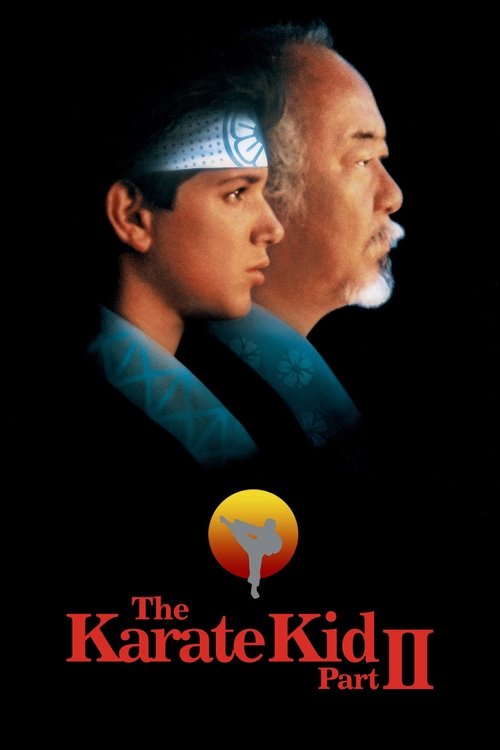
The Karate Kid Part II
1986 · Directed by John G. Avildsen
Woke Score
CriticCritic Score
Audience
Ultra Based
Critics rated this 40 points above its woke score. Among Ultra Based films, this critic score ranks #1056 of 1469.
Representation Casting
Score: 32/100
The film features primarily Asian and Asian-American actors in roles set in Okinawa, which is demographically appropriate. However, this reflects practical casting rather than progressive intention, and Asian characters remain secondary to Ralph Macchio's protagonist.
LGBTQ+ Themes
Score: 0/100
There are no LGBTQ+ themes, characters, or references present in the film. Romantic interest is exclusively heterosexual.
Feminist Agenda
Score: 12/100
Female characters exist in the narrative but occupy traditionally passive or romantic roles. Kumiko is a love interest rather than a fully developed character, and Yukie is presented primarily through her connection to men's conflicts.
Racial Consciousness
Score: 8/100
The film treats Okinawan culture and identity as setting and backdrop rather than exploring colonial history, systemic issues, or cultural power dynamics.
Climate Crusade
Score: 0/100
Climate change and environmental concerns are entirely absent from the narrative. The natural setting of Okinawa is purely aesthetic.
Eat the Rich
Score: 5/100
There is minimal engagement with economic systems or class critique. The conflict centers on personal honor and martial tradition rather than material conditions or wealth inequality.
Body Positivity
Score: 0/100
The film celebrates martial prowess and physical conditioning as ideals. Body diversity is not a concern, and physical discipline is presented as virtue without question.
Neurodivergence
Score: 0/100
There is no representation of neurodivergent characters or any engagement with disability, mental health, or neurodiversity.
Revisionist History
Score: 3/100
While the film is set against historical backdrop of Okinawa, it does not attempt revisionist historical narrative. It ignores rather than reframes historical context.
Lecture Energy
Score: 15/100
Miyagi delivers philosophical wisdom about karate and life, but these moments function as character development and mentorship rather than preachy lectures about social issues or morality lessons.


Synopsis
Summoned by his dying father, Miyagi returns to his homeland of Okinawa, with Daniel, after a 40-year exile. There he must confront Yukie, the love of his youth, and Sato, his former best friend turned vengeful rival. Sato is bent on a fight to the death, even if it means the destruction of their village. Daniel finds his own love in Yukia's niece, Kumiko, and his own enemy in Sato's nephew, the vicious Chozen. Now, far away from the tournaments, cheering crowds and safety of home, Daniel will face his greatest challenge ever when the cost of honor is life itself.
Consciousness Assessment
The Karate Kid Part II represents a curious artifact of mid-1980s filmmaking, a sequel that dutifully follows its predecessor to Okinawa with a cast predominantly composed of Asian and Asian-American actors. Yet the film's approach to representation remains largely incidental to its narrative machinery. The story concerns itself primarily with honor, tradition, and martial combat, topics that predate modern social consciousness by centuries. Pat Morita's Miyagi is a character of dignity and wisdom, but he exists more as a vessel for philosophical instruction than as a fully realized human being navigating the complexities of identity or systemic inequality.
The romantic subplot introduced through Kumiko (Tamlyn Tomita) and the antagonism of Chozen (Yuji Okumoto) follow conventional action-film logic without interrogating power dynamics or cultural dynamics with any contemporary sensibility. The film treats Okinawan culture as an exotic backdrop rather than exploring it through any lens of colonial history or cultural preservation. Sato's vendetta and the village conflict are framed as personal and historical matters of honor rather than as reflections of broader social structures. The female characters, while present, remain secondary to the male-centered narrative of combat and redemption.
This is a film that happens to feature Asian actors in a story set in Asia, but it demonstrates no particular interest in what we might now call social consciousness about representation, identity, or the power imbalances embedded in cross-cultural storytelling. It is, in essence, a martial arts adventure film from the Reagan era, confident in its own narrative and untroubled by the thought that there might be more to say about the world it depicts.
Analysis generated by our Consciousness Algorithm
Critic Reviews
“Kid II is an enlightening experience. It teaches you a little about courage, mercy, and the zen of movie-cycle maintenance. ”
“The plotline is classic Western morality-play stuff, with the goodies and baddies clearly delineated, but the set pieces are well constructed, and the whole thing is beautifully staged and shot.”
“There are scattered pleasures throughout the film due to its two lead performances, which are the equal of the work done in the original. It's just that with a few exceptions, the characters Miyagi and Daniel are forced into conflict with aren't worthy of their time.”
“Kid II is not comparable to its predecessor. It is stale and boring. [20 June 1986, p.D1]”
Consciousness Markers
The film features primarily Asian and Asian-American actors in roles set in Okinawa, which is demographically appropriate. However, this reflects practical casting rather than progressive intention, and Asian characters remain secondary to Ralph Macchio's protagonist.
There are no LGBTQ+ themes, characters, or references present in the film. Romantic interest is exclusively heterosexual.
Female characters exist in the narrative but occupy traditionally passive or romantic roles. Kumiko is a love interest rather than a fully developed character, and Yukie is presented primarily through her connection to men's conflicts.
The film treats Okinawan culture and identity as setting and backdrop rather than exploring colonial history, systemic issues, or cultural power dynamics.
Climate change and environmental concerns are entirely absent from the narrative. The natural setting of Okinawa is purely aesthetic.
There is minimal engagement with economic systems or class critique. The conflict centers on personal honor and martial tradition rather than material conditions or wealth inequality.
The film celebrates martial prowess and physical conditioning as ideals. Body diversity is not a concern, and physical discipline is presented as virtue without question.
There is no representation of neurodivergent characters or any engagement with disability, mental health, or neurodiversity.
While the film is set against historical backdrop of Okinawa, it does not attempt revisionist historical narrative. It ignores rather than reframes historical context.
Miyagi delivers philosophical wisdom about karate and life, but these moments function as character development and mentorship rather than preachy lectures about social issues or morality lessons.