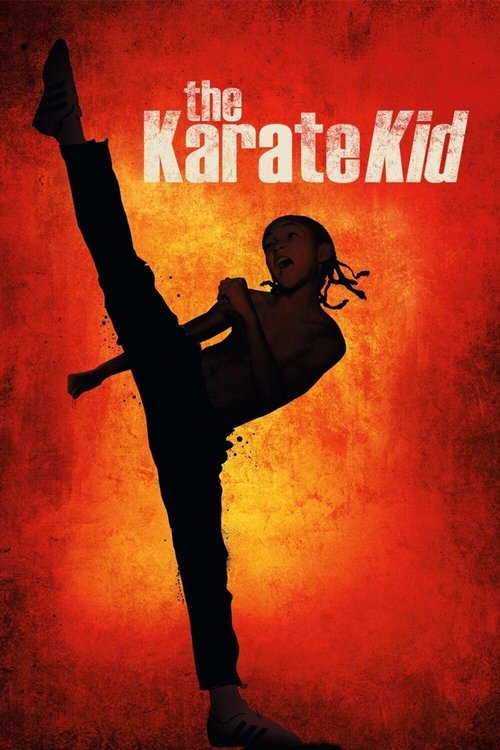
The Karate Kid
2010 · Directed by Harald Zwart
Woke Score
CriticCritic Score
Audience
Based
Critics rated this 39 points above its woke score. Among Based films, this critic score ranks #232 of 345.
Representation Casting
Score: 65/100
The film features a Black male lead (Jaden Smith) and an Asian male co-lead (Jackie Chan), with predominantly Chinese supporting cast. This represents intentional diversity compared to the 1984 original, though the film treats this casting as straightforward rather than thematically significant.
LGBTQ+ Themes
Score: 0/100
No LGBTQ+ themes, characters, or subtext are present in the film. It is a traditional heterosexual coming-of-age story.
Feminist Agenda
Score: 15/100
Taraji P. Henson plays Dre's mother as a capable professional whose career move drives the plot, but the film does not interrogate gender, female agency, or feminist themes.
Racial Consciousness
Score: 10/100
While the film features racial diversity in casting and is set in China, it does not engage with racial consciousness, systemic racism, or the implications of a Black American navigating Chinese society.
Climate Crusade
Score: 0/100
No environmental or climate themes are present in the film.
Eat the Rich
Score: 5/100
The film includes conflict between Dre and wealthier bullies, but this is portrayed as personal antagonism rather than class consciousness or critique of economic systems.
Body Positivity
Score: 0/100
The film centers on martial arts training and physical discipline without engaging in body positivity discourse or challenging conventional beauty standards.
Neurodivergence
Score: 0/100
No neurodivergent characters or themes are present in the film.
Revisionist History
Score: 0/100
The film is a contemporary story with no engagement with historical narratives or revisionist reframing of past events.
Lecture Energy
Score: 15/100
Mr. Han imparts martial arts philosophy and wisdom about discipline and maturity, but this teaching is positioned as timeless rather than as contemporary social commentary or awareness-raising.


Synopsis
12-year-old Dre Parker could've been the most popular kid in Detroit, but his mother's latest career move has landed him in China. Dre immediately falls for his classmate Mei Ying but the cultural differences make such a friendship impossible. Even worse, Dre's feelings make him an enemy of the class bully, Cheng. With no friends in a strange land, Dre has nowhere to turn but maintenance man Mr. Han, who is a kung fu master. As Han teaches Dre that kung fu is not about punches and parries, but maturity and calm, Dre realizes that facing down the bullies will be the fight of his life.
Consciousness Assessment
The 2010 remake of The Karate Kid represents a curious artifact of early 2010s Hollywood, when diversity in casting was increasingly visible but not yet accompanied by the explicit social consciousness that would define the progressive film landscape of the late 2010s and 2020s. The film's primary distinguishing feature from the 1984 original is its casting: Jaden Smith as a Black protagonist and Jackie Chan as an Asian co-lead, alongside a predominantly Chinese supporting cast. This is presented as straightforward recasting rather than as a meditation on racial identity or systemic inequality. The story remains fundamentally apolitical, content to be a fish-out-of-water martial arts fable where a Detroit teenager learns discipline and humility through kung fu training in Beijing. The mother-son relationship, anchored by Taraji P. Henson's presence, exists but is not interrogated through a feminist lens; she is a capable professional whose career move drives the plot without the film pausing to comment on her agency or the intersections of her identity.
The film's engagement with China functions as exotic backdrop rather than as an opportunity for cultural critique or awareness-raising. The wealthy Chinese bullies who antagonize Dre are portrayed as antagonists without the film suggesting anything about class consciousness or systemic power structures. Mr. Han's philosophy, while touching, aims toward timeless martial arts wisdom rather than contemporary social awareness. There is no discussion of identity, no examination of what it means for a Black American boy to navigate Chinese society, no queer subtext, no environmental consciousness, and no suggestion that the world operates according to unjust systems requiring restructuring. The film is, in essence, a traditional coming-of-age story that happens to feature characters who would be considered diverse by 2010s standards, but treats that diversity as incidental rather than as a subject worthy of exploration or commentary.
Viewed through the lens of modern progressive sensibilities, The Karate Kid 2010 occupies an interesting middle ground. It predates the cultural moment when films began to foreground social consciousness explicitly, yet it was also released after the point at which simple representation could be considered a sufficient marker of progressive intent. The film works as entertainment and as a competent remake, grossing $358 million globally and finding particular success in China. But measured against the specific markers of contemporary cultural awareness, it remains largely inert, content to tell a story about personal growth without interrogating the social structures within which that growth occurs.
Analysis generated by our Consciousness Algorithm
Critic Reviews
“What's fun is how the new Karate Kid embraces and vastly improves the cliches, keeping the plot cleverly updated for a generation that never heard of Ralph Macchio.”
“If you've seen “The Karate Kid” (1984), the memories will come back during this 2010 remake. That's a compliment.”
“Jaden Smith is destined to be a star by the force of will (and wallets) of parents Will and Jada Smith, both producers on The Karate Kid. But he's also got the raw material.”
“A popcorn picture that thinks it’s “The Last Emperor,” The Karate Kid is about as likely to grab your youngster’s attention as any other propaganda film made by the Chinese government.”
Consciousness Markers
The film features a Black male lead (Jaden Smith) and an Asian male co-lead (Jackie Chan), with predominantly Chinese supporting cast. This represents intentional diversity compared to the 1984 original, though the film treats this casting as straightforward rather than thematically significant.
No LGBTQ+ themes, characters, or subtext are present in the film. It is a traditional heterosexual coming-of-age story.
Taraji P. Henson plays Dre's mother as a capable professional whose career move drives the plot, but the film does not interrogate gender, female agency, or feminist themes.
While the film features racial diversity in casting and is set in China, it does not engage with racial consciousness, systemic racism, or the implications of a Black American navigating Chinese society.
No environmental or climate themes are present in the film.
The film includes conflict between Dre and wealthier bullies, but this is portrayed as personal antagonism rather than class consciousness or critique of economic systems.
The film centers on martial arts training and physical discipline without engaging in body positivity discourse or challenging conventional beauty standards.
No neurodivergent characters or themes are present in the film.
The film is a contemporary story with no engagement with historical narratives or revisionist reframing of past events.
Mr. Han imparts martial arts philosophy and wisdom about discipline and maturity, but this teaching is positioned as timeless rather than as contemporary social commentary or awareness-raising.