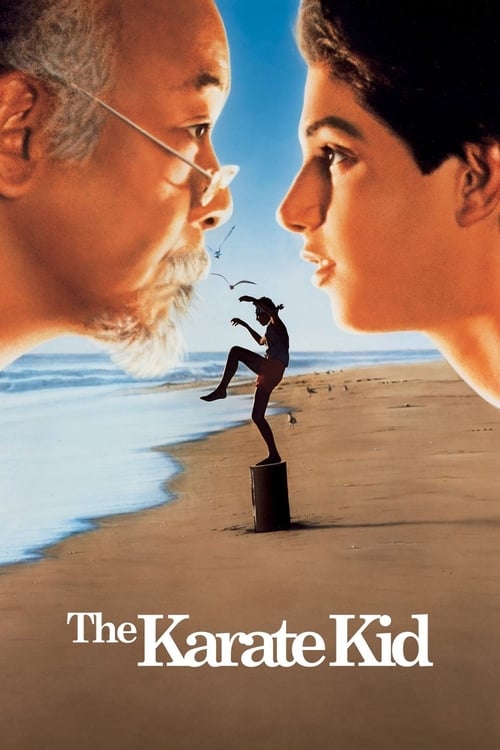
The Karate Kid
1984 · Directed by John G. Avildsen
Woke Score
CriticCritic Score
Audience
Ultra Based
Critics rated this 57 points above its woke score. Among Ultra Based films, this critic score ranks #880 of 1469.
Representation Casting
Score: 15/100
Pat Morita's casting was notable for an era of limited Asian-American representation, but the character remains the wise mentor archetype with minimal complexity or cultural depth.
LGBTQ+ Themes
Score: 0/100
No LGBTQ+ representation, themes, or subtext. The film is entirely heteronormative in its romantic elements.
Feminist Agenda
Score: 5/100
Ali exists as a romantic prize and motivation rather than a fully realized character. The film's worldview privileges masculine competition and physical dominance.
Racial Consciousness
Score: 20/100
While Mr. Miyagi is Japanese-American, his cultural background is treated as exotic mystique rather than examined critically or contextually.
Climate Crusade
Score: 0/100
No environmental themes, concerns, or messaging of any kind.
Eat the Rich
Score: 0/100
No critique of wealth, capitalism, or economic systems. Cobra Kai's ruthlessness is a moral failing, not a systemic one.
Body Positivity
Score: 0/100
The film celebrates physical fitness and martial prowess, framing weakness as something to overcome rather than accepting diverse body types.
Neurodivergence
Score: 0/100
No representation of neurodivergent characters or exploration of neurodivergence as a theme.
Revisionist History
Score: 0/100
Set in contemporary 1984 with no historical revisionism or reframing of past events.
Lecture Energy
Score: 5/100
Mr. Miyagi imparts philosophy through action and example rather than explicit moralizing, resulting in minimal preachy tone.


Synopsis
New Jersey teen Daniel LaRusso moves to Los Angeles with his mother, and soon strikes up a relationship with Ali. He quickly finds himself the target of bullying by a group of thugs, led by Ali's ex-boyfriend Johnny, who study karate at the Cobra Kai dojo under ruthless sensei John Kreese. Fortunately, Daniel befriends Mr. Miyagi, an unassuming repairman who just happens to be a martial arts master himself. Miyagi takes Daniel under his wing, training him in a more compassionate form of karate for self-defense and, later, preparing him to compete against the brutal Cobra Kai.
Consciousness Assessment
The Karate Kid presents itself as a film about discipline and personal growth, and it succeeds admirably at that particular task. What it does not do is interrogate any of the social consciousness frameworks that would later dominate cinema. The film is a product of 1984, which is to say it operates in a pre-awakening cultural moment when representation meant simply casting an Asian-American actor and asking no further questions about the implications.
Pat Morita's Mr. Miyagi is treated with respect and affection by the narrative, which counts for something, but the character exists primarily to dispense Oriental wisdom and martial philosophy to a white protagonist. His backstory, his full humanity, his relationship to his own heritage and immigration, these remain background details. The film is not hostile to Asian-American presence, merely indifferent to it as a subject worthy of examination. Elisabeth Shue's Ali serves as a romantic motivation, appearing and disappearing as the plot requires, her agency entirely subordinate to Daniel's arc of self-actualization.
The worldview is fundamentally masculine and competitive. Strength is physical, victory is achieved through combat, and the moral lesson involves out-fighting one's enemies rather than transcending conflict altogether. This is not presented as problematic; it is presented as simply how the world works. The Karate Kid is a film that believes in hierarchy, earned status, and the transformative power of traditional mentorship. By any contemporary measure of progressive sensibility, these positions would require considerable unpacking and qualification. The film offers none. It is content to be exactly what it is: a beautifully crafted story about an underdog learning to fight, with no concern for what that means or whom it might offend.
Analysis generated by our Consciousness Algorithm
Critic Reviews
“What's fun is how the new Karate Kid embraces and vastly improves the cliches, keeping the plot cleverly updated for a generation that never heard of Ralph Macchio.”
“If you've seen “The Karate Kid” (1984), the memories will come back during this 2010 remake. That's a compliment.”
“Jaden Smith is destined to be a star by the force of will (and wallets) of parents Will and Jada Smith, both producers on The Karate Kid. But he's also got the raw material.”
“A popcorn picture that thinks it’s “The Last Emperor,” The Karate Kid is about as likely to grab your youngster’s attention as any other propaganda film made by the Chinese government.”
Consciousness Markers
Pat Morita's casting was notable for an era of limited Asian-American representation, but the character remains the wise mentor archetype with minimal complexity or cultural depth.
No LGBTQ+ representation, themes, or subtext. The film is entirely heteronormative in its romantic elements.
Ali exists as a romantic prize and motivation rather than a fully realized character. The film's worldview privileges masculine competition and physical dominance.
While Mr. Miyagi is Japanese-American, his cultural background is treated as exotic mystique rather than examined critically or contextually.
No environmental themes, concerns, or messaging of any kind.
No critique of wealth, capitalism, or economic systems. Cobra Kai's ruthlessness is a moral failing, not a systemic one.
The film celebrates physical fitness and martial prowess, framing weakness as something to overcome rather than accepting diverse body types.
No representation of neurodivergent characters or exploration of neurodivergence as a theme.
Set in contemporary 1984 with no historical revisionism or reframing of past events.
Mr. Miyagi imparts philosophy through action and example rather than explicit moralizing, resulting in minimal preachy tone.