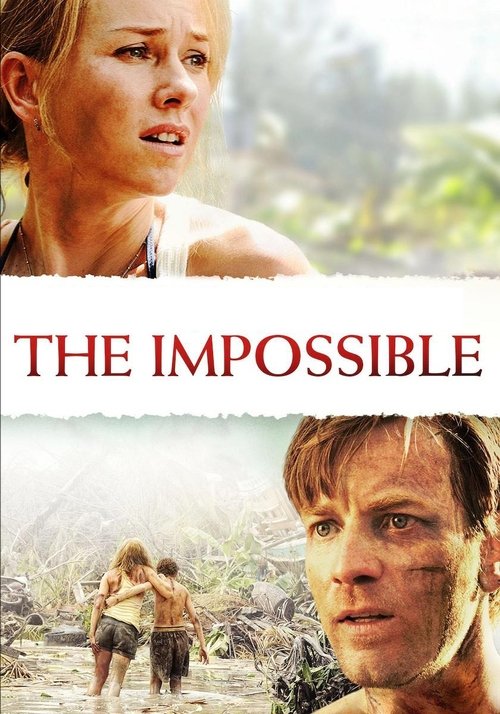
The Impossible
2012 · Directed by J. A. Bayona
Woke Score
CriticCritic Score
Audience
Ultra Based
Critics rated this 69 points above its woke score. Among Ultra Based films, this critic score ranks #523 of 1469.
Representation Casting
Score: 0/100
The film casts British actors for a British family, which is historically accurate casting rather than progressive representation. No effort toward diverse or inclusive casting beyond reflecting the true story.
LGBTQ+ Themes
Score: 0/100
No LGBTQ+ characters, themes, or representation present in the film.
Feminist Agenda
Score: 0/100
The female protagonist is a victim of the tsunami whose survival is the emotional focus, but there is no feminist agenda or gender-conscious commentary.
Racial Consciousness
Score: 5/100
The film centers a white British family in a tragedy that primarily affected Asian populations, but this is treated as a narrative choice rather than examined or interrogated. Minimal active racial consciousness, though the centering itself raises implicit questions.
Climate Crusade
Score: 0/100
The tsunami is treated as a natural disaster without any connection to climate change, environmental consciousness, or ecological themes.
Eat the Rich
Score: 0/100
No critique of capitalism, wealth inequality, or economic systems present in the film.
Body Positivity
Score: 0/100
The film contains graphic depictions of injury and suffering but no body positivity messaging or alternative body representation.
Neurodivergence
Score: 0/100
No representation of neurodivergence or discussion of cognitive or neurological diversity.
Revisionist History
Score: 0/100
The film is based on a true story and depicts historical events as they occurred without revisionist reinterpretation.
Lecture Energy
Score: 0/100
The film is a straightforward emotional survival narrative with no preachy messaging or attempts to educate the audience about social issues.


Synopsis
In December 2004, close-knit family Maria, Henry and their three sons begin their winter vacation in Thailand. But the day after Christmas, the idyllic holiday turns into an incomprehensible nightmare when a terrifying roar rises from the depths of the sea, followed by a wall of black water that devours everything in its path. Though Maria and her family face their darkest hour, unexpected displays of kindness and courage ameliorate their terror.
Consciousness Assessment
This 2012 disaster film represents the particular strain of prestige filmmaking that mistakes emotional authenticity for social awareness. Director J.A. Bayona has crafted a technically accomplished recreation of the 2004 Indian Ocean tsunami, centered entirely on the survival of a British family while millions of others perished in the catastrophe. The film is morally serious and deeply felt, which accounts for Naomi Watts' Academy Award nomination and the widespread critical acclaim. Yet moral seriousness about suffering is not the same as cultural consciousness.
The film's central narrative choice deserves examination. By positioning the white, English-speaking, affluent family as the emotional and moral center of a tragedy that devastated Indonesia, Thailand, and surrounding nations, it performs a subtle but consistent act of centering. The local characters who appear are largely incidental to the story, present to facilitate the family's rescue or provide background color. This is not deliberate malice but rather the unexamined default perspective of prestige cinema in the early 2010s. The film does not lecture, does not explicitly discuss social hierarchies, and contains no visible progressive signposting. It simply assumes that this particular family's anguish is the story worth telling in detail.
A minor point of interest: the film includes international cast members and was a Spanish production, yet these facts produce no visible multicultural sensibility in the actual narrative. The Impossible treats its subject matter with appropriate gravity but remains fundamentally a conventional survival story that happens to be about a real, incomprehensible tragedy. It is precisely the kind of film that earns awards while reinforcing existing hierarchies of whose stories matter.
Analysis generated by our Consciousness Algorithm
Critic Reviews
“The Impossible is one of the most emotionally realistic disaster movies in recent memory -- and certainly one of the most frightening in its epic re-creation of the catastrophic 2004 Indian Ocean tsunami.”
“Wrenchingly acted, deftly manipulated and terrifyingly well made.”
“Put a staggering accomplishment called The Impossible, from Spanish director J. A. Bayona, at the top of the season's must-see list. ”
“A sham realist's disaster movie, tackily insulting the deaths of 300,000 people by reducing the horrors of the Indian Ocean tsunami to a series of genre titillations.”
Consciousness Markers
The film casts British actors for a British family, which is historically accurate casting rather than progressive representation. No effort toward diverse or inclusive casting beyond reflecting the true story.
No LGBTQ+ characters, themes, or representation present in the film.
The female protagonist is a victim of the tsunami whose survival is the emotional focus, but there is no feminist agenda or gender-conscious commentary.
The film centers a white British family in a tragedy that primarily affected Asian populations, but this is treated as a narrative choice rather than examined or interrogated. Minimal active racial consciousness, though the centering itself raises implicit questions.
The tsunami is treated as a natural disaster without any connection to climate change, environmental consciousness, or ecological themes.
No critique of capitalism, wealth inequality, or economic systems present in the film.
The film contains graphic depictions of injury and suffering but no body positivity messaging or alternative body representation.
No representation of neurodivergence or discussion of cognitive or neurological diversity.
The film is based on a true story and depicts historical events as they occurred without revisionist reinterpretation.
The film is a straightforward emotional survival narrative with no preachy messaging or attempts to educate the audience about social issues.