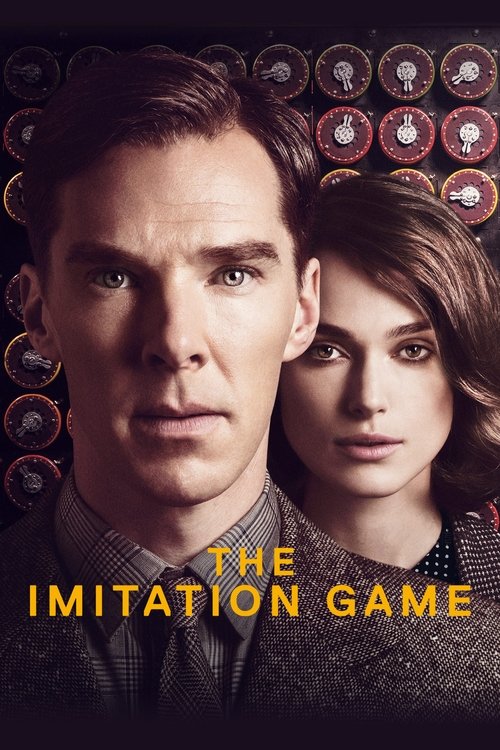
The Imitation Game
2014 · Directed by Morten Tyldum
Woke Score
CriticCritic Score
Audience
Woke
Critics rated this 3 points above its woke score. Among Woke films, this critic score ranks #57 of 88.
Representation Casting
Score: 50/100
The ensemble cast is predominantly white and male, reflecting historical reality, but Keira Knightley's inclusion and emphasis signals contemporary awareness of female exclusion from historical narratives. The casting choices do not prioritize diversity beyond correcting historical gender omissions.
LGBTQ+ Themes
Score: 78/100
The film centers entirely on Turing's homosexuality and the persecution he faced, making LGBTQ+ themes the emotional core of the narrative. His sexuality is presented as both an inherent aspect of his identity and as grounds for systemic injustice, treated with considerable gravity and sympathy.
Feminist Agenda
Score: 48/100
Joan Clarke's character provides commentary on gender discrimination in wartime Britain, but her narrative arc follows postfeminist logic where an exceptional individual overcomes barriers rather than challenging structural inequality. Gender inequality is acknowledged but not deeply interrogated.
Racial Consciousness
Score: 0/100
The film contains no meaningful engagement with racial themes, racial diversity in casting, or racial consciousness. The historical setting and narrative focus do not intersect with racial justice concerns.
Climate Crusade
Score: 0/100
Climate concerns are entirely absent from the film. No environmental themes, climate messaging, or ecological consciousness appears in the narrative or subtext.
Eat the Rich
Score: 0/100
There is no critique of capitalism, class structures, or economic systems. The film does not interrogate the institutional or economic contexts in which Bletchley Park operated.
Body Positivity
Score: 0/100
Body positivity concerns do not feature in the film. Character bodies are presented without commentary on beauty standards, disability representation, or body diversity.
Neurodivergence
Score: 25/100
Turing is portrayed with social awkwardness and behavioral peculiarities that suggest neurodivergence, but the film treats these characteristics as personality quirks rather than meaningfully engaging with neurodivergent identity or representation.
Revisionist History
Score: 62/100
The film substantially rewrites Turing's biography, inventing scenes and misrepresenting historical facts to serve a contemporary moral narrative about persecution and vindication. This revisionism is deliberate and serves progressive thematic purposes.
Lecture Energy
Score: 72/100
The film privileges moments of moral revelation and explicit explanation, where characters articulate lessons about intolerance and the cost of persecution. Scenes of confrontation and explanation carry considerable preachy weight, signaling contemporary progressive communication styles.


Synopsis
Based on the real life story of legendary cryptanalyst Alan Turing, the film portrays the nail-biting race against time by Turing and his brilliant team of code-breakers at Britain's top-secret Government Code and Cypher School at Bletchley Park, during the darkest days of World War II.
Consciousness Assessment
The Imitation Game arrives as a textbook example of prestige filmmaking in the 2010s, a period when progressive sensibilities began filtering into historical dramas with increasing deliberation. The film centers on Alan Turing's persecution for homosexuality, threading this narrative through the broader story of his cryptographic achievements, and in doing so, it announces its thematic priorities with considerable clarity. Morten Tyldum's approach treats Turing's sexuality not as an incidental detail of his biography but as the emotional core of the entire enterprise. The film's framing device, which intersperses scenes of Turing's chemical castration with flashbacks to his youth and his wartime triumphs, serves the modern sensibility that suffering ennobles marginalized subjects.
The film's engagement with gender inequality arrives primarily through Keira Knightley's Joan Clarke, a real historical figure whose presence in the narrative has been substantially augmented. Clarke functions as both Turing's intellectual equal and as a vessel for commentary on sexism in 1940s Britain. She is barred from the Enigma team, patronized by her colleagues, and relegated to lesser work until Turing recognizes her talent. This structure, while addressing historical gender discrimination, deploys what critics have termed a postfeminist logic: the exceptional woman who transcends systemic barriers through individual merit, rather than one who challenges the system itself. The film hints at injustice but never interrogates its own machinery. Beyond these two threads, the film offers little engagement with the broader constellation of contemporary progressive concerns. There is no interrogation of empire, capitalism, or environmental questions. The neurodivergence angle, while present in Turing's social awkwardness and behavioral peculiarities, remains largely incidental to his character rather than something the film examines with any specificity.
Where The Imitation Game achieves its most potent cultural work is in the lecture energy surrounding its moral pronouncements about persecution and conformity. The film consistently privileges scenes of revelation and confrontation, moments where Turing explains his brilliance or where his tormentors are made to understand the cost of their intolerance. This rhetorical approach, while emotionally effective, edges toward the preachy. The film is not content to let Turing's story speak for itself; it must ensure we understand, with absolute clarity, that society was wrong to punish him and that his marginalization was a tragedy. This is progressive moral instruction delivered with the gravity of historical importance, which is precisely what marks contemporary progressive cinema at the level of form, not merely content. The result is a film that genuinely cares about its subject's suffering, yet cannot resist the temptation to weaponize that suffering as a vehicle for contemporary cultural messaging.
Analysis generated by our Consciousness Algorithm
Critic Reviews
“On its bright face, The Imitation Game, written by Graham Moore and directed by Morten Tyldum, fits into that cozy genre of tortured-genius biopics that sprout like kudzu just in time for the Oscars. But that’s not fair to the film, which outthinks and outplays other examples of the genre.”
“Another must-see movie this year-end awards season (the other one is The Theory of Everything) is the brilliant encapsulation of one of the greatest stories of our time — the genius, heroism and ultimately shameful destruction of Alan Turing. ”
“The film works as well as it does due to the genius of Benedict Cumberbatch and the way he has inhabited Alan Turing’s persona.”
“This could have been a story of immense heroism, tragic sacrifice and agonizing historical irony, and it hints in that direction, in its stiff-upper-lip fashion, before retreating into a vain search for a happy ending and an effort to turn itself into “The King’s Speech.””
Consciousness Markers
The ensemble cast is predominantly white and male, reflecting historical reality, but Keira Knightley's inclusion and emphasis signals contemporary awareness of female exclusion from historical narratives. The casting choices do not prioritize diversity beyond correcting historical gender omissions.
The film centers entirely on Turing's homosexuality and the persecution he faced, making LGBTQ+ themes the emotional core of the narrative. His sexuality is presented as both an inherent aspect of his identity and as grounds for systemic injustice, treated with considerable gravity and sympathy.
Joan Clarke's character provides commentary on gender discrimination in wartime Britain, but her narrative arc follows postfeminist logic where an exceptional individual overcomes barriers rather than challenging structural inequality. Gender inequality is acknowledged but not deeply interrogated.
The film contains no meaningful engagement with racial themes, racial diversity in casting, or racial consciousness. The historical setting and narrative focus do not intersect with racial justice concerns.
Climate concerns are entirely absent from the film. No environmental themes, climate messaging, or ecological consciousness appears in the narrative or subtext.
There is no critique of capitalism, class structures, or economic systems. The film does not interrogate the institutional or economic contexts in which Bletchley Park operated.
Body positivity concerns do not feature in the film. Character bodies are presented without commentary on beauty standards, disability representation, or body diversity.
Turing is portrayed with social awkwardness and behavioral peculiarities that suggest neurodivergence, but the film treats these characteristics as personality quirks rather than meaningfully engaging with neurodivergent identity or representation.
The film substantially rewrites Turing's biography, inventing scenes and misrepresenting historical facts to serve a contemporary moral narrative about persecution and vindication. This revisionism is deliberate and serves progressive thematic purposes.
The film privileges moments of moral revelation and explicit explanation, where characters articulate lessons about intolerance and the cost of persecution. Scenes of confrontation and explanation carry considerable preachy weight, signaling contemporary progressive communication styles.