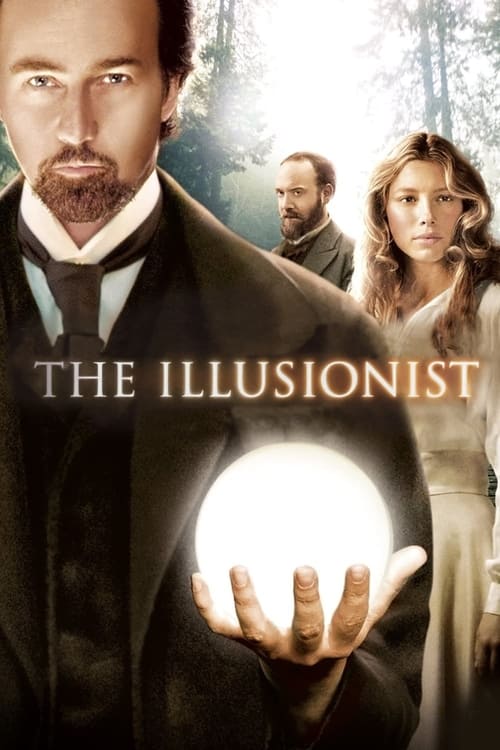
The Illusionist
2006 · Directed by Neil Burger
Woke Score
CriticCritic Score
Audience
Ultra Based
Critics rated this 64 points above its woke score. Among Ultra Based films, this critic score ranks #683 of 1469.
Representation Casting
Score: 0/100
The cast reflects period-appropriate Vienna with no conscious effort toward diverse representation. Casting serves narrative and historical setting, not contemporary diversity values.
LGBTQ+ Themes
Score: 0/100
No LGBTQ+ themes, characters, or subtext appear in the film. The narrative is entirely heteronormative in its romantic structure.
Feminist Agenda
Score: 5/100
Jessica Biel's character Sophie possesses agency in choosing her romantic partner, but remains primarily a romantic object to be won rather than a protagonist of her own story.
Racial Consciousness
Score: 0/100
The film contains no engagement with racial themes, consciousness, or representation. Its Viennese setting is treated as historical backdrop, not as a site of racial commentary.
Climate Crusade
Score: 0/100
No environmental themes, climate consciousness, or ecological messaging appears in the narrative.
Eat the Rich
Score: 5/100
The film depicts class transgression through an individual illusionist's scheme, but this operates as personal rebellion rather than systemic critique of capitalism or monarchy.
Body Positivity
Score: 0/100
No engagement with body diversity, body positivity, or non-conventional body representation. The film's aesthetic is period-appropriate glamour.
Neurodivergence
Score: 0/100
No neurodivergent characters, representation, or themes appear in the narrative.
Revisionist History
Score: 0/100
The film treats Austro-Hungarian history as straightforward historical backdrop without revisionist reframing or contemporary commentary on historical events.
Lecture Energy
Score: 0/100
The film contains no preachy messaging, moral lectures, or explicit ideological positioning. It pursues narrative mystery and entertainment.


Synopsis
With his eye on a lovely aristocrat, a gifted illusionist named Eisenheim uses his powers to win her away from her betrothed, a crown prince. But Eisenheim's scheme creates tumult within the monarchy and ignites the suspicion of a dogged inspector.
Consciousness Assessment
The Illusionist stands as a period entertainment wholly indifferent to the cultural preoccupations of progressive modernity. Set in fin-de-siècle Vienna, this 2006 thriller concerns itself with magic, class transgression, and romantic intrigue within a narrowly circumscribed aristocratic world. The narrative functions as a mystery box rather than a vehicle for social consciousness. Edward Norton's illusionist character uses his craft to transgress class boundaries and seduce Jessica Biel's Sophie from her betrothed prince, but this transgression operates as individual rebellion, not systemic critique. The film treats its female lead as a romantic prize to be won, not as an agent of her own liberation. Paul Giamatti's inspector pursues the mystery with bureaucratic determination, embodying the rational state apparatus, but the film's sympathies lie with illusion over enlightenment rationality.
The production design and narrative mechanics are entirely devoted to period atmosphere and plot mechanics. There is no contemporary social consciousness embedded in the storytelling. The class dynamics present themselves as historical fact rather than as commentary on economic structures. The representation of women, while present, remains ornamental to the central male narrative. The film makes no claims about neurodivergence, body diversity, environmental crisis, or the systematic oppression of marginalized groups. It is simply a thriller about a magician who deceives everyone, including the audience.
This is a pre-2015 artifact, made when films could concern themselves with narrative pleasure without interrogating their own social implications. It contains neither progressive nor regressive messaging, only indifference to such categories. A period piece that remains period, asking nothing of the viewer beyond engagement with its mystery.
Analysis generated by our Consciousness Algorithm
Critic Reviews
“Deserved an end-of-the-year prestige release, is a true work of art in a marketplace filled with velvet paintings. It's positively magical, the reason we loved movies in the first place.”
“Beautifully acted and handsomely mounted, this gorgeous period piece is an intelligent and intriguing exploration of "the dark arts" -- less dependent on mere hocus-pocus than on the convincing journey of the soul undertaken by its hero.”
“The film's moody, dark palette and soft, inchoate backgrounds tend to lull the senses rather than actively engage the viewer. The magic practiced by this illusionist does not extend to the screen.”
Consciousness Markers
The cast reflects period-appropriate Vienna with no conscious effort toward diverse representation. Casting serves narrative and historical setting, not contemporary diversity values.
No LGBTQ+ themes, characters, or subtext appear in the film. The narrative is entirely heteronormative in its romantic structure.
Jessica Biel's character Sophie possesses agency in choosing her romantic partner, but remains primarily a romantic object to be won rather than a protagonist of her own story.
The film contains no engagement with racial themes, consciousness, or representation. Its Viennese setting is treated as historical backdrop, not as a site of racial commentary.
No environmental themes, climate consciousness, or ecological messaging appears in the narrative.
The film depicts class transgression through an individual illusionist's scheme, but this operates as personal rebellion rather than systemic critique of capitalism or monarchy.
No engagement with body diversity, body positivity, or non-conventional body representation. The film's aesthetic is period-appropriate glamour.
No neurodivergent characters, representation, or themes appear in the narrative.
The film treats Austro-Hungarian history as straightforward historical backdrop without revisionist reframing or contemporary commentary on historical events.
The film contains no preachy messaging, moral lectures, or explicit ideological positioning. It pursues narrative mystery and entertainment.