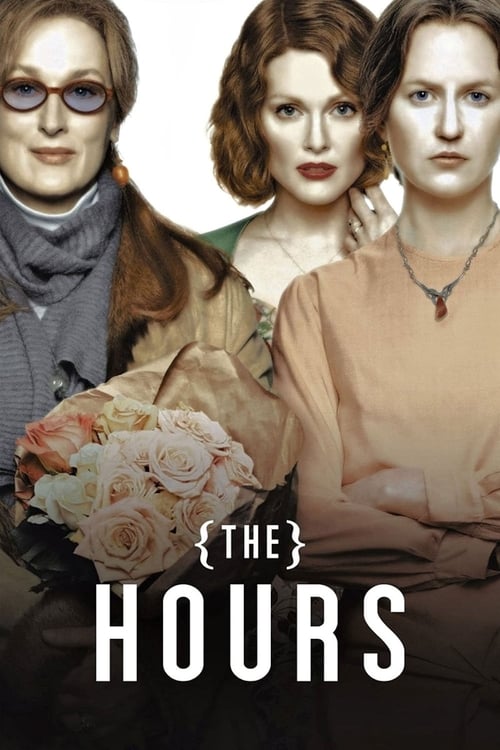
The Hours
2002 · Directed by Stephen Daldry
Woke Score
CriticCritic Score
Audience
Woke-Adjacent
Critics rated this 38 points above its woke score. Among Woke-Adjacent films, this critic score ranks #38 of 151.
Representation Casting
Score: 0/100
The cast reflects no deliberate diversity activism or representation strategy. The film centers white women across its three timelines with no apparent casting consideration beyond artistic fit.
LGBTQ+ Themes
Score: 65/100
Meryl Streep's character is in a long-term committed lesbian relationship. The film treats this with emotional sincerity and normality, though it is not the central focus and lacks explicit advocacy.
Feminist Agenda
Score: 58/100
The film centers female experience and interior life, critiquing 1950s domestic suffocation and celebrating female intellectual achievement. However, this emerges through narrative implication rather than explicit feminist argument.
Racial Consciousness
Score: 0/100
No racial consciousness or commentary appears in the film. Characters are uniformly white, and no thematic engagement with race or racial dynamics is present.
Climate Crusade
Score: 0/100
The film contains no climate-related themes, environmental consciousness, or ecological messaging of any kind.
Eat the Rich
Score: 0/100
No anti-capitalist sentiment or critique of economic systems appears. The film's concerns are existential and personal rather than economic or political.
Body Positivity
Score: 0/100
The film offers no body positivity messaging or commentary on body image, beauty standards, or bodily autonomy beyond naturalistic character portrayal.
Neurodivergence
Score: 0/100
No neurodivergent representation or discussion of neurodiversity appears in the film.
Revisionist History
Score: 0/100
While the film engages with Virginia Woolf's historical life, it does not attempt to rewrite history or challenge established historical narratives with contemporary revisionism.
Lecture Energy
Score: 0/100
The film maintains literary restraint and trusts viewers to interpret its themes. It contains no preachy speeches, explanatory dialogue, or heavy-handed messaging about social issues.


Synopsis
The story of three women searching for more potent, meaningful lives. Each is alive at a different time and place, all are linked by their yearnings and their fears. Their stories intertwine, and finally come together in a surprising, transcendent moment of shared recognition.
Consciousness Assessment
The Hours presents an interesting case study in examining how a prestige drama from the early 2000s engages with contemporary progressive sensibilities, even if those sensibilities were not yet codified as such at the time of release. The film centers three women across different temporal planes, each struggling with societal expectations and personal authenticity. Nicole Kidman's portrayal of Virginia Woolf emphasizes her intellectual brilliance and artistic vision, while Julianne Moore's suburban housewife character confronts the suffocating constraints of 1950s domesticity. Meryl Streep's contemporary New York woman navigates a long-term same-sex partnership. The film's DNA is literary and introspective rather than preachy, yet certain progressive preoccupations do surface.
The film's engagement with LGBTQ themes is its most pronounced progressive marker. Meryl Streep's character is in a committed lesbian relationship, and the narrative treats this with normality and emotional depth. The exploration of female sexuality and desire, particularly in the suburban 1950s segment, carries implicit feminist critique. However, the film stops short of explicit social consciousness or lecture. Its feminist dimensions operate through mood and implication rather than argument. The representation of women as intellectual, complex, and deserving of interiority is consistent throughout, though this was less radical in 2002 than it might have been in 1982.
Where the film falters on modern progressive markers is precisely where its literary pedigree protects it from contemporary pitfalls. There is no representation-casting activism, no racial consciousness, no climate preoccupation, no body positivity messaging, no neurodivergent representation, no revisionist history, and no lecture energy. The film trusts its audience to draw conclusions. This restraint, while admirable from a storytelling perspective, means that by contemporary progressive scoring standards, it remains a middling entry. The Hours is a serious film about serious female experience, but it is not a film designed to signal cultural awareness in the way that contemporary prestige cinema often does.
Analysis generated by our Consciousness Algorithm
Critic Reviews
“Ms. Kidman, in a performance of astounding bravery, evokes the savage inner war waged by a brilliant mind against a system of faulty wiring that transmits a searing, crazy static into her brain.”
“A splendid film. It uses all the resources of cinema -- masterful writing, superb acting, directorial intelligence, an enveloping score, top-of-the-line production design, costumes, cinematography and editing -- to make a film whose cumulative emotional power takes viewers by surprise, capturing us unawares in its ability to move us as deeply as it does.”
“The result is something rare, especially considering how fine the novel is, a film that's fuller and deeper than the book.”
“I found the film -- excruciatingly flat-footed, with one of the most exasperating scores (by Philip Glass) ever written. The most fascinating thing in the movie is a nose.”
Consciousness Markers
The cast reflects no deliberate diversity activism or representation strategy. The film centers white women across its three timelines with no apparent casting consideration beyond artistic fit.
Meryl Streep's character is in a long-term committed lesbian relationship. The film treats this with emotional sincerity and normality, though it is not the central focus and lacks explicit advocacy.
The film centers female experience and interior life, critiquing 1950s domestic suffocation and celebrating female intellectual achievement. However, this emerges through narrative implication rather than explicit feminist argument.
No racial consciousness or commentary appears in the film. Characters are uniformly white, and no thematic engagement with race or racial dynamics is present.
The film contains no climate-related themes, environmental consciousness, or ecological messaging of any kind.
No anti-capitalist sentiment or critique of economic systems appears. The film's concerns are existential and personal rather than economic or political.
The film offers no body positivity messaging or commentary on body image, beauty standards, or bodily autonomy beyond naturalistic character portrayal.
No neurodivergent representation or discussion of neurodiversity appears in the film.
While the film engages with Virginia Woolf's historical life, it does not attempt to rewrite history or challenge established historical narratives with contemporary revisionism.
The film maintains literary restraint and trusts viewers to interpret its themes. It contains no preachy speeches, explanatory dialogue, or heavy-handed messaging about social issues.