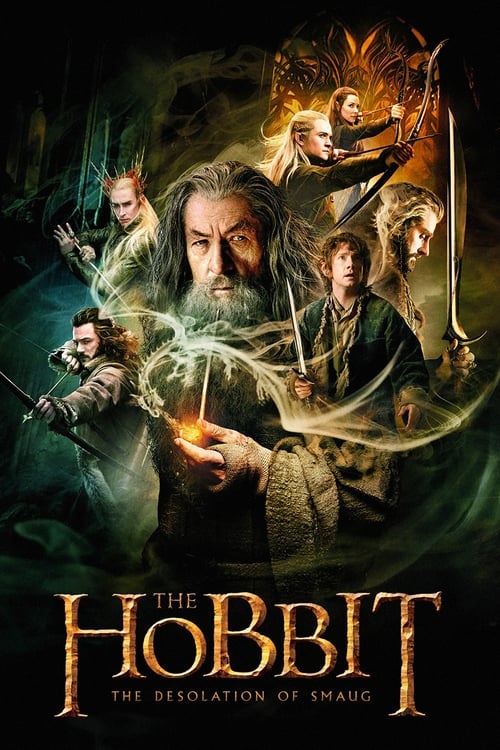
The Hobbit: The Desolation of Smaug
2013 · Directed by Peter Jackson
Woke Score
CriticCritic Score
Audience
Ultra Based
Critics rated this 58 points above its woke score. Among Ultra Based films, this critic score ranks #733 of 1469.
Representation Casting
Score: 15/100
The cast is predominantly white and European, with no meaningful ethnic diversity. The film reflects Tolkien's original 1937 fantasy worldbuilding rather than contemporary casting practices.
LGBTQ+ Themes
Score: 0/100
No LGBTQ+ themes, representation, or subtext present. The film contains no same-sex relationships or queer characters of any kind.
Feminist Agenda
Score: 25/100
Tauriel, a female character created for the films, serves as a warrior and leader. However, her addition feels perfunctory rather than intentional, and the film lacks any explicit feminist messaging or analysis.
Racial Consciousness
Score: 0/100
No engagement with racial themes or consciousness. The film treats its fantasy world as a neutral space without commentary on race or ethnicity.
Climate Crusade
Score: 0/100
No climate change messaging or environmental advocacy. The dragon and mountain setting are purely fantastical elements without ecological commentary.
Eat the Rich
Score: 10/100
The narrative involves reclaiming dwarven gold and wealth, but presents this as a sympathetic personal quest rather than engaging with critiques of capitalism or economic systems.
Body Positivity
Score: 0/100
No exploration of body positivity or disability representation. The film follows conventional fantasy casting and costuming without commentary on bodies.
Neurodivergence
Score: 0/100
No representation of neurodivergence or disability. The film contains no characters coded as neurodivergent or disabled.
Revisionist History
Score: 10/100
The film adds new material to Tolkien's source text, including Tauriel and expanded character arcs, but this is adaptation rather than revisionist history in the modern sense.
Lecture Energy
Score: 5/100
The film occasionally includes exposition about its fantasy world, but lacks the preachy tone of explicitly message-driven cinema. It prioritizes spectacle over sermonizing.


Synopsis
The Dwarves, Bilbo and Gandalf have successfully escaped the Misty Mountains, and Bilbo has gained the One Ring. They all continue their journey to get their gold back from the Dragon, Smaug.
Consciousness Assessment
The Hobbit: The Desolation of Smaug remains a conservative adaptation of Tolkien's material, though not without its minor concessions to contemporary sensibilities. The introduction of Tauriel, a female elf warrior created specifically for the films, represents the only genuine gesture toward expanding the source material's gender dynamics. Yet this addition feels less like a deliberate statement and more like the inevitable product of adapting a 1937 children's novel for modern audiences who expect female characters to occasionally wield swords.
The film's cultural consciousness registers as minimal throughout. The cast remains overwhelmingly white and European, reflecting both the source material's medieval fantasy setting and the trilogy's general disinterest in racial representation. There are no meaningful explorations of economic inequality, environmental catastrophe, or systemic injustice. The narrative concerns itself entirely with personal quests and dragon slaying, matters of zero relevance to contemporary progressive discourse.
The Desolation of Smaug asks us to care about dwarven gold and elven politics, not about the politics of our own world. In the vocabulary of modern cultural analysis, it barely registers at all.
Analysis generated by our Consciousness Algorithm
Critic Reviews
“Middle-earth's got its mojo back. A huge improvement on the previous installment, this takes our adventurers into uncharted territory and delivers spectacle by the ton.”
“Bilbo, as played by Freeman, suggests a sly-dog Dana Carvey without irony, and he is certainly overmatched, but that doesn't mean he's outplayed. Desolation is now his business.”
“Smaug is different: a really good movie, superior to the first in that it brings its characters to rambunctious life. ”
“Results are all that matter, and the result here is that The Desolation of Smaug fails in almost every way, as a story, as an adventure, as a piece of art direction and as a visual spectacle.”
Consciousness Markers
The cast is predominantly white and European, with no meaningful ethnic diversity. The film reflects Tolkien's original 1937 fantasy worldbuilding rather than contemporary casting practices.
No LGBTQ+ themes, representation, or subtext present. The film contains no same-sex relationships or queer characters of any kind.
Tauriel, a female character created for the films, serves as a warrior and leader. However, her addition feels perfunctory rather than intentional, and the film lacks any explicit feminist messaging or analysis.
No engagement with racial themes or consciousness. The film treats its fantasy world as a neutral space without commentary on race or ethnicity.
No climate change messaging or environmental advocacy. The dragon and mountain setting are purely fantastical elements without ecological commentary.
The narrative involves reclaiming dwarven gold and wealth, but presents this as a sympathetic personal quest rather than engaging with critiques of capitalism or economic systems.
No exploration of body positivity or disability representation. The film follows conventional fantasy casting and costuming without commentary on bodies.
No representation of neurodivergence or disability. The film contains no characters coded as neurodivergent or disabled.
The film adds new material to Tolkien's source text, including Tauriel and expanded character arcs, but this is adaptation rather than revisionist history in the modern sense.
The film occasionally includes exposition about its fantasy world, but lacks the preachy tone of explicitly message-driven cinema. It prioritizes spectacle over sermonizing.