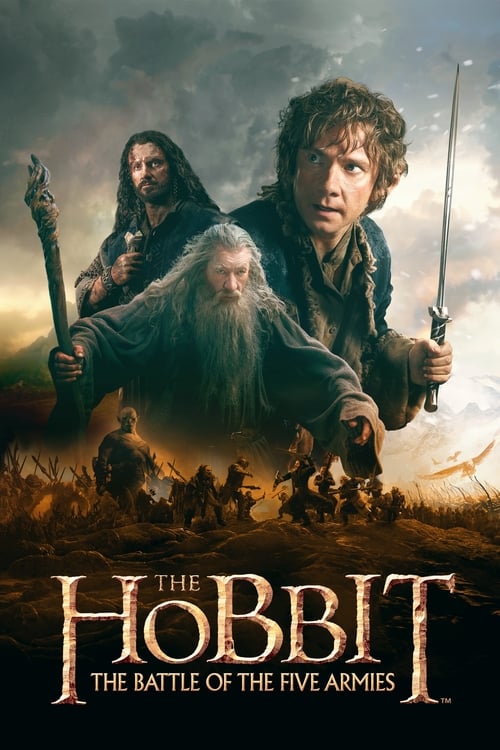
The Hobbit: The Battle of the Five Armies
2014 · Directed by Peter Jackson
Woke Score
CriticCritic Score
Audience
Ultra Based
Critics rated this 44 points above its woke score. Among Ultra Based films, this critic score ranks #927 of 1469.
Representation Casting
Score: 35/100
The film includes Evangeline Lilly as Tauriel, a female elf warrior added for the films, and maintains a racially diverse ensemble cast. However, diversity is presented without commentary and casting decisions follow fantasy world-building logic rather than explicit representation goals.
LGBTQ+ Themes
Score: 5/100
No LGBTQ+ themes, relationships, or character representation appear in the film. The romantic subplot involves heterosexual pairing only.
Feminist Agenda
Score: 25/100
While Tauriel participates in combat alongside male characters, her role remains secondary and primarily defined by romantic entanglement. The film does not engage with gender politics or feminist themes substantively.
Racial Consciousness
Score: 15/100
Racial consciousness is entirely absent from the narrative. The Orc army represents evil through fantasy tropes, not through any engagement with real-world racial dynamics or colonial critique.
Climate Crusade
Score: 0/100
No environmental themes, climate consciousness, or ecological concerns appear in the film's narrative or thematic framework.
Eat the Rich
Score: 10/100
The central conflict involves competing claims to mountain treasure and wealth, presented as a tragic consequence of greed, but the film makes no systemic critique of capitalism or resource extraction.
Body Positivity
Score: 5/100
The film presents idealized fantasy physiques for its characters with no engagement with body diversity or body positivity messaging.
Neurodivergence
Score: 0/100
No neurodivergent characters, representation, or themes appear in the film.
Revisionist History
Score: 20/100
The film adapts fantasy fiction rather than historical events, though it does add female warriors and expanded roles for female characters not present in Tolkien's 1937 novel, representing a modest modernization of source material.
Lecture Energy
Score: 5/100
The film avoids explicit preachiness about social issues, instead focusing on plot and spectacle. No characters deliver speeches about progressive values or social consciousness.


Synopsis
Following Smaug's attack on Laketown, Bilbo and the dwarves try to defend Erebor's mountain of treasure from others who claim it: the men of the ruined Laketown and the elves of Mirkwood. Meanwhile an army of Orcs led by Azog the Defiler is marching on Erebor, fueled by the rise of the dark lord Sauron. Dwarves, elves and men must unite, and the hope for Middle-Earth falls into Bilbo's hands.
Consciousness Assessment
The Hobbit: The Battle of the Five Armies represents the final installment of Peter Jackson's trilogy, a film that exists primarily as spectacle rather than social commentary. The narrative concerns itself with the collision of kingdoms over mountain treasure and territorial claims, a fundamentally conservative meditation on property rights and dynastic conflict that would have resonated comfortably with audiences in 1937 and remains unchanged in its essential moral architecture. Jackson's additions to Tolkien's source material include the character of Tauriel, a female elf warrior, though her presence functions more as romantic subplot than as any genuine exploration of gender dynamics or female agency in warfare.
The film's relationship to progressive sensibilities is incidental rather than intentional. Evangeline Lilly's character participates in combat sequences alongside male combatants, a development that might have been remarkable in earlier decades but by 2014 represented nothing more than the baseline expectations of contemporary blockbuster filmmaking. The ensemble cast contains no meaningful diversity beyond the casting of various actors in roles defined by their fantasy species rather than their demographic characteristics. There are no substantive explorations of colonialism, resource extraction ethics, or the moral dimensions of conquest, despite the plot's obvious potential for such readings. The film simply stages battle sequences and emotional beats without interrogating the systems that produce such conflict.
The film achieves a kind of neutral position within the contemporary cultural landscape, neither advancing progressive sensibilities nor actively resisting them, but instead operating in a register where such considerations simply do not apply. It is a technically proficient fantasy epic that treats its audience with neither particular condescension nor particular respect regarding social consciousness. It is a film about war that does not examine war, about treasure that does not examine greed, about power that does not examine power.
Analysis generated by our Consciousness Algorithm
Critic Reviews
“If The Hobbit doesn't equal the achievement of Jackson's earlier Middle-earth movies -- and, honestly, what could? -- it is still, in sum, a thrilling effort.”
“The best film of The Hobbit's three, this final installment is closer in quality to "The Lord of the Rings" than to its immediate predecessors. ”
“Fighting — presented with Jackson’s usual double helpings of visual splendor, emotional oomph and low-key comedy — is what Battle of the Five Armies is all about.”
“Jackson has marched the modern fantasy-action epic into a thundering blind alley; the movie exhausts your senses without ever engaging your imagination.”
Consciousness Markers
The film includes Evangeline Lilly as Tauriel, a female elf warrior added for the films, and maintains a racially diverse ensemble cast. However, diversity is presented without commentary and casting decisions follow fantasy world-building logic rather than explicit representation goals.
No LGBTQ+ themes, relationships, or character representation appear in the film. The romantic subplot involves heterosexual pairing only.
While Tauriel participates in combat alongside male characters, her role remains secondary and primarily defined by romantic entanglement. The film does not engage with gender politics or feminist themes substantively.
Racial consciousness is entirely absent from the narrative. The Orc army represents evil through fantasy tropes, not through any engagement with real-world racial dynamics or colonial critique.
No environmental themes, climate consciousness, or ecological concerns appear in the film's narrative or thematic framework.
The central conflict involves competing claims to mountain treasure and wealth, presented as a tragic consequence of greed, but the film makes no systemic critique of capitalism or resource extraction.
The film presents idealized fantasy physiques for its characters with no engagement with body diversity or body positivity messaging.
No neurodivergent characters, representation, or themes appear in the film.
The film adapts fantasy fiction rather than historical events, though it does add female warriors and expanded roles for female characters not present in Tolkien's 1937 novel, representing a modest modernization of source material.
The film avoids explicit preachiness about social issues, instead focusing on plot and spectacle. No characters deliver speeches about progressive values or social consciousness.