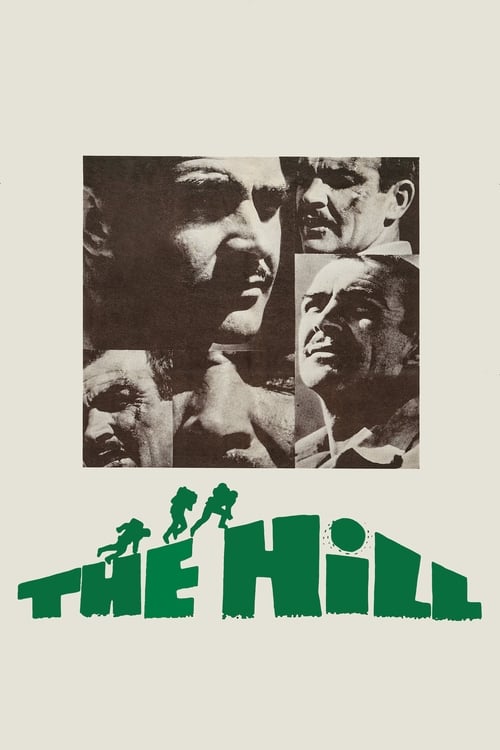
The Hill
1965 · Directed by Sidney Lumet
Woke Score
CriticCritic Score
Audience
Ultra Based
Critics rated this 77 points above its woke score. Among Ultra Based films, this critic score ranks #346 of 1469.
Representation Casting
Score: 15/100
Ossie Davis appears in the ensemble cast, which represents early integrated casting in 1960s British cinema. However, the film does not engage with or foreground questions of racial identity or representation as narrative themes.
LGBTQ+ Themes
Score: 0/100
No LGBTQ+ themes, representation, or content present in this military prison drama.
Feminist Agenda
Score: 0/100
The film is set in an all-male military context with no female characters or feminist themes present.
Racial Consciousness
Score: 0/100
While the cast includes an African American actor, the film contains no explicit engagement with racial themes, consciousness, or commentary about race.
Climate Crusade
Score: 0/100
No climate-related themes, environmental consciousness, or ecological commentary present in this military drama.
Eat the Rich
Score: 5/100
The film critiques institutional authority and systemic cruelty within the military hierarchy, but this represents a critique of authoritarianism rather than specific anti-capitalist ideology or messaging.
Body Positivity
Score: 0/100
No body positivity themes, representation, or commentary present in this film.
Neurodivergence
Score: 0/100
No representation of or engagement with neurodivergence, neurodiversity, or related themes in the narrative.
Revisionist History
Score: 0/100
The film presents a straightforward historical drama set during World War II without revisionist reinterpretation of historical events or narratives.
Lecture Energy
Score: 8/100
While the film examines themes of institutional cruelty and human dignity, it does so through dramatic narrative rather than preachy exposition. Some thematic weight carries implicit moral commentary, but this falls short of explicit 'lecture energy' characteristic of contemporary progressive cinema.


Synopsis
North Africa, World War II. British soldiers on the brink of collapse push beyond endurance to struggle up a brutal incline. It's not a military objective. It's The Hill, a manmade instrument of torture, a tower of sand seared by a white-hot sun. And the troops' tormentors are not the enemy, but their own comrades-at-arms.
Consciousness Assessment
Sidney Lumet's "The Hill" arrives as a brutal examination of military authority set against the North African theater of World War II. The film concerns itself with the systematic dehumanization of soldiers, a theme that carries moral weight but operates within traditional dramatic frameworks rather than contemporary progressive sensibilities. Sean Connery anchors an ensemble cast navigating the sadistic hierarchy of a military prison, where the real enemy is institutional cruelty masquerading as discipline. The narrative trajectory remains fundamentally interested in the universal human experience of suffering and resistance, not in the specific cultural consciousness that defines modern progressive cinema.
The film's casting represents a modest historical note: Ossie Davis appears in the ensemble, which was sufficiently unusual for 1965 British cinema to merit mention. Yet his presence functions as integrated casting rather than as a deliberate statement about representation or racial consciousness. The film does not engage with questions of identity politics, nor does it position Davis's character within any framework of social commentary. This is neither a condemnation nor a point of particular distinction, simply an observation that the film predates the era in which such choices carry thematic weight.
What emerges from "The Hill" is a war drama concerned with the mechanics of institutional oppression and human dignity in the face of arbitrary authority. These remain worthy subjects, but they operate at a remove from the specific markers of cultural consciousness that have come to characterize contemporary progressive filmmaking. Lumet's interest lies in the universal rather than the particular, in the physical and psychological dimensions of suffering rather than in the social categories through which such suffering is now typically analyzed.
Analysis generated by our Consciousness Algorithm
Critic Reviews
“Lots of sand but no day at the beach for its characters -- and not, from all appearances, the actors, either. Among the best of director Sidney Lumet's movies not set in New York. [08 Jun 2007, p.8E]”
“Rebel-with-a-cause clichés are mostly averted by sturdy acting, Oswald Morris’ vivid black-and-white cinematography, and a satisfyingly bleak conclusion.”
“Atmospherically black-and-white photography provides suitable accompaniment to Sidney Lumet's unrelenting direction, with the two leads into it with plenty of relish.”
“Lumet uses every claustrophobic camera angle in the book to make the viewer feel as trapped as the characters. [04 Nov 2000, p.12]”
Consciousness Markers
Ossie Davis appears in the ensemble cast, which represents early integrated casting in 1960s British cinema. However, the film does not engage with or foreground questions of racial identity or representation as narrative themes.
No LGBTQ+ themes, representation, or content present in this military prison drama.
The film is set in an all-male military context with no female characters or feminist themes present.
While the cast includes an African American actor, the film contains no explicit engagement with racial themes, consciousness, or commentary about race.
No climate-related themes, environmental consciousness, or ecological commentary present in this military drama.
The film critiques institutional authority and systemic cruelty within the military hierarchy, but this represents a critique of authoritarianism rather than specific anti-capitalist ideology or messaging.
No body positivity themes, representation, or commentary present in this film.
No representation of or engagement with neurodivergence, neurodiversity, or related themes in the narrative.
The film presents a straightforward historical drama set during World War II without revisionist reinterpretation of historical events or narratives.
While the film examines themes of institutional cruelty and human dignity, it does so through dramatic narrative rather than preachy exposition. Some thematic weight carries implicit moral commentary, but this falls short of explicit 'lecture energy' characteristic of contemporary progressive cinema.