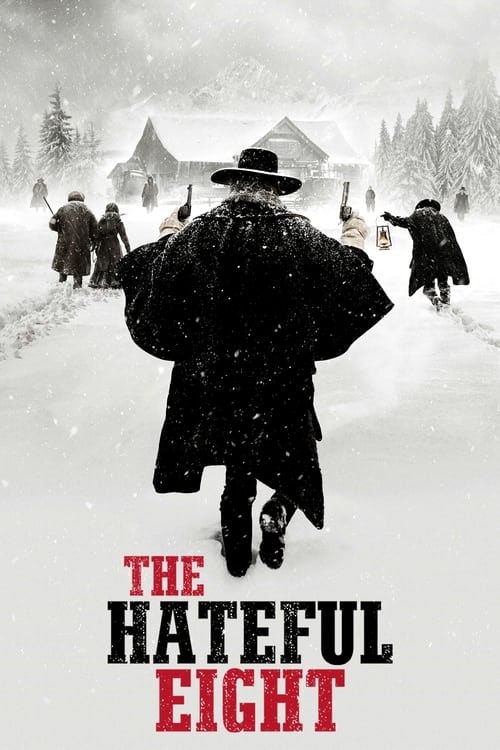
The Hateful Eight
2015 · Directed by Quentin Tarantino
Woke Score
CriticCritic Score
Audience
Woke-Adjacent
Critics rated this 26 points above its woke score. Among Woke-Adjacent films, this critic score ranks #89 of 151.
Representation Casting
Score: 55/100
The film features a diverse ensemble with Samuel L. Jackson in a central, morally complex role as a Union Army officer. However, the sole significant female character (Jennifer Jason Leigh) is subjected to brutal violence, and her role remains limited despite the ensemble structure.
LGBTQ+ Themes
Score: 0/100
No LGBTQ+ themes, characters, or representation present in the film.
Feminist Agenda
Score: 15/100
Jennifer Jason Leigh's character is the only significant female presence and serves primarily as a target of masculine violence and contempt. While her brutalization may be intentional provocation, the film offers no counter-narrative or critique of this dynamic.
Racial Consciousness
Score: 60/100
The film directly engages with American racism, slavery, and racial trauma through its narrative and dialogue. Samuel L. Jackson's character explicitly references his experience as a Union soldier and racial violence. However, the engagement is ambiguous, presented through Tarantino's provocative aesthetic rather than clear moral positioning.
Climate Crusade
Score: 0/100
No climate-related themes or environmental consciousness present in the film.
Eat the Rich
Score: 20/100
The bounty hunting economy and characters' motivations are driven by greed and economic self-interest, which the film depicts cynically. However, this serves character motivation rather than thematic critique of capitalism itself.
Body Positivity
Score: 0/100
No body positivity messaging or representation of diverse body types presented in the film.
Neurodivergence
Score: 0/100
No neurodivergent characters or representation present in the film.
Revisionist History
Score: 25/100
The film engages with post-Civil War American history, but primarily as a setting for character conflict rather than as historical revisionism. The treatment of slavery and racial trauma is presented through contemporary sensibilities imposed on historical figures.
Lecture Energy
Score: 35/100
While the film contains extended monologues and explicit discussions of race and trauma, these emerge from character conflict rather than authorial instruction. The tone remains cynical and ambiguous rather than preachy.


Synopsis
Bounty hunters seek shelter from a raging blizzard and get caught up in a plot of betrayal and deception.
Consciousness Assessment
The Hateful Eight presents a peculiar challenge to the contemporary critic of social consciousness. Here stands a film from 2015, that liminal year when progressive sensibilities had begun their steady march through the culture, yet Tarantino remained defiantly committed to his maximalist aesthetic of provocation. The film assembles a diverse cast into a snowbound cabin where deception and betrayal metastasize across racial and gender lines. Samuel L. Jackson delivers a powerhouse performance as a Union Army officer, and the ensemble creates a toxic crucible of suspicion. The film does not shy away from depicting racism, historical trauma, and the violence embedded in American mythology. Yet the manner of its engagement proves crucial.
What complicates any analysis is Tarantino's approach to representation. The film includes Black characters in positions of narrative importance and moral complexity, which distinguishes it from his earlier work. Jackson's character is not a supporting figure but a central architect of the plot, possessed of agency and cunning. The inclusion of Jennifer Jason Leigh as the sole significant female character in this male-dominated chamber piece, however, reveals the film's limitations. She is brutalized with a precision that feels less like critique than spectacle. The dialogue crackles with Tarantino's trademark profanity and racial slurs, deployed as historical accuracy and tonal authenticity. Whether this constitutes genuine reckoning with American racism or merely its aesthetic reproduction remains the persistent question.
The film exhibits minimal investment in the progressive sensibilities crystallizing around it in 2015. There is no climate consciousness, no celebration of body diversity, no neurodivergent representation, and no lecture energy regarding systemic oppression. The anti-capitalist sentiment appears only as character motivation rather than thematic commitment. The treatment of gender, while not progressive, does not venture into revisionist history either. This is a film concerned with betrayal and human venality in their most baroque forms, not with social instruction. It remains a work of craft and cynicism, offering representation without necessarily offering redemption.
Analysis generated by our Consciousness Algorithm
Critic Reviews
“Tarantino has created another breathtakingly stylish and clever film, a Jacobean western, intimate yet somehow weirdly colossal, once again releasing his own kind of unwholesome crazy-funny-violent nitrous oxide into the cinema auditorium for us all to inhale.”
“The Hateful Eight is a parlour-room epic, an entire nation in a single room, a film steeped in its own filminess but at the same time vital, riveting and real. ”
“Beautifully photographed to take full advantage of the corners of a 2:76:1 aspect ratio, often hiding key character details in the background of shots in a way that demands a second viewing, this is a gorgeous piece of filmcraft all the way around.”
“The Hateful Eight wears out its welcome well before the halfway point, leaving the equivalent of a whole other movie to sit — and suffer — through.”
Consciousness Markers
The film features a diverse ensemble with Samuel L. Jackson in a central, morally complex role as a Union Army officer. However, the sole significant female character (Jennifer Jason Leigh) is subjected to brutal violence, and her role remains limited despite the ensemble structure.
No LGBTQ+ themes, characters, or representation present in the film.
Jennifer Jason Leigh's character is the only significant female presence and serves primarily as a target of masculine violence and contempt. While her brutalization may be intentional provocation, the film offers no counter-narrative or critique of this dynamic.
The film directly engages with American racism, slavery, and racial trauma through its narrative and dialogue. Samuel L. Jackson's character explicitly references his experience as a Union soldier and racial violence. However, the engagement is ambiguous, presented through Tarantino's provocative aesthetic rather than clear moral positioning.
No climate-related themes or environmental consciousness present in the film.
The bounty hunting economy and characters' motivations are driven by greed and economic self-interest, which the film depicts cynically. However, this serves character motivation rather than thematic critique of capitalism itself.
No body positivity messaging or representation of diverse body types presented in the film.
No neurodivergent characters or representation present in the film.
The film engages with post-Civil War American history, but primarily as a setting for character conflict rather than as historical revisionism. The treatment of slavery and racial trauma is presented through contemporary sensibilities imposed on historical figures.
While the film contains extended monologues and explicit discussions of race and trauma, these emerge from character conflict rather than authorial instruction. The tone remains cynical and ambiguous rather than preachy.