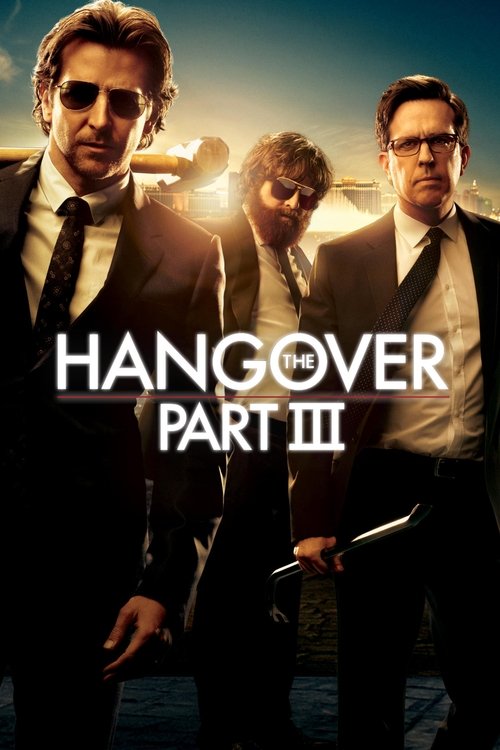
The Hangover Part III
2013 · Directed by Todd Phillips
Woke Score
CriticCritic Score
Audience
Ultra Based
Critics rated this 26 points above its woke score. Among Ultra Based films, this critic score ranks #1433 of 1469.
Representation Casting
Score: 15/100
The cast includes Ken Jeong and Melissa McCarthy as supporting players, but their characters function primarily as comedic devices without substantive development or agency.
LGBTQ+ Themes
Score: 0/100
No LGBTQ themes, characters, or representation present in the film.
Feminist Agenda
Score: 0/100
No feminist themes, female-centered narrative, or commentary on gender dynamics present.
Racial Consciousness
Score: 5/100
Ken Jeong's character continues the franchise pattern of comedic stereotyping rather than demonstrating any meaningful engagement with racial consciousness or dignity.
Climate Crusade
Score: 0/100
No climate-related themes or environmental messaging present.
Eat the Rich
Score: 0/100
No anti-capitalist themes, critiques of wealth, or systemic economic commentary present.
Body Positivity
Score: 0/100
No body positivity messaging or representation of diverse body types in affirming contexts.
Neurodivergence
Score: 10/100
Alan's character appears to struggle with mental health issues and mentions being off his medication, but this is used as comedic fodder rather than genuine representation or awareness.
Revisionist History
Score: 0/100
No historical narrative, revisionism, or engagement with historical events present.
Lecture Energy
Score: 0/100
No preachy messaging, moralizing, or attempt to educate the audience on social issues.


Synopsis
This time, there's no wedding. No bachelor party. What could go wrong, right? But when the Wolfpack hits the road, all bets are off.
Consciousness Assessment
The Hangover Part III arrives as a curious artifact of pre-woke mainstream comedy, a film so thoroughly committed to its own formula that it barely acknowledges the existence of social consciousness. Todd Phillips has constructed a vehicle designed to move his core demographic through a series of escalating mishaps, with supporting players deployed as comedic satellites rather than fully realized human beings. Ken Jeong's continued presence signals a form of representation that asks nothing of itself, asking only that audiences find his character's existence amusing. The film operates in a moral vacuum where consequences are temporary and the only real stakes involve money and friendship bonds between its white male leads.
What emerges from this structure is a film utterly indifferent to progressive sensibilities, which is to say it is a film of its era. The humor derives entirely from established buddy comedy architecture, with no interest in interrogating its own assumptions about masculinity, power, or the nature of its own comedy. Melissa McCarthy's inclusion suggests the appearance of gender diversity while her character remains subordinate to the narrative needs of the central trio. The film's treatment of mental health, glimpsed through Alan's medication struggles, functions purely as character quirk rather than any genuine engagement with neurodivergence or mental wellness.
This is fundamentally a film that has nothing to say beyond its own premise. There is no lecture, no message, no attempt to weaponize entertainment toward any particular social vision. One might argue this represents a kind of integrity, though integrity through indifference is hardly a virtue. The Hangover Part III scores low not because it offends progressive sensibilities but because it ignores their existence entirely, content to inhabit the comedy ecosystem of 2013 without comment or reflection.
Analysis generated by our Consciousness Algorithm
Critic Reviews
“Galifianakis, though, is the key here. Able to smash a scene to smithereens with the simplest of lines, the hirsute comic is as unpredictable as ever, yet takes director Todd Phillips’ bait to up the stakes. ”
“The franchise is sent off in style, a reminder of why it earned such praise and affection in the first place, the wolfpack giving us one final howl at the moon.”
“The Hangover Part III is more like "Beverly Hills Cop," a generic crime flick improved by comical touches that shouldn't fit the proceedings.”
“Not just bad, but weirdly, fascinatingly bad.”
Consciousness Markers
The cast includes Ken Jeong and Melissa McCarthy as supporting players, but their characters function primarily as comedic devices without substantive development or agency.
No LGBTQ themes, characters, or representation present in the film.
No feminist themes, female-centered narrative, or commentary on gender dynamics present.
Ken Jeong's character continues the franchise pattern of comedic stereotyping rather than demonstrating any meaningful engagement with racial consciousness or dignity.
No climate-related themes or environmental messaging present.
No anti-capitalist themes, critiques of wealth, or systemic economic commentary present.
No body positivity messaging or representation of diverse body types in affirming contexts.
Alan's character appears to struggle with mental health issues and mentions being off his medication, but this is used as comedic fodder rather than genuine representation or awareness.
No historical narrative, revisionism, or engagement with historical events present.
No preachy messaging, moralizing, or attempt to educate the audience on social issues.