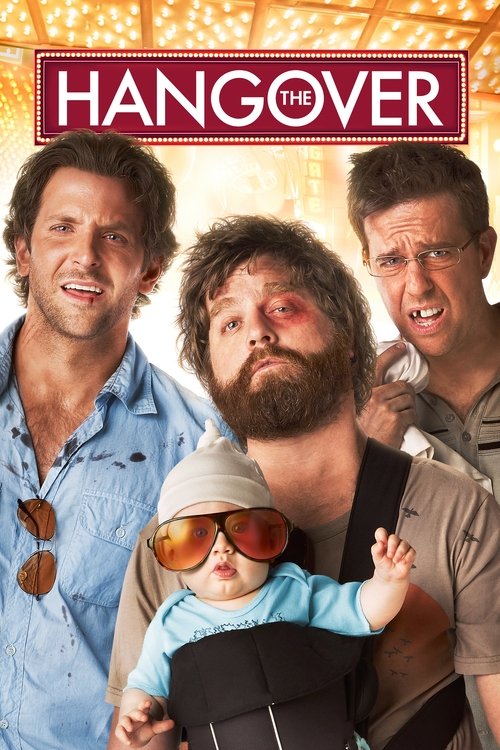
The Hangover
2009 · Directed by Todd Phillips
Woke Score
CriticCritic Score
Audience
Ultra Based
Critics rated this 71 points above its woke score. Among Ultra Based films, this critic score ranks #526 of 1469.
Representation Casting
Score: 5/100
The cast is overwhelmingly white and male. Female characters are peripheral romantic interests. Ken Jeong appears in a supporting role but exists primarily as a comedic device rather than a fully realized character.
LGBTQ+ Themes
Score: 2/100
The film contains a homophobic slur used as a punchline. There is no LGBTQ+ representation or themes. The humor relies on the transgression of casual homophobia.
Feminist Agenda
Score: 0/100
Female characters serve as romantic prizes, comedic obstacles, or victims of the male characters' schemes. There is no feminist consciousness or challenge to gender dynamics.
Racial Consciousness
Score: 5/100
While the film features some minority actors in supporting roles, there is no racial consciousness or commentary. Characters are defined by their comedic function rather than their identity.
Climate Crusade
Score: 0/100
The film contains no climate-related themes or environmental consciousness of any kind.
Eat the Rich
Score: 0/100
The film celebrates excess and consumption without critique. Wealth and indulgence are presented as desirable and comedic.
Body Positivity
Score: 0/100
Physical appearance is frequently used as a source of comedy, particularly regarding characters perceived as unattractive or overweight.
Neurodivergence
Score: 0/100
There is no representation of neurodivergent characters or any engagement with neurodivergence as a theme.
Revisionist History
Score: 0/100
The film contains no historical revisionism or engagement with historical narratives.
Lecture Energy
Score: 0/100
The film is purely concerned with entertainment and transgression. It contains no preachy elements or attempts to educate the audience about social issues.


Synopsis
When three friends finally come to after a raucous night of bachelor-party revelry, they find a baby in the closet and a tiger in the bathroom. But they can't seem to locate their best friend, Doug, who's supposed to be tying the knot. Launching a frantic search for Doug, the trio perseveres through a nasty hangover to try to make it to the church on time.
Consciousness Assessment
The Hangover arrives as a monument to pre-2015 comedy sensibilities, a time when male-centered buddy comedies could thrive without a single thought toward representation or progressive consciousness. Todd Phillips crafted a film that is purely concerned with excess, transgression, and the mechanics of a well-timed punchline. The cast is overwhelmingly white and male, the female characters exist primarily as romantic prizes or comedic obstacles, and the humor often punches downward at those perceived as different.
The film's most glaring artifact of its era is its casual deployment of homophobic slurs, which has aged poorly and now reads as a period piece documenting attitudes we have collectively moved past. Yet this is not evidence of performative progressivism masquerading as social consciousness, merely the standard comedy vocabulary of 2009. There is nothing in The Hangover that suggests the filmmakers are making any statement about society beyond the simple observation that drunk men behave badly.
The bachelor party setting, the Las Vegas excess, the reduction of women to conquests or complications, the punch-up-and-down humor, the complete absence of any character whose identity exists beyond their function in the plot, all of this reflects a comedy universe innocent of the progressive sensibilities that would come to dominate mainstream entertainment by the early 2020s. The Hangover is not problematic in a woke sense; it is simply a product of a different comedic era, one that preceded the cultural moment entirely.
Analysis generated by our Consciousness Algorithm
Critic Reviews
“This is a movie where you WANT to stick around for the credits. The beauty is that you are totally set up for it, and you don't mind one bit. That final sequence ties the movie together in an awesome fashion.”
“A piercingly funny, twisted "whatever-happens-in-Vegas" caper.”
“At once raucously free-wheeling and meticulously contrived, picture satisfies as a boys-gone-wild laff riot that also clicks as a seriocomic beat-the-clock detective story.”
“The Hangover is like an infernal comedy machine. Surrender your soul to its foul mesh of cheap cleverness and vulgarity. and you howl like a delighted demon. Resist, and you feel all sense and sensibility being crushed in its cogs.”
Consciousness Markers
The cast is overwhelmingly white and male. Female characters are peripheral romantic interests. Ken Jeong appears in a supporting role but exists primarily as a comedic device rather than a fully realized character.
The film contains a homophobic slur used as a punchline. There is no LGBTQ+ representation or themes. The humor relies on the transgression of casual homophobia.
Female characters serve as romantic prizes, comedic obstacles, or victims of the male characters' schemes. There is no feminist consciousness or challenge to gender dynamics.
While the film features some minority actors in supporting roles, there is no racial consciousness or commentary. Characters are defined by their comedic function rather than their identity.
The film contains no climate-related themes or environmental consciousness of any kind.
The film celebrates excess and consumption without critique. Wealth and indulgence are presented as desirable and comedic.
Physical appearance is frequently used as a source of comedy, particularly regarding characters perceived as unattractive or overweight.
There is no representation of neurodivergent characters or any engagement with neurodivergence as a theme.
The film contains no historical revisionism or engagement with historical narratives.
The film is purely concerned with entertainment and transgression. It contains no preachy elements or attempts to educate the audience about social issues.