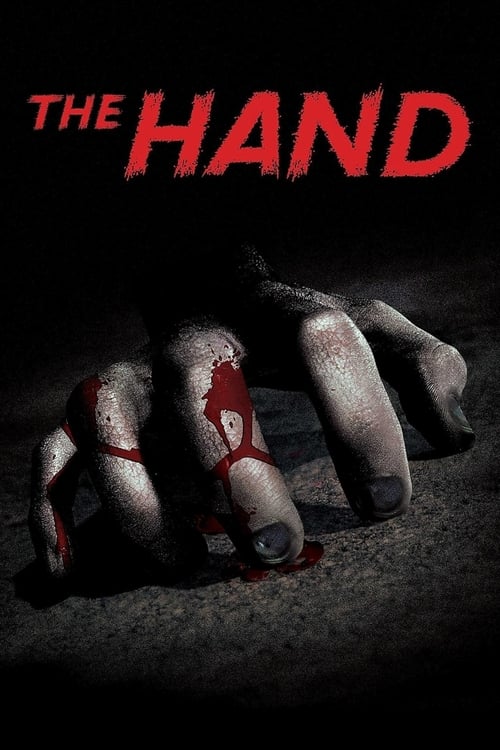
The Hand
1981 · Directed by Oliver Stone
Woke Score
CriticCritic Score
Audience
Ultra Based
Critics rated this 57 points above its woke score. Among Ultra Based films, this critic score ranks #946 of 1469.
Representation Casting
Score: 0/100
The cast is predominantly white and drawn from standard 1981 Hollywood casting. No deliberate effort toward diverse representation is evident.
LGBTQ+ Themes
Score: 0/100
No LGBTQ+ themes, characters, or references appear in the film.
Feminist Agenda
Score: 0/100
The female lead serves only as a passive element in the male protagonist's psychological crisis. No feminist perspective or female agency is present.
Racial Consciousness
Score: 0/100
The film contains no exploration of race or racial dynamics whatsoever.
Climate Crusade
Score: 0/100
Climate themes are entirely absent from this psychological horror narrative.
Eat the Rich
Score: 5/100
The protagonist is a successful comic book artist whose career pressures contribute to his psychological unraveling, suggesting mild critique of professional ambition, but this is incidental to the horror narrative rather than a central theme.
Body Positivity
Score: 0/100
Body positivity is not addressed or relevant to the film's concerns.
Neurodivergence
Score: 0/100
The film depicts psychological breakdown and violent impulses but makes no attempt to explore or represent neurodivergence as a concept.
Revisionist History
Score: 0/100
No historical narrative is present for revision in this contemporary horror scenario.
Lecture Energy
Score: 0/100
The film entertains rather than instructs. It contains no preachy elements or moralistic messaging about social issues.


Synopsis
Jon Lansdale is a comic book artist who loses his right hand in a car accident. The hand was not found at the scene of the accident, but it soon returns by itself to follow Jon around, and murder those who anger him.
Consciousness Assessment
Oliver Stone's 1981 venture into psychological horror presents a film so thoroughly indifferent to contemporary social consciousness that it feels almost archaeological. The narrative concerns itself entirely with male anxiety, marital dissolution, and the monstrous id made manifest through a severed limb. Michael Caine navigates the proceedings with the weary professionalism of a seasoned actor performing what he himself termed a money job, which lends the proceedings an inadvertent honesty about commercial filmmaking's purpose.
The film contains a female character in Andrea Marcovicci, but she exists solely as a vessel for the protagonist's emotional crisis. Her presence registers as an obstacle to his descent into paranoia rather than a character with autonomous concerns. The narrative makes no apparent attempt at representation beyond the casting of whatever actors were available in 1981. Gender dynamics are explored only insofar as they fuel the protagonist's rage and justify his spiral into violence.
This is a film about psychological disintegration and the violence that erupts from masculine ego threatened by loss. It pursues these themes with a kind of B-movie sincerity that precludes any self-aware interrogation of its own premises. The severed hand serves as pure symbol, divorced from any social meaning beyond the personal. We are meant to find the spectacle entertaining, not edifying. In this regard, "The Hand" succeeds admirably.
Analysis generated by our Consciousness Algorithm
Critic Reviews
“A suspense-horror film of unusual psychological intelligence and wit. ”
“There are some genuinely witty lines, but The Hand is no comedy. In the end, it must rank as one of the more original efforts to find danger in mundane places. [18 May 1981]”
“The Hand is a moderately frightening, reasonably stylish exercise that ultimately doesn't seem worth the effort. Connoisseurs of schlock shock effects will not be satisfied by its tony illusion/reality games, and those looking for psycho/sexual illuminations will be one step ahead of the Freudian cliches. [27 Apr 1991, p.90]”
Consciousness Markers
The cast is predominantly white and drawn from standard 1981 Hollywood casting. No deliberate effort toward diverse representation is evident.
No LGBTQ+ themes, characters, or references appear in the film.
The female lead serves only as a passive element in the male protagonist's psychological crisis. No feminist perspective or female agency is present.
The film contains no exploration of race or racial dynamics whatsoever.
Climate themes are entirely absent from this psychological horror narrative.
The protagonist is a successful comic book artist whose career pressures contribute to his psychological unraveling, suggesting mild critique of professional ambition, but this is incidental to the horror narrative rather than a central theme.
Body positivity is not addressed or relevant to the film's concerns.
The film depicts psychological breakdown and violent impulses but makes no attempt to explore or represent neurodivergence as a concept.
No historical narrative is present for revision in this contemporary horror scenario.
The film entertains rather than instructs. It contains no preachy elements or moralistic messaging about social issues.