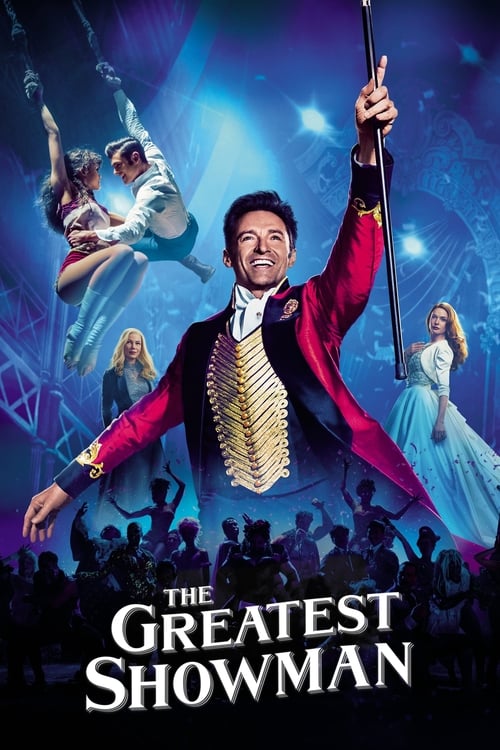
The Greatest Showman
2017 · Directed by Michael Gracey
Woke Score
CriticCritic Score
Audience
Woke-Adjacent
Critics rated this 4 points below its woke score. Among Woke-Adjacent films, this critic score ranks #140 of 151.
Representation Casting
Score: 65/100
The film features deliberate diverse casting with performers of color in prominent roles, particularly Zendaya and Keala Settle, but these characters lack narrative agency and primarily serve the white protagonist's arc.
LGBTQ+ Themes
Score: 0/100
No LGBTQ+ characters, relationships, or thematic content present in the film.
Feminist Agenda
Score: 25/100
Michelle Williams plays Barnum's wife but remains sidelined and domestic, with minimal agency or development, while the narrative centers male ambition and achievement.
Racial Consciousness
Score: 35/100
The film addresses racial discrimination and features performers of color prominently, but avoids explicit engagement with systemic racism and uses sanitized language that critics noted ultimately undermines its racial commentary.
Climate Crusade
Score: 0/100
No environmental themes, climate advocacy, or ecological consciousness present in the film.
Eat the Rich
Score: 15/100
While depicting class conflict and Barnum's rise from poverty, the film ultimately celebrates his capitalist success and wealth accumulation rather than critiquing economic systems.
Body Positivity
Score: 40/100
The film celebrates performers with physical differences as worthy of acceptance, but does so within the framework of spectacle and othering rather than genuine bodily autonomy and agency.
Neurodivergence
Score: 0/100
No neurodivergent characters or thematic representation present in the film.
Revisionist History
Score: 65/100
The film fundamentally whitewashes P.T. Barnum's documented racism, exploitation, and ethical violations, substituting historical reality with an uplifting narrative of inclusion and acceptance.
Lecture Energy
Score: 60/100
The film delivers its progressive message about acceptance and inclusion with considerable directness through dialogue, song lyrics, and character arcs, creating a somewhat preachy tone.


Synopsis
The story of American showman P.T. Barnum, founder of the circus that became the famous traveling Ringling Bros. and Barnum & Bailey Circus.
Consciousness Assessment
The Greatest Showman presents itself as a progressive celebration of human diversity and acceptance, yet functions primarily as a vehicle for historical whitewashing and the aestheticization of marginalized bodies. The film assembles a deliberately diverse ensemble cast, with Zendaya, Keala Settle, and Yahya Abdul-Mateen II occupying prominent roles as circus performers, and deploys inclusive messaging through both dialogue and Benj Pasek and Justin Paul's relentlessly uplifting score. The narrative arc suggests that Barnum's greatest triumph lies not in wealth but in recognizing the inherent worth of society's outcasts, a sentiment that plays beautifully to contemporary sensibilities about acceptance.
The problem, of course, is that this narrative bears only passing resemblance to historical reality. Critics have noted that the film systematically erases Barnum's documented racism, exploitation, and ethical compromises in favor of an inspirational arc that serves the needs of 2017 audiences far better than it serves historical truth. The diverse performers are presented as objects of wonder and spectacle rather than as fully realized human beings with agency, and their inclusion exists primarily to facilitate the moral education of a white male protagonist. The film's refusal to explicitly engage with racial dynamics, as one analysis observed, ultimately makes its racial commentary less rather than more progressive.
The film's relationship to progressive values proves to be fundamentally transactional. It celebrates difference while simultaneously exploiting it for profit and emotional resonance. Michelle Williams exists as a domestic fixture rather than a fully developed character. The working-class narrative of Barnum's rise celebrates capitalist accumulation rather than critiquing it. Even the body positivity on display functions within the context of spectacle and othering. What emerges is a film that has learned the language of contemporary progressive culture without engaging with its substance, deploying diversity as a aesthetic choice rather than a moral imperative. It is, in many respects, the perfect artifact of a particular moment in cultural history when the appearance of inclusion could substitute for its reality.
Analysis generated by our Consciousness Algorithm
Critic Reviews
“The Greatest Showman is the feel-good (and feel good about it) movie every holiday season needs. P.T. Barnum is famous for saying there’s a sucker born every minute and he’s still right. For 105 minutes I’m a sucker for his movie, that may not be the greatest show on Earth but close enough.”
“The director, Michael Gracey, is an Australian maker of commercials who has never directed a feature before, and he works with an exuberant sincerity that can’t be faked. The Greatest Showman is a concoction, the kind of film where the pieces all click into place, yet at an hour and 45 minutes it flies by, and the link it draws between P.T. Barnum and the spirit of today is more than hype. ”
“The Greatest Showman, directed with verve and panache by Michael Gracey, is an unabashed piece of pure entertainment, punctuated by 11 memorable songs composed by Oscar- and Tony-winning duo Benj Pasek and Justin Paul.”
“It's an empty, moronic, pandering and utterly forgettable, low-rent "Moulin Rouge" that pays curious tribute to Barnum by similarly hailing its audience as slack-jawed rubes, slobbering for whatever passes as entertainment. It's godawful.”
Consciousness Markers
The film features deliberate diverse casting with performers of color in prominent roles, particularly Zendaya and Keala Settle, but these characters lack narrative agency and primarily serve the white protagonist's arc.
No LGBTQ+ characters, relationships, or thematic content present in the film.
Michelle Williams plays Barnum's wife but remains sidelined and domestic, with minimal agency or development, while the narrative centers male ambition and achievement.
The film addresses racial discrimination and features performers of color prominently, but avoids explicit engagement with systemic racism and uses sanitized language that critics noted ultimately undermines its racial commentary.
No environmental themes, climate advocacy, or ecological consciousness present in the film.
While depicting class conflict and Barnum's rise from poverty, the film ultimately celebrates his capitalist success and wealth accumulation rather than critiquing economic systems.
The film celebrates performers with physical differences as worthy of acceptance, but does so within the framework of spectacle and othering rather than genuine bodily autonomy and agency.
No neurodivergent characters or thematic representation present in the film.
The film fundamentally whitewashes P.T. Barnum's documented racism, exploitation, and ethical violations, substituting historical reality with an uplifting narrative of inclusion and acceptance.
The film delivers its progressive message about acceptance and inclusion with considerable directness through dialogue, song lyrics, and character arcs, creating a somewhat preachy tone.