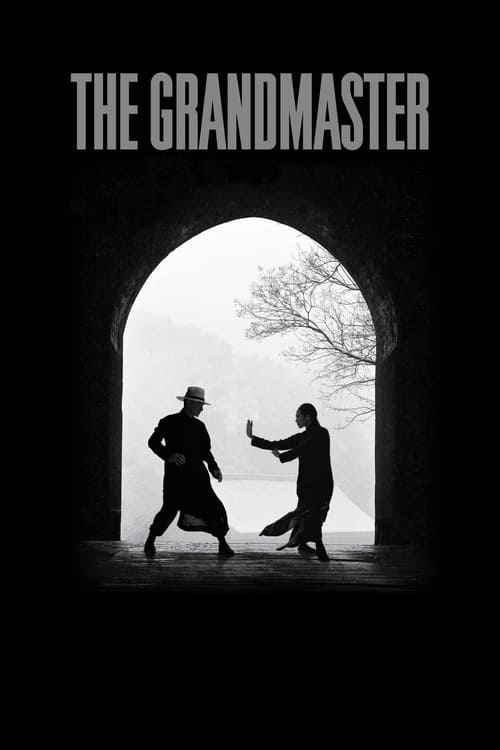
The Grandmaster
2013 · Directed by Wong Kar-Wai
Woke Score
CriticCritic Score
Audience
Ultra Based
Critics rated this 65 points above its woke score. Among Ultra Based films, this critic score ranks #522 of 1469.
Representation Casting
Score: 25/100
The film features a diverse Asian cast appropriate to its Chinese setting and includes Zhang Ziyi as a capable female martial artist, though this reflects historical accuracy rather than conscious representation strategy.
LGBTQ+ Themes
Score: 0/100
No LGBTQ+ themes, characters, or subtext are present in the film.
Feminist Agenda
Score: 20/100
Gong Er is a skilled martial artist whose talents are suppressed by gender expectations of her era, but the film treats this as historical context rather than feminist commentary. Her arc concludes in tragedy rather than empowerment.
Racial Consciousness
Score: 5/100
The film depicts historical racial and national conflict, the Second Sino-Japanese War, but does not engage in modern racial consciousness or contemporary commentary about these dynamics.
Climate Crusade
Score: 0/100
No climate-related themes or environmental messaging appears in the film.
Eat the Rich
Score: 10/100
The film mentions that Wing Chun was historically reserved for the wealthy but does not develop this into anti-capitalist ideology or systemic critique.
Body Positivity
Score: 0/100
No body positivity messaging or diverse body representation is present. The film focuses on martial prowess and physical discipline.
Neurodivergence
Score: 0/100
No representation of neurodivergence or disability is evident in the film.
Revisionist History
Score: 0/100
The film presents historical events and figures without revisionist reinterpretation to serve modern ideological purposes.
Lecture Energy
Score: 0/100
The film maintains an artistic, meditative tone and does not lecture the audience about social or political issues.


Synopsis
Ip Man's peaceful life in Foshan changes after Gong Yutian seeks an heir for his family in Southern China. Ip Man then meets Gong Er who challenges him for the sake of regaining her family's honor. After the Second Sino-Japanese War, Ip Man moves to Hong Kong and struggles to provide for his family. In the mean time, Gong Er chooses the path of vengeance after her father was killed by Ma San.
Consciousness Assessment
Wong Kar-Wai's "The Grandmaster" presents a martial arts biography that operates almost entirely in the aesthetic and philosophical register, treating its historical setting with the reverence of a museum curator rather than a social activist. The film's one genuinely interesting concession to modern sensibilities is the character of Gong Er, a skilled martial artist whose talents are constrained by the patriarchal expectations of early 20th century China. Zhang Ziyi's performance suggests a woman of considerable capability and intelligence thwarted by circumstance, though the film ultimately resolves her arc through tragedy rather than empowerment. This is not progressive filmmaking so much as historically accurate filmmaking that happens to feature a capable female character.
The narrative refuses the sort of explicit social messaging that would signal contemporary cultural awareness. The film does not announce that class barriers in martial arts training were unjust, nor does it deploy Ip Man's later democratization of Wing Chun as a triumph of progressive philosophy. Instead, these elements exist as simple historical facts within a story concerned primarily with honor, loss, and the erosion of tradition. There is no dialogue about the subjugation of women, no meta-commentary on imperialism, no earnest discussion of identity politics. The Second Sino-Japanese War appears as backdrop rather than moral argument.
The restraint is almost refreshing in its refusal to retrofit modern ideological frameworks onto a story set in the 1930s and 1940s. "The Grandmaster" is a work of visual poetry and historical observation, not social consciousness. Its austere indifference to contemporary progressive alignment exists entirely outside the scope of what one might measure as cultural awareness in the modern sense.
Analysis generated by our Consciousness Algorithm
Critic Reviews
“The Grandmaster is, at its most persuasive, about the triumph of style. When Ip Man slyly asks “What’s your style?” it’s clear that Mr. Wong is asking the same question because here, as in his other films, style isn’t reducible to ravishing surfaces; it’s an expression of meaning.”
“The Grandmaster, may well be the definitive illustration of kung fu in all its arcane schools and intricate styles. There's never been anything like it — a seemingly endless flow of spectacular images in a story about Ip Man (Tony Leung), the legendary kung-fu master who trained Bruce Lee. ”
“An exercise in pure cinematic style filled with the most ravishing images, The Grandmaster finds director Wong Kar-wai applying his impeccable visual style to the mass-market martial arts genre with potent results. ”
“The movie ultimately winds up falling between two stools, failing as both a biography and an action film. Martial arts fans will naturally be drawn to the story, but the film does nothing to open up the world to outsiders.”
Consciousness Markers
The film features a diverse Asian cast appropriate to its Chinese setting and includes Zhang Ziyi as a capable female martial artist, though this reflects historical accuracy rather than conscious representation strategy.
No LGBTQ+ themes, characters, or subtext are present in the film.
Gong Er is a skilled martial artist whose talents are suppressed by gender expectations of her era, but the film treats this as historical context rather than feminist commentary. Her arc concludes in tragedy rather than empowerment.
The film depicts historical racial and national conflict, the Second Sino-Japanese War, but does not engage in modern racial consciousness or contemporary commentary about these dynamics.
No climate-related themes or environmental messaging appears in the film.
The film mentions that Wing Chun was historically reserved for the wealthy but does not develop this into anti-capitalist ideology or systemic critique.
No body positivity messaging or diverse body representation is present. The film focuses on martial prowess and physical discipline.
No representation of neurodivergence or disability is evident in the film.
The film presents historical events and figures without revisionist reinterpretation to serve modern ideological purposes.
The film maintains an artistic, meditative tone and does not lecture the audience about social or political issues.