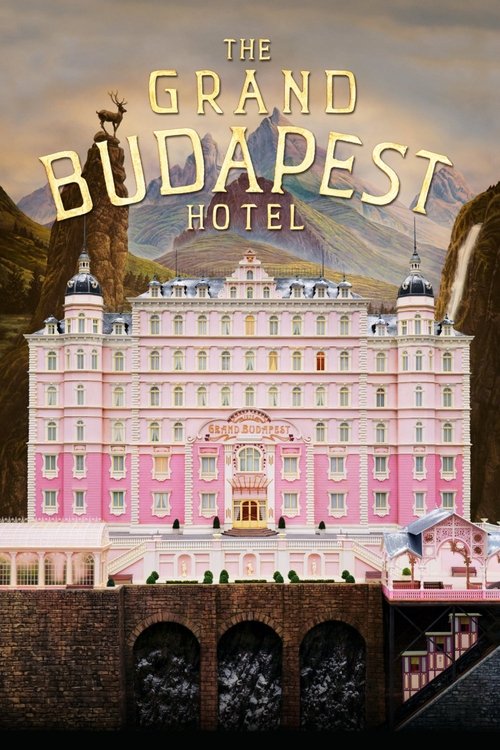
The Grand Budapest Hotel
2014 · Directed by Wes Anderson
Woke Score
CriticCritic Score
Audience
Ultra Based
Critics rated this 84 points above its woke score. Among Ultra Based films, this critic score ranks #170 of 1469.
Representation Casting
Score: 25/100
Tony Revolori, of Filipino-American heritage, plays Zero Moustafa, a Middle Eastern character, providing some casting diversity. However, the film features an otherwise predominantly white ensemble cast in a European setting.
LGBTQ+ Themes
Score: 0/100
No LGBTQ+ themes, representation, or subtext are evident in the film. The romantic and interpersonal relationships are entirely heterosexual.
Feminist Agenda
Score: 0/100
Female characters in the film are decorative and defined by their relationships to male protagonists rather than possessing agency or thematic significance. No feminist themes are present.
Racial Consciousness
Score: 5/100
Zero's Middle Eastern heritage is mentioned as biographical fact but never examined or engaged with thematically. His ethnicity exists as incidental detail rather than subject of cultural commentary.
Climate Crusade
Score: 0/100
No climate-related themes or environmental consciousness appear in the film. The historical setting and narrative focus preclude any engagement with contemporary ecological concerns.
Eat the Rich
Score: 0/100
The film presents wealth accumulation and the battle for a family fortune without critique or irony. Economic inequality and class dynamics receive no interrogation.
Body Positivity
Score: 0/100
No body positivity themes are evident. The film's aesthetic is devoted to elegance and refinement, with no commentary on diverse body types or beauty standards.
Neurodivergence
Score: 0/100
No neurodivergence representation or thematic engagement appears in the film. Characters are portrayed without any exploration of neurodivergent experiences.
Revisionist History
Score: 0/100
While the film is set during the rise of fascism in interwar Europe, it does not engage with this historical context in any meaningful way. History serves as aesthetic setting rather than subject matter.
Lecture Energy
Score: 0/100
The film maintains a consistent tone of whimsy and aesthetic detachment. No preachy messaging, moral lectures, or explicit social commentary are present.


Synopsis
The Grand Budapest Hotel tells of a legendary concierge at a famous European hotel between the wars and his friendship with a young employee who becomes his trusted protégé. The story involves the theft and recovery of a priceless Renaissance painting, the battle for an enormous family fortune and the slow and then sudden upheavals that transformed Europe during the first half of the 20th century.
Consciousness Assessment
The Grand Budapest Hotel presents itself as an exquisitely crafted pastiche of European elegance and old-world sophistication, a film so devoted to its own aesthetic precision that matters of social consciousness remain conspicuously absent from its frame. The narrative centers on the friendship between Gustave H., a white European concierge of immaculate sensibilities, and Zero Moustafa, a young man of Middle Eastern descent whose ethnic identity exists in the film as a biographical detail rather than a subject of thematic engagement. While Zero's casting with Tony Revolori (an actor of Filipino-American heritage) represents at least a nominal acknowledgment of casting beyond the default, the film offers no meaningful examination of his character's cultural background or the historical context of his position in interwar Europe.
Anderson's meticulous visual and narrative world operates in a realm of pure style, a space where historical upheaval, economic inequality, and geopolitical transformation serve primarily as aesthetic backdrop rather than substantive concern. The film's treatment of the accumulation and battle over an enormous family fortune proceeds without irony or critique, presenting wealth and its acquisition as simply the natural order of things. There is no interrogation of labor, class exploitation, or economic injustice, merely the charming misadventures of the privileged and the elegant. The film's feminism is similarly absent, with female characters present but largely decorative, defined by their beauty or their relationship to the male protagonist rather than by any internal complexity or agency.
What we encounter is a film of supreme technical accomplishment and genuine visual invention, yet one entirely unburdened by the progressive cultural sensibilities that have become prevalent in contemporary cinema. Anderson's world is one of aesthetic and emotional distance, in which suffering exists as a compositional element and historical tragedy becomes merely another texture in his elaborate design. This is not a film that wishes to speak to contemporary social consciousness, nor does it pretend to do so. It is simply a film about beautiful things, made beautifully, for an audience that has learned to appreciate surfaces.
Analysis generated by our Consciousness Algorithm
Critic Reviews
“A captivating 1930s-set caper whose innumerable surface pleasures might just seduce you into overlooking its sly intelligence and depth of feeling.”
“The auteur’s style — dramatic zooms, winking symmetry — is balanced against a newfound political context; this one’s his "To Be or Not to Be."”
““GBH” is a featherweight screwball comedy that, trying mightily to be cosmopolitan, feels awfully provincial, desperately touristy.”
Consciousness Markers
Tony Revolori, of Filipino-American heritage, plays Zero Moustafa, a Middle Eastern character, providing some casting diversity. However, the film features an otherwise predominantly white ensemble cast in a European setting.
No LGBTQ+ themes, representation, or subtext are evident in the film. The romantic and interpersonal relationships are entirely heterosexual.
Female characters in the film are decorative and defined by their relationships to male protagonists rather than possessing agency or thematic significance. No feminist themes are present.
Zero's Middle Eastern heritage is mentioned as biographical fact but never examined or engaged with thematically. His ethnicity exists as incidental detail rather than subject of cultural commentary.
No climate-related themes or environmental consciousness appear in the film. The historical setting and narrative focus preclude any engagement with contemporary ecological concerns.
The film presents wealth accumulation and the battle for a family fortune without critique or irony. Economic inequality and class dynamics receive no interrogation.
No body positivity themes are evident. The film's aesthetic is devoted to elegance and refinement, with no commentary on diverse body types or beauty standards.
No neurodivergence representation or thematic engagement appears in the film. Characters are portrayed without any exploration of neurodivergent experiences.
While the film is set during the rise of fascism in interwar Europe, it does not engage with this historical context in any meaningful way. History serves as aesthetic setting rather than subject matter.
The film maintains a consistent tone of whimsy and aesthetic detachment. No preachy messaging, moral lectures, or explicit social commentary are present.