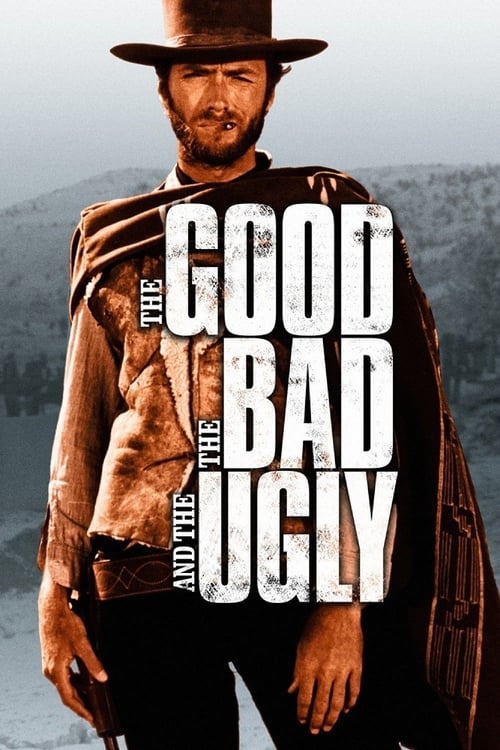
The Good, the Bad and the Ugly
1966 · Directed by Sergio Leone
Woke Score
CriticCritic Score
Audience
Ultra Based
Critics rated this 88 points above its woke score. Among Ultra Based films, this critic score ranks #144 of 1469.
Representation Casting
Score: 0/100
All three main characters are men. The single female character has no meaningful role or dialogue. Casting reflects 1966 Hollywood norms with no diversity considerations.
LGBTQ+ Themes
Score: 0/100
No LGBTQ+ themes, representation, or subtext. The film contains no acknowledgment of LGBTQ+ existence.
Feminist Agenda
Score: 0/100
No female characters of substance. No feminist themes or perspectives. The narrative is entirely male-centered.
Racial Consciousness
Score: 0/100
Set during the Civil War yet ignores the war's racial dimensions entirely. The Mexican character is played for comic relief without any nuance or depth.
Climate Crusade
Score: 0/100
No environmental themes or climate consciousness. The desert setting is purely aesthetic.
Eat the Rich
Score: 5/100
The film treats all characters as morally compromised by greed, but this is cynicism about human nature rather than anti-capitalist critique.
Body Positivity
Score: 0/100
No body positivity discourse. The film makes no comment on bodies or appearance beyond conventional aesthetics.
Neurodivergence
Score: 0/100
No neurodivergent representation or themes. Characters are portrayed as neurotypical.
Revisionist History
Score: 0/100
No engagement with history whatsoever. The Civil War setting is window dressing for a myth about greed and moral compromise.
Lecture Energy
Score: 0/100
No preachy moralizing or lecture energy. The film trusts the audience to draw their own conclusions about character and morality.


Synopsis
While the Civil War rages on between the Union and the Confederacy, three men – a quiet loner, a ruthless hitman, and a Mexican bandit – comb the American Southwest in search of a strongbox containing $200,000 in stolen gold.
Consciousness Assessment
Sergio Leone's 1966 masterpiece exists in a temporal and cultural space so remote from contemporary progressive sensibilities that scoring it on these metrics feels almost quaint. The film is a work of pure genre cinema, concerned with visual composition, narrative economy, and the mythic archetypes of the western rather than with any form of social consciousness. The three protagonists are all men. The film is set during the American Civil War yet shows no interest whatsoever in the war's actual stakes, causes, or moral dimensions. The Mexican character, played by Eli Wallach, is a bandit and comic relief, which reflects precisely the sensibilities of 1966 Hollywood without commentary or self-awareness.
The film's only claim to any progressive element is its cynicism about human nature and capitalist greed, a fairly universal theme that predates modern social justice discourse by centuries. Leone treats all three men as equally morally compromised, none heroic in any conventional sense. This is not progressive politics. This is nihilism dressed in a duster and a poncho. The film contains no female characters of any significance, no LGBTQ+ representation, no neurodivergent coding, and certainly no revisionist engagement with history. It simply ignores history entirely in favor of myth.
What we have here is a film from an era before the cultural markers we are measuring became culturally salient. To score "The Good, the Bad and the Ugly" on a scale of contemporary progressive consciousness is to commit a category error, though we do so anyway, as is our solemn duty. The film deserves its place in cinema history based on its formal brilliance and thematic sophistication about human nature. It simply has nothing to say about the things we are measuring.
Analysis generated by our Consciousness Algorithm
Critic Reviews
“Though ordained from the beginning, the three-way showdown that climaxes the film is tense and thoroughly astonishing. ”
“An improbable masterpiece -- a bizarre mixture of grandly operatic visuals, grim brutality and sordid violence that keeps wrenching you from one extreme to the other. ”
“There are two kinds of people, my friend. Those who love Sergio Leone's The Good, the Bad, and the Ugly, and those who resist the machismo and gallows humor of what is arguably the definitive spaghetti western. ”
“A curious amalgam of the visually striking, the dramatically feeble and the offensively sadistic.”
Consciousness Markers
All three main characters are men. The single female character has no meaningful role or dialogue. Casting reflects 1966 Hollywood norms with no diversity considerations.
No LGBTQ+ themes, representation, or subtext. The film contains no acknowledgment of LGBTQ+ existence.
No female characters of substance. No feminist themes or perspectives. The narrative is entirely male-centered.
Set during the Civil War yet ignores the war's racial dimensions entirely. The Mexican character is played for comic relief without any nuance or depth.
No environmental themes or climate consciousness. The desert setting is purely aesthetic.
The film treats all characters as morally compromised by greed, but this is cynicism about human nature rather than anti-capitalist critique.
No body positivity discourse. The film makes no comment on bodies or appearance beyond conventional aesthetics.
No neurodivergent representation or themes. Characters are portrayed as neurotypical.
No engagement with history whatsoever. The Civil War setting is window dressing for a myth about greed and moral compromise.
No preachy moralizing or lecture energy. The film trusts the audience to draw their own conclusions about character and morality.