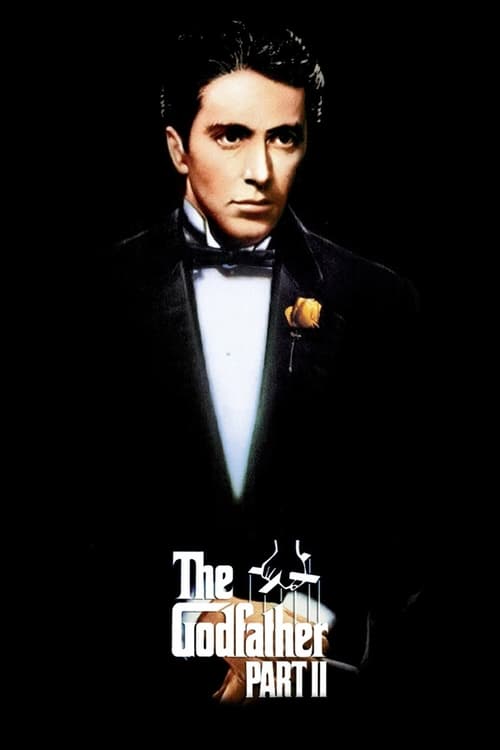
The Godfather Part II
1974 · Directed by Francis Ford Coppola
Woke Score
CriticCritic Score
Audience
Ultra Based
Critics rated this 86 points above its woke score. Among Ultra Based films, this critic score ranks #142 of 1469.
Representation Casting
Score: 5/100
Italian and Italian-American characters are portrayed authentically within their historical context, but this reflects period accuracy rather than progressive casting philosophy. No deliberate effort toward contemporary diversity representation is evident.
LGBTQ+ Themes
Score: 0/100
No LGBTQ+ themes, characters, or subtext appear in the film. The work operates entirely within heteronormative family structures without acknowledgment of alternative identities.
Feminist Agenda
Score: 2/100
Women exist in supporting, reactive roles within a patriarchal criminal structure that the film never critiques. Kay and Connie lack agency and autonomy. No feminist consciousness is present.
Racial Consciousness
Score: 3/100
The film depicts racial and ethnic tensions within 1950s New York and Cuba, but presents these as historical facts rather than social critique. No explicit antiracist commentary or consciousness-raising occurs.
Climate Crusade
Score: 0/100
Environmental concerns are entirely absent from the narrative. The film contains no climate-related themes or messaging.
Eat the Rich
Score: 15/100
While the film depicts organized crime as predatory and corrupting, it treats this as a moral problem endemic to the criminal underworld rather than as systemic capitalist critique. No anti-capitalist ideology is promoted.
Body Positivity
Score: 0/100
Body positivity is not a consideration in the film. Characters are presented without commentary on physical appearance or body diversity.
Neurodivergence
Score: 0/100
No neurodivergent characters or representation appear in the film. Mental health and neurological difference are not addressed.
Revisionist History
Score: 5/100
The film takes creative liberties with historical events, particularly regarding the Bay of Pigs and Cuban politics, but this is artistic license rather than progressive historical reinterpretation.
Lecture Energy
Score: 0/100
The film never breaks character to deliver moral lessons or educational content. It maintains dramatic immersion throughout without preachy messaging.


Synopsis
In the continuing saga of the Corleone crime family, a young Vito Corleone grows up in Sicily and in 1910s New York. In the 1950s, Michael Corleone attempts to expand the family business into Las Vegas, Hollywood and Cuba.
Consciousness Assessment
The Godfather Part II stands as perhaps the most prestigious artifact of American cinema, and it remains almost entirely indifferent to the cultural preoccupations that would come to dominate discourse fifty years after its release. Coppola's epic operates within a purely classical dramatic framework: the rise and fall of empires, the corruption of individuals, the dissolution of family bonds. These are eternal themes, not contemporary ones. The film depicts Italian immigrants and their descendants with specificity and complexity, but this is historical representation rather than progressive consciousness. We are watching a portrait of a subculture, not a manifesto.
The film's treatment of women is instructive in its absence of any modern progressive sensibility. Diane Keaton's Kay Adams exists primarily as a moral mirror to Michael's descent, and while her performance is excellent, her character functions within a decidedly patriarchal structure that the film never questions or critiques. Talia Shire's Connie is defined by her victimization and emotional volatility. These are limitations of the 1974 moment, not evidence of cultural awareness. The film is content to depict the world as it was, not to interrogate it through contemporary ethical frameworks.
Viewed through the lens of current cultural markers, The Godfather Part II emerges as a work unconcerned with representation casting, LGBTQ+ visibility, feminist critique, racial consciousness, environmental concerns, or any form of lecture energy. It is a film about power, loyalty, and the American dream as corrupted by organized crime. It is masterful and urgent, but it is not, in any meaningful sense, what we now call progressive. That is simply a fact.
Analysis generated by our Consciousness Algorithm
Critic Reviews
“And with supporting roles from the likes of Diane Keaton, Robert Duvall and Lee Strasberg, to say nothing of Roger Corman and Harry Dean Stanton in bit parts, this is nothing short of magisterial.”
“As the beginning of Part II echoes the opening of "The Godfather," so too does the end. Because of the manner in which circumstances are handled and considering the people involved, the impact here is more forceful. The tragic flaw has accomplished its poisonous, inevitable designs. Coppola punctuates both movies with a gut-twisting exclamation point.”
“Cinematographer Willis superbly captures the turn-of-the-century period, applying a seriographic tint to flashback scenes for a softer, richer look than the sharp image of the ongoing contemporary story.”
“The only remarkable thing about Francis Ford Coppola's The Godfather, Part II is the insistent manner in which it recalls how much better his original film was...Even if Part II were a lot more cohesive, revealing, and exciting than it is, it probably would have run the risk of appearing to be the self-parody it now seems.”
Consciousness Markers
Italian and Italian-American characters are portrayed authentically within their historical context, but this reflects period accuracy rather than progressive casting philosophy. No deliberate effort toward contemporary diversity representation is evident.
No LGBTQ+ themes, characters, or subtext appear in the film. The work operates entirely within heteronormative family structures without acknowledgment of alternative identities.
Women exist in supporting, reactive roles within a patriarchal criminal structure that the film never critiques. Kay and Connie lack agency and autonomy. No feminist consciousness is present.
The film depicts racial and ethnic tensions within 1950s New York and Cuba, but presents these as historical facts rather than social critique. No explicit antiracist commentary or consciousness-raising occurs.
Environmental concerns are entirely absent from the narrative. The film contains no climate-related themes or messaging.
While the film depicts organized crime as predatory and corrupting, it treats this as a moral problem endemic to the criminal underworld rather than as systemic capitalist critique. No anti-capitalist ideology is promoted.
Body positivity is not a consideration in the film. Characters are presented without commentary on physical appearance or body diversity.
No neurodivergent characters or representation appear in the film. Mental health and neurological difference are not addressed.
The film takes creative liberties with historical events, particularly regarding the Bay of Pigs and Cuban politics, but this is artistic license rather than progressive historical reinterpretation.
The film never breaks character to deliver moral lessons or educational content. It maintains dramatic immersion throughout without preachy messaging.