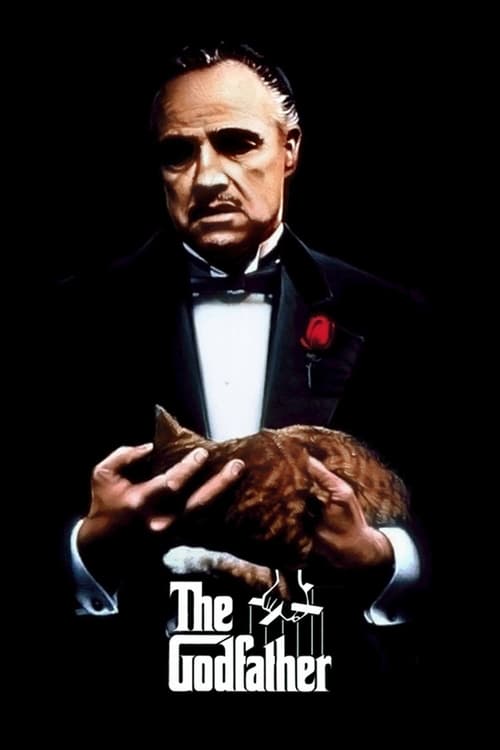
The Godfather
1972 · Directed by Francis Ford Coppola
Woke Score
CriticCritic Score
Audience
Ultra Based
Critics rated this 96 points above its woke score. Among Ultra Based films, this critic score ranks #3 of 1469.
Representation Casting
Score: 15/100
The film features Italian-American actors in leading roles, but this reflects authentic casting rather than contemporary diversity initiatives. Female roles are minimal and subordinate to male family drama.
LGBTQ+ Themes
Score: 0/100
No LGBTQ+ themes, characters, or representation of any kind. The film is entirely heteronormative in its worldview.
Feminist Agenda
Score: 5/100
Women are largely relegated to supporting roles as mothers, wives, and romantic interests. Kay Adams has agency only insofar as she serves as moral conscience to the male-dominated narrative.
Racial Consciousness
Score: 0/100
The film contains no explicit engagement with racial themes or contemporary racial consciousness. It is entirely focused on Italian-American family dynamics without commentary on broader racial dynamics.
Climate Crusade
Score: 0/100
Climate themes are entirely absent from the film. The narrative contains no environmental consciousness whatsoever.
Eat the Rich
Score: 0/100
The film presents organized crime as an alternative power structure, but it does not critique capitalism or wealth accumulation. It is morally neutral toward economic systems.
Body Positivity
Score: 0/100
No body positivity themes or representation of diverse body types. The film contains no commentary on physical appearance or body standards.
Neurodivergence
Score: 0/100
No representation of neurodivergent characters or themes. The film contains no engagement with neurodiversity.
Revisionist History
Score: 5/100
The film presents organized crime history through a sympathetic lens toward the Corleone family, which could be seen as revisionist, but this is narrative sympathy rather than contemporary historical revisionism.
Lecture Energy
Score: 2/100
The film is fundamentally a story rather than a sermon. It contains minimal moralizing or pedagogical intent. Characters act according to their nature and circumstances rather than embodying ideological positions.


Synopsis
Spanning the years 1945 to 1955, a chronicle of the fictional Italian-American Corleone crime family. When organized crime family patriarch, Vito Corleone barely survives an attempt on his life, his youngest son, Michael steps in to take care of the would-be killers, launching a campaign of bloody revenge.
Consciousness Assessment
The Godfather is a pre-ideological masterpiece, a film concerned with the mechanics of power and family loyalty rather than with signaling progressive cultural values. Released in 1972, it predates the contemporary constellation of social consciousness movements by decades, and it shows. The film's representation of Italian-Americans, while sympathetic and complex, is not motivated by diversity imperatives. Its women exist primarily as wives, mothers, and romantic interests rather than as autonomous agents with their own narrative arcs. Kay Adams (Diane Keaton) functions as moral conscience and outsider perspective, but she is ultimately sidelined from the central family drama that consumes the men around her.
The film contains no LGBTQ+ themes, no climate consciousness, no neurodivergence representation, and no anti-capitalist critique. Its depiction of organized crime is presented as a naturalistic chronicle of how power operates within a particular family structure, not as a platform for contemporary social interrogation. Violence is simply how business is conducted in this world. Patriarchy is assumed rather than questioned. The film treats its subject matter with the seriousness of a historian, not a pamphleteer.
This is not a criticism of The Godfather as cinema. It is rather an acknowledgment that great art and contemporary progressive signaling are not synonymous. The film remains one of the greatest achievements in American film history precisely because it is unconcerned with contemporary cultural debates. Evaluating it through the lens of modern social consciousness requires recognizing that it operates in a different register entirely, one predating the very frameworks we are applying to it.
Analysis generated by our Consciousness Algorithm
Critic Reviews
“Just about as great as a movie's ever gonna be... As for the storytellng, The Godfather is an intricately constructed gem that simultaneously kicks ass.”
“The picture is a series of mini-climaxes, all building to the devastating, definitive conclusion... It was carefully and painstakingly crafted. Every major character - and more than a few minor ones - is molded into a distinct, complex individual.”
“The wedding sequence... is a virtuoso stretch of filmmaking: Coppola brings his large cast onstage so artfully that we are drawn at once into the Godfather's world.”
“Overlong at about 175 minutes (played without intermission), and occasionally confusing. While never so placid as to be boring, it is never so gripping as be superior screen drama.”
Consciousness Markers
The film features Italian-American actors in leading roles, but this reflects authentic casting rather than contemporary diversity initiatives. Female roles are minimal and subordinate to male family drama.
No LGBTQ+ themes, characters, or representation of any kind. The film is entirely heteronormative in its worldview.
Women are largely relegated to supporting roles as mothers, wives, and romantic interests. Kay Adams has agency only insofar as she serves as moral conscience to the male-dominated narrative.
The film contains no explicit engagement with racial themes or contemporary racial consciousness. It is entirely focused on Italian-American family dynamics without commentary on broader racial dynamics.
Climate themes are entirely absent from the film. The narrative contains no environmental consciousness whatsoever.
The film presents organized crime as an alternative power structure, but it does not critique capitalism or wealth accumulation. It is morally neutral toward economic systems.
No body positivity themes or representation of diverse body types. The film contains no commentary on physical appearance or body standards.
No representation of neurodivergent characters or themes. The film contains no engagement with neurodiversity.
The film presents organized crime history through a sympathetic lens toward the Corleone family, which could be seen as revisionist, but this is narrative sympathy rather than contemporary historical revisionism.
The film is fundamentally a story rather than a sermon. It contains minimal moralizing or pedagogical intent. Characters act according to their nature and circumstances rather than embodying ideological positions.