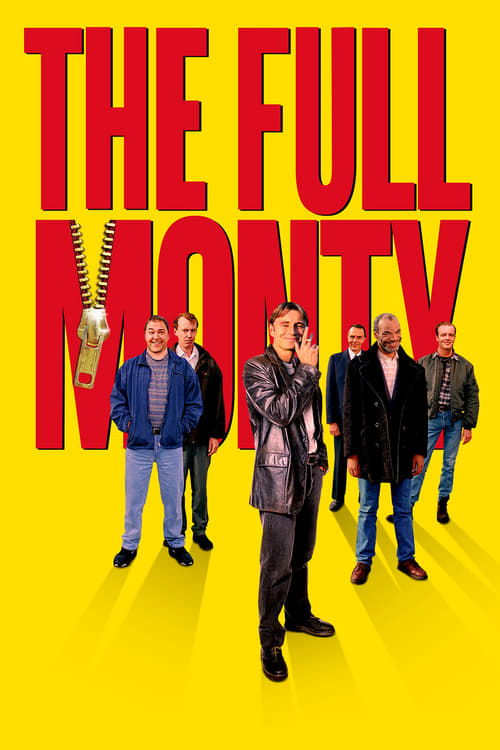
The Full Monty
1997 · Directed by Peter Cattaneo
Woke Score
CriticCritic Score
Audience
Ultra Based
Critics rated this 57 points above its woke score. Among Ultra Based films, this critic score ranks #481 of 1469.
Representation Casting
Score: 15/100
The cast is predominantly white and male. Female characters appear in supporting roles with minimal agency or screen time. No deliberate effort toward diverse representation is evident.
LGBTQ+ Themes
Score: 35/100
A gay character is present and treated with some sympathy, but primarily serves comedic purposes. The film's approach feels more like 1990s tolerance than contemporary LGBTQ+ consciousness.
Feminist Agenda
Score: 10/100
Women are largely relegated to supporting roles as wives and mothers. Their perspectives and struggles receive minimal attention. The narrative centers entirely on male experience.
Racial Consciousness
Score: 5/100
The film makes no deliberate statement about race or racial representation. The cast reflects the demographics of its setting without any conscious diversity initiative.
Climate Crusade
Score: 0/100
Climate change and environmental concerns are entirely absent from the film. The narrative focuses on economic hardship rather than ecological awareness.
Eat the Rich
Score: 20/100
While the film sympathetically portrays working-class unemployment, it does not critique capitalism systematically. The men's solution involves commodifying their bodies rather than questioning economic structures.
Body Positivity
Score: 25/100
The film depicts bodies of various ages and shapes, which could be read as body positive, but the humor often relies on discomfort with nudity and bodily exposure rather than genuine celebration.
Neurodivergence
Score: 0/100
No representation of neurodivergent characters or engagement with neurodivergence as a theme appears in the film.
Revisionist History
Score: 5/100
The film does not attempt to reinterpret historical events. It depicts a contemporary economic crisis in its own moment without historical revisionism.
Lecture Energy
Score: 8/100
The film does not lecture its audience on social issues. It tells its story through comedy and character interaction rather than preachy messaging.


Synopsis
Sheffield, England. Gaz, a jobless steelworker in need of quick cash persuades his mates to bare it all in a one-night-only strip show.
Consciousness Assessment
The Full Monty presents itself as a film about masculine vulnerability and economic hardship, themes that might suggest progressive sensibilities to the casual observer. In 1997, when the film arrived, it was treated as something of a cultural event, a British comedy that dared to show middle-aged men in various states of undress. Yet the film operates according to the comedic logic of its era, which means that any social consciousness on display is incidental rather than deliberate. The treatment of its gay character exists somewhere between sympathy and the kind of gentle ribbing that passed for inclusivity in the nineties.
The film's real interest lies not in contemporary progressive frameworks but in the specific economic catastrophe of deindustrialization in Sheffield. This is important material, but importance and social consciousness are not the same thing. The men of The Full Monty are depicted with genuine affection, as are their struggles. Their solution to joblessness, however, relies on the male body as commodity and spectacle, a premise the film never interrogates in any systematic way. There is no critique of capitalism here, merely a pragmatic workaround. The women in the film exist primarily as wives, girlfriends, and mothers. Their interiority remains largely unexamined.
The film's cultural legacy has been significantly reinterpreted in subsequent decades, as audiences project contemporary values onto its narrative. This is a common phenomenon in film criticism. The Full Monty remains what it always was: a charming, economically specific comedy from the pre-smartphone era, well-made and emotionally resonant, but innocent of the cultural preoccupations that define modern progressive discourse.
Analysis generated by our Consciousness Algorithm
Critic Reviews
“So seamlessly buoyant and enjoyable that it's easy to miss how carefully and sensitively it's made.”
“Takes a premise that seems ripe for broad, vulgar joking and turns it into a sly, even subtle, comedy.”
“An enjoyable, ultimately inconsequential crowd-pleaser.”
Consciousness Markers
The cast is predominantly white and male. Female characters appear in supporting roles with minimal agency or screen time. No deliberate effort toward diverse representation is evident.
A gay character is present and treated with some sympathy, but primarily serves comedic purposes. The film's approach feels more like 1990s tolerance than contemporary LGBTQ+ consciousness.
Women are largely relegated to supporting roles as wives and mothers. Their perspectives and struggles receive minimal attention. The narrative centers entirely on male experience.
The film makes no deliberate statement about race or racial representation. The cast reflects the demographics of its setting without any conscious diversity initiative.
Climate change and environmental concerns are entirely absent from the film. The narrative focuses on economic hardship rather than ecological awareness.
While the film sympathetically portrays working-class unemployment, it does not critique capitalism systematically. The men's solution involves commodifying their bodies rather than questioning economic structures.
The film depicts bodies of various ages and shapes, which could be read as body positive, but the humor often relies on discomfort with nudity and bodily exposure rather than genuine celebration.
No representation of neurodivergent characters or engagement with neurodivergence as a theme appears in the film.
The film does not attempt to reinterpret historical events. It depicts a contemporary economic crisis in its own moment without historical revisionism.
The film does not lecture its audience on social issues. It tells its story through comedy and character interaction rather than preachy messaging.