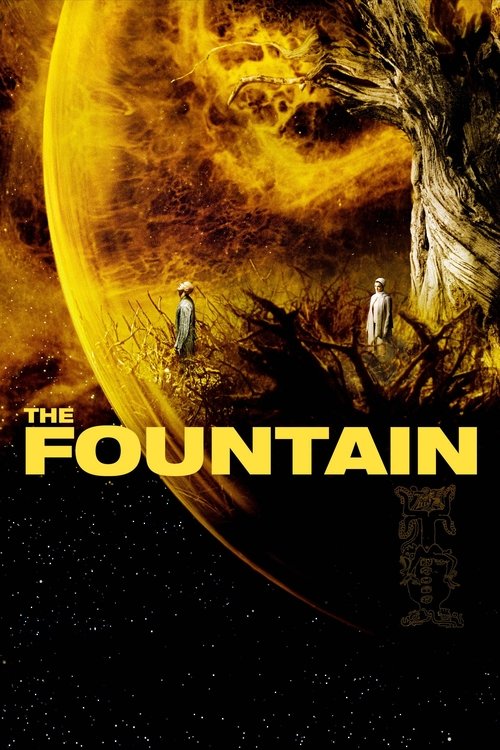
The Fountain
2006 · Directed by Darren Aronofsky
Woke Score
CriticCritic Score
Audience
Ultra Based
Critics rated this 47 points above its woke score. Among Ultra Based films, this critic score ranks #1139 of 1469.
Representation Casting
Score: 10/100
The film features Hugh Jackman and Rachel Weisz in lead roles with diverse supporting cast members, but this casting serves the narrative rather than making a statement about diversity or representation.
LGBTQ+ Themes
Score: 0/100
No LGBTQ+ themes, characters, or storylines are present in the film. All romantic relationships depicted are heterosexual.
Feminist Agenda
Score: 5/100
Rachel Weisz plays multiple female characters across timelines, but they are primarily defined by their relationships to the male protagonist and his existential quest rather than by independent agency or feminist critique.
Racial Consciousness
Score: 0/100
While the film incorporates Mayan mythology and spiritual traditions, it does not engage with contemporary racial consciousness, indigenous representation, or systemic inequities.
Climate Crusade
Score: 0/100
No environmental themes, climate messaging, or ecological consciousness is present in the film.
Eat the Rich
Score: 0/100
The modern storyline features a pharmaceutical scientist protagonist, but there is no critique of capitalism, wealth inequality, or corporate exploitation.
Body Positivity
Score: 0/100
No messaging about body positivity, body standards, or challenges to conventional beauty norms appears in the film.
Neurodivergence
Score: 0/100
No representation, discussion, or portrayal of neurodivergence or mental health conditions is present.
Revisionist History
Score: 0/100
While the film uses historical settings including a Spanish Inquisition-era sequence, it does not revise historical narratives to serve contemporary social agendas.
Lecture Energy
Score: 5/100
The film is deeply philosophical and meditative, but conveys its ideas through visual poetry and symbolic narrative rather than preachy dialogue or explicit social lectures.


Synopsis
Spanning over one thousand years, and three parallel stories, The Fountain is a story of love, death, spirituality, and the fragility of our existence in this world.
Consciousness Assessment
The Fountain occupies that peculiar territory inhabited by ambitious prestige dramas that arrived before the cultural vocabulary of contemporary progressive consciousness had fully crystallized. Darren Aronofsky's philosophical meditation on love, mortality, and the human refusal to accept the finality of death operates almost entirely outside the register of modern social awareness. The film is concerned with nothing so pedestrian as representation, equity, or systemic critique. Instead, it reaches toward the eternal and the spiritual, drawing on Mayan mythology and Christian theology to construct a vision of human experience that transcends the particular historical moment.
What makes The Fountain's low cultural consciousness score particularly instructive is that this is not a film lacking in ambition or substance. Aronofsky constructs an elaborate three-timeline narrative exploring parallel versions of love, loss, and the struggle against mortality. The performances from Hugh Jackman and Rachel Weisz across their multiple incarnations ground the abstraction in genuine emotional weight. The film simply does not concern itself with contemporary identity markers or progressive social messaging. Rachel Weisz's characters exist not as statements about female agency but as objects of devotion in the male protagonist's existential crisis. The Mayan elements serve as spiritual scaffolding, not commentary on indigenous representation or postcolonial power dynamics.
The result is a film that speaks to universal human preoccupations in a mode that feels almost quaint by 2020s standards. We might describe this as a form of innocence, though one earned through deliberate artistic choice rather than ignorance. The Fountain was made in a moment when a major studio picture could ask profound questions about meaning and mortality without feeling obligated to interrogate these questions through the lens of contemporary social consciousness. Whether this represents a loss or a preservation of artistic integrity depends entirely on one's perspective.
Analysis generated by our Consciousness Algorithm
Critic Reviews
“As it happens, each one of these tales is also a love story, and The Fountain is Aronofsky’s profession of faith concerning love’s place in the idea of eternity. It’s a movie that’s as deeply felt as it is imagined.”
“It's an ambitious, passionate, grief-stricken work of film art.”
“Viewers not attuned to his (Aronofsky's) heartfelt, bombastic Richard Wagner-by-way-of-"2001: A Space Odyssey" lyricism might be better off looking elsewhere. But they'll never see anything else quite like it.”
“Aronofsky's reach far exceeds his grasp with this film, and the muddle he concocts makes one wonder if there was ever a solid foundation for The Fountain. Hope may spring eternal, but this fountain is a dry hole.”
Consciousness Markers
The film features Hugh Jackman and Rachel Weisz in lead roles with diverse supporting cast members, but this casting serves the narrative rather than making a statement about diversity or representation.
No LGBTQ+ themes, characters, or storylines are present in the film. All romantic relationships depicted are heterosexual.
Rachel Weisz plays multiple female characters across timelines, but they are primarily defined by their relationships to the male protagonist and his existential quest rather than by independent agency or feminist critique.
While the film incorporates Mayan mythology and spiritual traditions, it does not engage with contemporary racial consciousness, indigenous representation, or systemic inequities.
No environmental themes, climate messaging, or ecological consciousness is present in the film.
The modern storyline features a pharmaceutical scientist protagonist, but there is no critique of capitalism, wealth inequality, or corporate exploitation.
No messaging about body positivity, body standards, or challenges to conventional beauty norms appears in the film.
No representation, discussion, or portrayal of neurodivergence or mental health conditions is present.
While the film uses historical settings including a Spanish Inquisition-era sequence, it does not revise historical narratives to serve contemporary social agendas.
The film is deeply philosophical and meditative, but conveys its ideas through visual poetry and symbolic narrative rather than preachy dialogue or explicit social lectures.