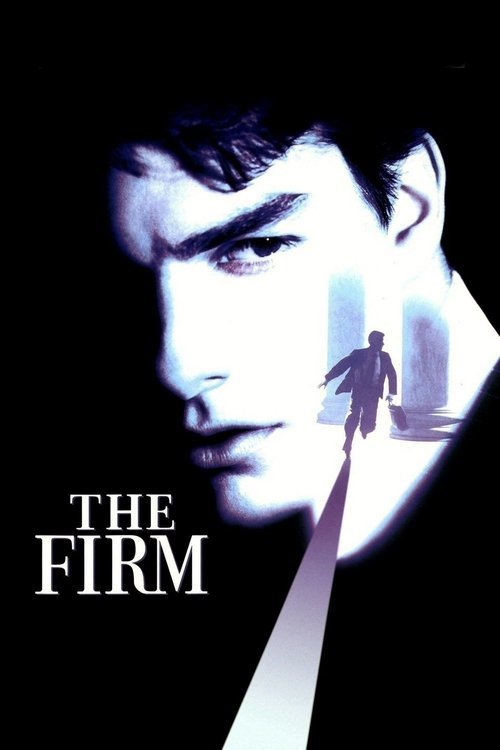
The Firm
1993 · Directed by Sydney Pollack
Woke Score
CriticCritic Score
Audience
Based
Critics rated this 36 points above its woke score. Among Based films, this critic score ranks #265 of 345.
Representation Casting
Score: 25/100
The ensemble cast includes some diversity with Holly Hunter and Karina Lombard in supporting roles, but the narrative centers entirely on Tom Cruise's white male protagonist. Casting is inclusive without being conscious.
LGBTQ+ Themes
Score: 0/100
No LGBTQ+ characters, relationships, or themes appear in the film. Sexual orientation is not addressed.
Feminist Agenda
Score: 20/100
Holly Hunter's character is a secretary whose agency is limited by her role. The film contains no feminist critique or championing of women's equality.
Racial Consciousness
Score: 15/100
Black characters appear in minor roles but the film makes no effort to explore racial themes or acknowledge systemic racism. Colorblind casting was the norm.
Climate Crusade
Score: 0/100
Environmental concerns are entirely absent from this corporate legal thriller.
Eat the Rich
Score: 35/100
The film critiques corporate corruption and the corrupting influence of wealth and money, though this critique is moral rather than ideological and lacks systematic analysis of capitalism.
Body Positivity
Score: 0/100
All principal actors conform to conventional Hollywood physical standards. No commentary on body diversity.
Neurodivergence
Score: 0/100
No characters are portrayed with neurodivergent conditions or related themes.
Revisionist History
Score: 0/100
This is a contemporary thriller set in the 1990s with no historical revisionism or reinterpretation.
Lecture Energy
Score: 10/100
The film prioritizes plot and suspense over preachy messaging. Exposition about legal matters is functional rather than educational about social issues.


Synopsis
Mitch McDeere is a young man with a promising future in Law. About to sit his Bar exam, he is approached by 'The Firm' and made an offer he doesn't refuse. Seduced by the money and gifts showered on him, he is totally oblivious to the more sinister side of his company. Then, two Associates are murdered. The FBI contact him, asking him for information and suddenly his life is ruined. He has a choice - work with the FBI, or stay with the Firm. Either way he will lose his life as he knows it. Mitch figures the only way out is to follow his own plan...
Consciousness Assessment
The Firm stands as an exemplary artifact of 1990s mainstream cinema, a period when progressive sensibilities had not yet calcified into the specific cultural markers we now track with the dedication of museum curators. Sydney Pollack's adaptation of John Grisham's legal thriller concerns itself entirely with the mechanics of corporate corruption and individual moral compromise, treating these as matters of plot rather than as opportunities for systemic social critique. Tom Cruise's Mitch McDeere navigates a world of money, power, and institutional loyalty with the narrow perspective of a man concerned primarily with his own survival, and the film follows him faithfully in this myopia.
The film's sole concession to progressive consciousness emerges in its portrayal of the firm itself as a corrupting force, a machine that consumes idealistic lawyers and converts them into instruments of criminal enterprise. Yet this critique lacks any particular ideological sharpness; it functions as moral cautionary tale rather than as indictment of capitalism itself. The supporting cast, including a capable Holly Hunter in a secretarial role and scattered Black characters in minor positions, reflects the colorblind casting practices of the era. None of these casting choices signal any deliberate engagement with representation or diversity as values worth foregrounding.
What remains is a technically proficient thriller that treats social consciousness as irrelevant to its narrative concerns. The film makes no attempt to interrogate gender, race, sexuality, environmental impact, or any of the concerns that would come to define cultural discourse in subsequent decades. It exists in a space of comfortable political neutrality, which is to say, it is not neutral at all, but rather reflects the unremarked assumptions of its moment. This is not a failing of the film itself, merely a historical fact worth recording.
Analysis generated by our Consciousness Algorithm
Critic Reviews
“The result is a top-drawer melodrama, a polished example of commercial movie-making that manages to improve on the original while retaining its best-selling spirit. [30 Jun 1993 Pg. F1]”
“Rebounding from his biggest career flopflop with "Havana," Sydney Pollack has done an ultra-pro job in giving spit and polish to this star-driven, sure-fire commercial project.”
“Cruise was born to play company man, and the role is an opportunity to sum up his old roles and transcend them with his most potently emotional work.”
“By then, the lofty ambitions can't disguise the sad reality - it's long, it's cluttered, and it's trite.”
Consciousness Markers
The ensemble cast includes some diversity with Holly Hunter and Karina Lombard in supporting roles, but the narrative centers entirely on Tom Cruise's white male protagonist. Casting is inclusive without being conscious.
No LGBTQ+ characters, relationships, or themes appear in the film. Sexual orientation is not addressed.
Holly Hunter's character is a secretary whose agency is limited by her role. The film contains no feminist critique or championing of women's equality.
Black characters appear in minor roles but the film makes no effort to explore racial themes or acknowledge systemic racism. Colorblind casting was the norm.
Environmental concerns are entirely absent from this corporate legal thriller.
The film critiques corporate corruption and the corrupting influence of wealth and money, though this critique is moral rather than ideological and lacks systematic analysis of capitalism.
All principal actors conform to conventional Hollywood physical standards. No commentary on body diversity.
No characters are portrayed with neurodivergent conditions or related themes.
This is a contemporary thriller set in the 1990s with no historical revisionism or reinterpretation.
The film prioritizes plot and suspense over preachy messaging. Exposition about legal matters is functional rather than educational about social issues.