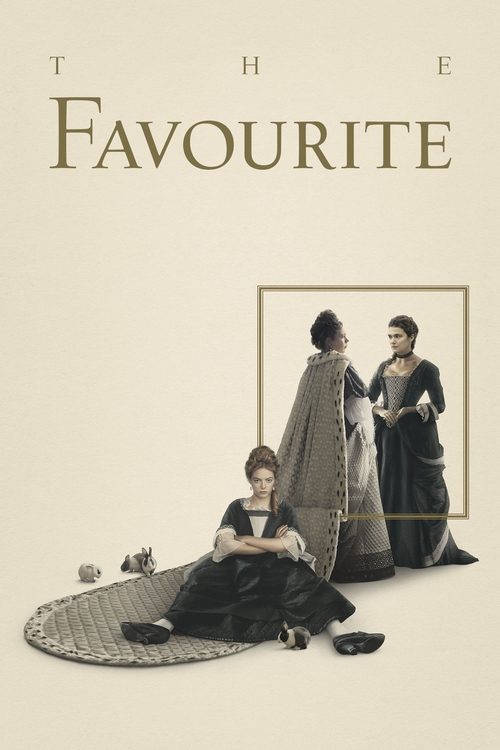
The Favourite
2018 · Directed by Yorgos Lanthimos
Woke Score
CriticCritic Score
Audience
Woke
Critics rated this 29 points above its woke score. Among Woke films, this critic score ranks #6 of 88.
Representation Casting
Score: 85/100
The film centers three women as complex, morally ambiguous protagonists in a historical drama traditionally dominated by male perspectives. Female characters occupy all positions of power and agency.
LGBTQ+ Themes
Score: 80/100
The central narrative explicitly portrays romantic and sexual desire between women as the core conflict, with no heteronormative framing or apology. Same-sex relationships are treated as ordinary within the world of the film.
Feminist Agenda
Score: 50/100
While the film centers women in positions of power, it offers no aspirational vision of feminism or liberation. Women are portrayed as equally capable of cruelty and moral corruption as any male character might be, which reads as nihilistic rather than politically engaged.
Racial Consciousness
Score: 0/100
The film makes no apparent engagement with racial themes or racial representation. The cast is uniformly white, and there is no commentary on or acknowledgment of race in the narrative.
Climate Crusade
Score: 0/100
No environmental or climate themes are present in this historical court drama.
Eat the Rich
Score: 25/100
The film depicts aristocratic excess and corruption, but this critique is presented as timeless human nature rather than as a specific indictment of capitalist systems or economic structures.
Body Positivity
Score: 0/100
There is no evident engagement with body positivity themes. The film does not challenge conventional beauty standards or celebrate diverse body types.
Neurodivergence
Score: 0/100
No representation of neurodivergent characters or themes appears in the film.
Revisionist History
Score: 35/100
The film takes significant creative liberties with historical fact, particularly in its portrayal of relationships and character motivations, but this serves aesthetic purposes rather than explicit revisionist political messaging.
Lecture Energy
Score: 15/100
The film maintains a deliberately playful, anarchic tone that resists preachiness. Any social commentary is delivered through dark comedy and aesthetic provocation rather than earnest explanation.


Synopsis
England, early 18th century. The close relationship between Queen Anne and Sarah Churchill is threatened by the arrival of Sarah's cousin, Abigail Hill, resulting in a bitter rivalry between the two cousins to be the Queen's favourite.
Consciousness Assessment
The Favourite presents itself as a gleefully anarchic romp through 18th century court politics, yet beneath its baroque excess and vicious comedy lies a film deeply preoccupied with contemporary sensibilities around gender and desire. Lanthimos populates his film almost entirely with female characters occupying positions of power, intrigue, and moral complexity, a deliberate inversion of historical hierarchies that announces itself through the sheer numerical dominance of women in every frame. The central relationship between Queen Anne and her two favorites is explicitly romantic and physical, with no apology or heterosexual framing, suggesting that same-sex desire is simply the texture of these women's lives rather than a revelation to be gasped over by the audience.
Yet the film's progressive elements coexist uneasily with its fundamental cynicism about power itself. Every character is ruthless, duplicitous, and motivated by base appetites. The women here do not seek liberation or dignity; they seek control and pleasure, often at the expense of others. This is not feminism in any aspirational sense, but rather a kind of nihilistic gender inversion where women are permitted to be as petty, cruel, and self-serving as any male-dominated historical narrative might portray men. One might call this subversive, though whether subversion that merely mirrors patriarchal vice constitutes meaningful progressive commentary remains an open question. The film's refusal to offer moral clarity or character redemption feels less like a challenge to existing power structures and more like a shrug.
The production values and craft are undeniable, and the performances from Stone, Colman, and Weisz suggest a film interested in complex female interiority. Yet Lanthimos remains committed to aesthetic provocation over political substance. His baroque compositions, his occasional forays into visual distortion, his deployment of anachronistic music and language, all serve the god of style rather than any coherent vision of social consciousness. The Favourite is a film that has been embraced by progressive audiences precisely because it features women and queer desire in a historical setting, but its actual engagement with the implications of its own progressive markers remains superficial. It is a film that looks the part while maintaining a studied distance from genuine critique.
Analysis generated by our Consciousness Algorithm
Critic Reviews
“The Favourite has ribaldry and intelligence to burn, a deliciously entertaining period piece that feels liberated by its period, rather than restrained and invigorates like a glass of wine thrown violently in your face.”
“[Yorgos Lanthimos'] fabulously entertaining tragicomedy, The Favourite, is a juicy power tangle connecting three women in the royal court of early 18th-century England, played by a divine trio who bounce off one another with obvious relish. ”
“The Favourite is one of those rare films where the energy generated by three talents at the top of their game and the energy generated by their characters swirl and merge in a perfect storm.”
“The actresses are so expert, especially Colman, with her grievous, hardbitten woe, that you may not care, but if one is to mock this sort of historical extravaganza, I much prefer the nutbrain Monty Python approach to all this deep-dish folderol.”
Consciousness Markers
The film centers three women as complex, morally ambiguous protagonists in a historical drama traditionally dominated by male perspectives. Female characters occupy all positions of power and agency.
The central narrative explicitly portrays romantic and sexual desire between women as the core conflict, with no heteronormative framing or apology. Same-sex relationships are treated as ordinary within the world of the film.
While the film centers women in positions of power, it offers no aspirational vision of feminism or liberation. Women are portrayed as equally capable of cruelty and moral corruption as any male character might be, which reads as nihilistic rather than politically engaged.
The film makes no apparent engagement with racial themes or racial representation. The cast is uniformly white, and there is no commentary on or acknowledgment of race in the narrative.
No environmental or climate themes are present in this historical court drama.
The film depicts aristocratic excess and corruption, but this critique is presented as timeless human nature rather than as a specific indictment of capitalist systems or economic structures.
There is no evident engagement with body positivity themes. The film does not challenge conventional beauty standards or celebrate diverse body types.
No representation of neurodivergent characters or themes appears in the film.
The film takes significant creative liberties with historical fact, particularly in its portrayal of relationships and character motivations, but this serves aesthetic purposes rather than explicit revisionist political messaging.
The film maintains a deliberately playful, anarchic tone that resists preachiness. Any social commentary is delivered through dark comedy and aesthetic provocation rather than earnest explanation.