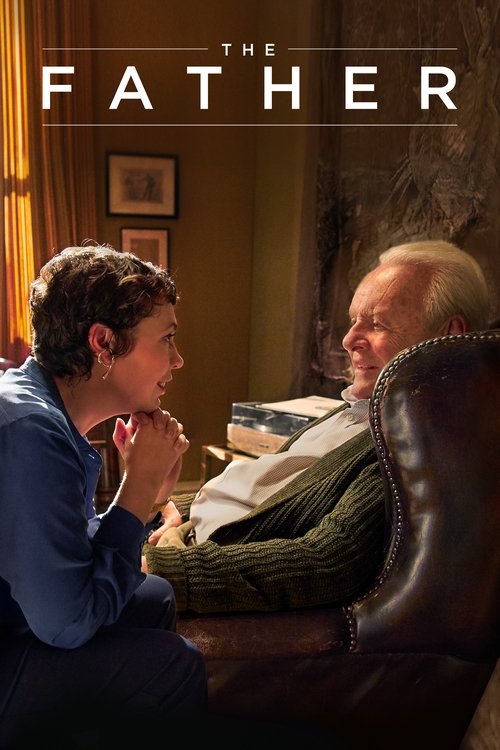
The Father
2020 · Directed by Florian Zeller
Woke Score
CriticCritic Score
Audience
Ultra Based
Critics rated this 84 points above its woke score. Among Ultra Based films, this critic score ranks #167 of 1469.
Representation Casting
Score: 0/100
The cast is predominantly white and drawn from a wealthy British family context. No evidence of intentional representation politics in casting decisions.
LGBTQ+ Themes
Score: 0/100
No LGBTQ+ themes, characters, or representation present in the narrative.
Feminist Agenda
Score: 0/100
While Olivia Colman's character is female, the film contains no feminist framework or agenda. She functions as a family member and caregiver, not as a vehicle for feminist consciousness.
Racial Consciousness
Score: 0/100
The film contains no racial themes, consciousness, or commentary. Race is not engaged as a thematic element.
Climate Crusade
Score: 0/100
No environmental or climate-related content, messaging, or themes are present.
Eat the Rich
Score: 0/100
The family's wealth and social position are incidental to the narrative. No anti-capitalist messaging or critique of economic systems is present.
Body Positivity
Score: 0/100
The film does not engage with body image politics, body positivity movements, or related social consciousness markers.
Neurodivergence
Score: 35/100
The film centers dementia and attempts to represent its subjective, disorienting experience from the protagonist's perspective. However, it frames cognitive decline as tragedy and loss rather than as an identity or valid alternative way of being.
Revisionist History
Score: 0/100
The film contains no historical revisionism or reframing of past events through contemporary social justice lenses.
Lecture Energy
Score: 0/100
The film is formally subtle and experiential rather than preachy or preachy. It does not lecture the audience about its themes.


Synopsis
A man refuses all assistance from his daughter as he ages and, as he tries to make sense of his changing circumstances, he begins to doubt his loved ones, his own mind and even the fabric of his reality.
Consciousness Assessment
The Father is a masterwork of formal experimentation that uses cinematic language to evoke the disorientation of cognitive decline. Florian Zeller's directorial debut, adapted from his own stage play, eschews conventional narrative in favor of a fractured, subjective perspective that places the viewer inside the protagonist's deteriorating mental landscape. The film is genuinely innovative in this regard, and Anthony Hopkins delivers what may be his finest performance in a role that demands both physical restraint and psychological precision.
Yet for all its formal sophistication, the film remains entirely apolitical and untouched by contemporary progressive sensibilities. There is no attempt to reframe dementia as anything other than loss, no celebration of neurodivergence as an alternate mode of being, no assertion that the protagonist's confusion contains wisdom or value. The relationship between father and daughter is presented as a human tragedy, not as a site for ideological revision. Olivia Colman's character exists not as a vehicle for feminist consciousness but as a caregiver navigating the practical and emotional devastation of her father's condition.
The film's emotional power comes from its commitment to authenticity rather than cultural messaging. It is a work of art about aging, mortality, and the erosion of selfhood, treated with the gravity such subjects deserve. In an era of considerable cultural noise, this restraint feels almost radical, though the film would likely reject such framing. It simply is what it is: a portrait of decline, rendered with technical mastery and performed with heartbreaking restraint.
Analysis generated by our Consciousness Algorithm
Critic Reviews
“The best film about the wages of aging since Amour eight years ago, The Father takes a bracingly insightful, subtle and nuanced look at encroaching dementia and the toll it takes on those in close proximity to the afflicted.”
“The Father is about the suffering of old age, the importance of connection, the sick encroaching of an affliction, and ultimately, death. It doesn’t sugarcoat things, despite its sugarcoated exterior. Like its French counterpart, Michael Haneke’s Amour, it’s not an easy watch, but it’s a necessary one, a film that examines the very essence of our humanity.”
“Another powerful, mesmerizing and downright heartbreaking performance by the great Anthony Hopkins enhances The Father.”
“The Father is brilliantly structured and executed, but in the end it’s just a cleverly constructed way to depict the mundane. It never finds that level of the fantastic or allows for the kind of magical thinking necessary to escape its dreary reality. Ultimately it wallows in the pathetic. Who needs this?”
Consciousness Markers
The cast is predominantly white and drawn from a wealthy British family context. No evidence of intentional representation politics in casting decisions.
No LGBTQ+ themes, characters, or representation present in the narrative.
While Olivia Colman's character is female, the film contains no feminist framework or agenda. She functions as a family member and caregiver, not as a vehicle for feminist consciousness.
The film contains no racial themes, consciousness, or commentary. Race is not engaged as a thematic element.
No environmental or climate-related content, messaging, or themes are present.
The family's wealth and social position are incidental to the narrative. No anti-capitalist messaging or critique of economic systems is present.
The film does not engage with body image politics, body positivity movements, or related social consciousness markers.
The film centers dementia and attempts to represent its subjective, disorienting experience from the protagonist's perspective. However, it frames cognitive decline as tragedy and loss rather than as an identity or valid alternative way of being.
The film contains no historical revisionism or reframing of past events through contemporary social justice lenses.
The film is formally subtle and experiential rather than preachy or preachy. It does not lecture the audience about its themes.